Chengde
Send it to whoever you'd travel with
Chengde is the Qing emperors' old summer escape north of Beijing — a UNESCO mountain resort, a ring of imperial temples, and grasslands on the doorstep.
Chengde is what Beijing escaped to. For most of the 18th century, Qing emperors spent the hottest months here in a walled royal park the size of a small city, ruling the empire from a wooden throne hall in the shade of pines while diplomats from Tibet, Mongolia, and beyond filed up the valley to pay tribute. The whole apparatus — the Mountain Resort, the ring of imperial temples on the hills above it, the cooler-than-Beijing air — is still here, mostly intact, two hundred and forty kilometres and one hour by bullet train from the capital. Almost no foreign travellers come. It's one of the strangest deals in Chinese tourism.
The Mountain Resort itself (Bishu Shanzhuang, 'mountain villa for escaping the heat') is a UNESCO site the size of a small district — palace halls in front, then lakes, then a wooded plateau you can walk for half a day without seeing the wall. Around the rim sit the Eight Outer Temples, and this is where Chengde gets unusual. Putuo Zongcheng is a scaled imitation of the Potala in Lhasa, built so visiting Tibetan dignitaries would feel at home. Puning Temple holds a 22-metre carved-wood Guanyin with a thousand arms, modelled on Tibet's Samye Monastery. The architectural vocabulary — Han, Mongolian, Uyghur, Tibetan — was political. The Qing court was telling its frontier subjects: we built this for you.
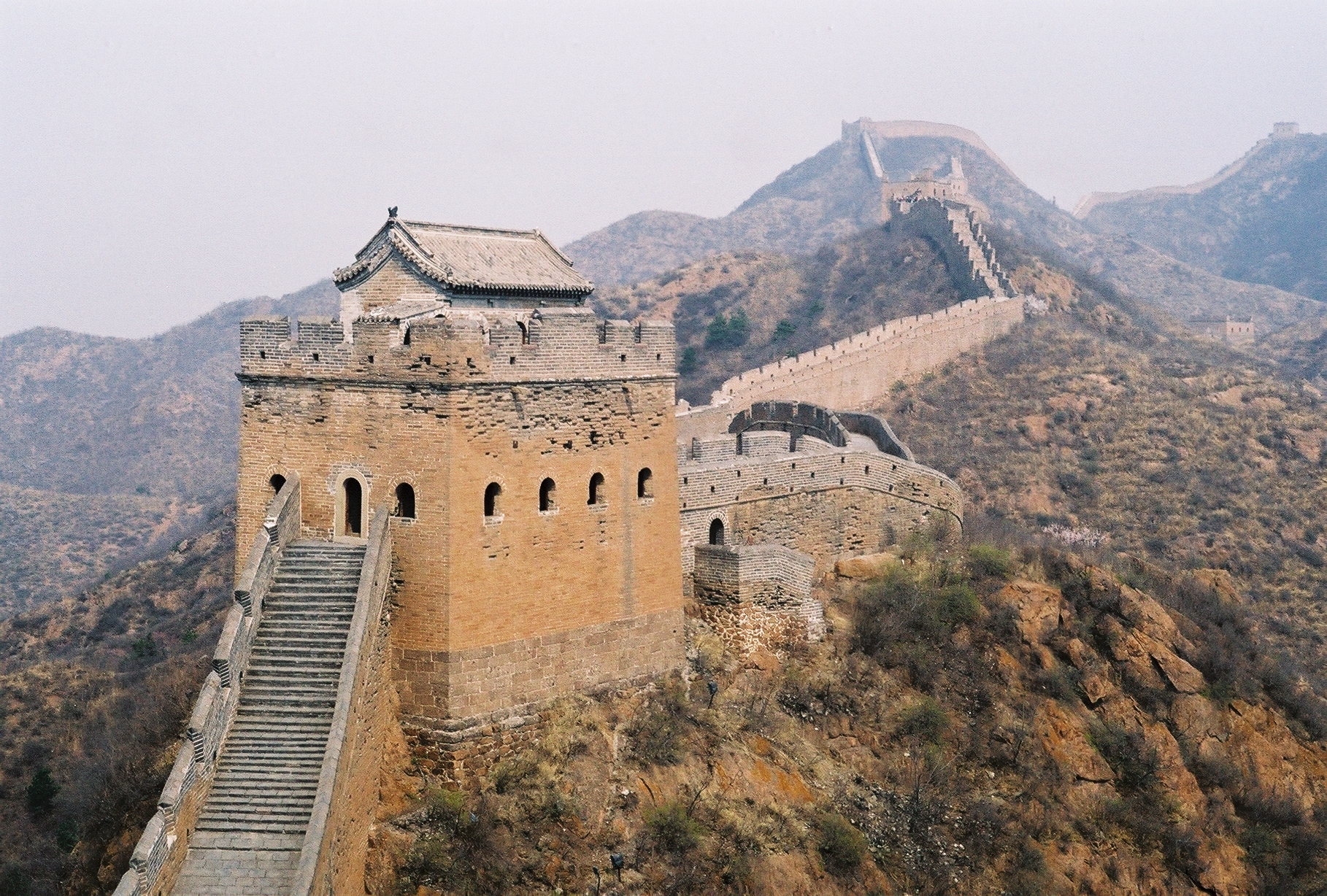
Practically, the city outside the park is workaday Hebei: wide boulevards, a river, a downtown of shopping streets and noodle houses, mountains in every direction. Two full days handles the resort and the two famous temples comfortably. A third day buys you Jinshanling — arguably the best-restored stretch of Great Wall in China, ninety kilometres south. A fourth gets you out onto Mulan Paddock and the Bashang Grassland, the imperial hunting ground where Qianlong staged annual hunts with thousands of horsemen. Stay any longer than that and you're padding.
Go in late spring or autumn. Summer is when the resort is technically at its purpose — and the crowds know it — but September into early October, when the larches on the paddock turn gold and the temple courtyards thin out, is when the place feels the way the emperors meant it to.
The practical bits.
- Best time
-
Late Apr – early OctMountain Resort and temples are best on dry, mild days; July–August are peak crowds but pleasantly cooler than Beijing.
- How long
-
3 nights recommendedTwo nights covers the resort and main temples; add nights for Jinshanling and the grasslands.
- Budget
-
$110 / day typicalTemple entry tickets and a hired car to Jinshanling or the grasslands move the budget more than hotels do.
- Getting around
-
Walkable downtown, taxis or DiDi for temples and outlying sites.The Mountain Resort sits beside downtown, so most central hotels are a walk away. Temples spread along the hills 4–8 km north; a taxi or DiDi is a few dollars. For Jinshanling or Bashang Grassland you'll want a hired car or organised tour.
- Currency
-
¥ Chinese Yuan (CNY / RMB)Cash is rarely used. Most places run on WeChat Pay or Alipay; both now support foreign cards, but link one before you arrive — small noodle shops and temple ticket counters won't take Visa.
- Language
- Mandarin Chinese. English is limited outside major hotels — translation apps and screenshots of place names help a lot.
- Visa
- Most travellers need a Chinese tourist visa; the 240-hour visa-free transit policy now applies for many nationalities entering via Beijing, which makes Chengde an easy add-on.
- Safety
- Very safe by global standards, including at night. The main hazards are crossing roads and pacing yourself in summer heat or winter wind at the temples.
- Plug
- Types A / C / I, 220V / 50Hz
- Timezone
- GMT+8
A few specific picks.
Hand-picked, not algorithmic. Each of these has earned its space.
Allow most of a day — the front palace courts are heavy and dim, then the back opens into lakes, pavilions, and a wooded plateau you can hike for hours.
The 'Little Potala' — a stepped white-walled climb up a hillside that genuinely echoes Lhasa, with a gilded roof at the top.
Home to a 22-metre carved-wood thousand-armed Guanyin; the hall is dim and incense-thick, the statue staggering up close.
Round mandala-roofed temple paired with a famous rock pillar above it — short cable car or a sweaty hour-long climb.
A 38-metre rock spire on a ridge — the unofficial symbol of the city, with the whole resort spread out below.
Ninety km south, the best-restored stretch of wall in the region; the Zhuanduokou to Big Jinshan hike runs about 2.5 hours.
Qianlong's imperial hunting grounds — rolling grass, horse herds, dark-sky nights; only worth it with at least one overnight.
Several restaurants on Nanyingzi Street serve Qing-court-style banquets — venison, pheasant, lotus-leaf chicken, mushroom dishes.
The local hangover and cold-weather cure — clear, peppery broth with hand-sliced mutton; eat it at any storefront with a queue.
Two cheap Hebei street snacks worth chasing — flaky bean-paste cakes and pan-fried buckwheat patties with garlicky vinegar.
Locals walk and dance here at dusk; quietly one of the best places to see the city be itself.
Period-style rooms inside walking distance of the main gate — the easy splurge if you want to be at the wall by 7am.
Pick a neighborhood, not a hotel.
Chengde is a city of neighborhoods. The one you stay in shapes the trip more than the property does.
Different trips for different travelers.
Same city, very different stays. Pick the lens that matches your trip.
Chengde for history buffs
Few places concentrate as much Qing-era political theatre as Chengde — a single park where Tibetan, Mongolian and Han architectural vocabularies coexist by imperial design.
Chengde for architecture lovers
Putuo Zongcheng's stepped white walls, Puning's tiered mandala plan, and the Mountain Resort's understated wooden palaces give you three distinct traditions inside two days.
Chengde for slow travelers
The Mountain Resort has whole quiet half-days inside its walls — pine paths, half-empty lake pavilions, almost no rush. A rare Chinese city where you can just walk.
Chengde for beijing add-on travelers
One-hour bullet train, no domestic transfer, and a totally different register from the capital — Chengde is the smartest two-night extension out of Beijing.
Chengde for hikers
Jinshanling Great Wall is within day-trip reach, and the Mountain Resort itself has hours of forested ridge walks inside the boundary wall.
Chengde for photographers
Golden-hour roofs at Putuo Zongcheng, the early-morning lake mist inside the resort, and autumn larches on Mulan Paddock all read very well on camera.
When to go to Chengde.
A quick year at a glance. Great, good, or skip — see what each month is doing before you book.
Lowest rates of the year; temples in snow are striking but bitter.
Avoid Chinese New Year week — domestic crowds and closures.
Cheap and quiet, but landscape isn't at its best yet.
Excellent shoulder month — start of the comfortable season.
Arguably the best month overall, with May 1 Golden Week the one date to avoid.
Still pleasant, especially compared to scorching Beijing.
Peak domestic tourist season — book hotels well ahead.
Best time for Mulan Paddock and Bashang Grassland.
Best balance of weather, light, and lower crowds.
Avoid Oct 1–7 Golden Week; otherwise excellent.
Cold and quiet; temples atmospheric but most outdoor sites feel grim.
Cheap and uncrowded, but plan only short outdoor stretches.
Day trips from Chengde.
When you want a change of pace. Each one's a half-day or full-day out, easy from Chengde.
Jinshanling Great Wall
1.5 hrSteep ridges, dense towers, and a fraction of the Badaling crowds.
Mulan Paddock / Bashang Grassland
3.5 hrQianlong's imperial hunting ground — only worth it with at least one overnight.
Puning Temple
20 minInside city limits; close enough to pair with the Mountain Resort.
Sledgehammer Rock & Pule Temple
30 minCable car to the ridge or a sweaty hour-long climb up.
Saihanba National Forest Park
4 hrChina's largest planted forest, north of Mulan Paddock — best paired with a grassland overnight.
Gubeikou Wild Wall
2.5 hrTowards Beijing; pair with Jinshanling on the way back.
Chengde vs elsewhere.
Quick honest reads on the cities people compare Chengde to.
Beijing is the imperial capital at full volume; Chengde is the same dynasty at half volume in cooler air. Smaller, calmer, far less English, far fewer crowds.
Pick Chengde if: Pick Chengde as a 2–3 night counterpoint after Beijing, not instead of it.
Datong's draw is the Yungang Grottoes and the Hanging Monastery — Buddhist rock sculpture at a vast, older scale. Chengde's draw is Qing-era political architecture and a living royal park.
Pick Chengde if: Pick Datong for Buddhist art history; Chengde for imperial scenography.
Pingyao is a walled Ming merchant town frozen in 19th-century commerce. Chengde is an open imperial summer city with temples on the hills.
Pick Chengde if: Pick Pingyao for old-town walkability; Chengde for landscape-scale Qing heritage.
Hohhot is the real gateway to Inner Mongolia — bigger grasslands, Mongol culture, longer flights. Chengde gives you a one-night taste of grassland life from a bullet train hop.
Pick Chengde if: Pick Hohhot for a full grassland trip; Chengde if grassland is one chapter among temples and walls.
Xi'an is the heavyweight of Chinese ancient capitals — Terracotta Army, Tang-era streets, Muslim Quarter. Chengde is a single dynasty in a single landscape.
Pick Chengde if: Pick Xi'an for the headline sights of Chinese history; Chengde for atmosphere and unexpectedness.
Itineraries you can start from.
Rough shapes for a trip here — a feel for the pace and cost. Find the one that fits you.
Bullet train up from Beijing Friday evening, a full day inside the Mountain Resort, and a half-day temple loop ending at Sledgehammer Rock. Back to Beijing by dinner Sunday.
Two days for the resort and Outer Temples, then a hired-car day out to Jinshanling Great Wall — arguably the best-restored stretch in the country, hiked with almost no crowds.
Chengde city for the heritage, plus two nights at Bashang Grassland for horseback rides, sunset over Mulan Paddock, and a stargazing night before looping back via Jinshanling.
Things people ask about Chengde.
Is Chengde worth visiting?
Yes — particularly if you've already done Beijing and want to see Qing imperial culture in the setting it was actually designed for. The Mountain Resort and the Eight Outer Temples are a single UNESCO World Heritage site, the architecture spans Han, Tibetan, Mongolian and Uyghur traditions, and crowds are a fraction of the capital's. Two or three days is the right scale; longer if you add Jinshanling or the grasslands.
How many days do you need in Chengde?
Two full days cover the Mountain Resort and the main Outer Temples — Putuo Zongcheng, Puning, and Pule with Sledgehammer Rock. A third day buys you Jinshanling Great Wall, which sits between Chengde and Beijing. Four to five lets you add an overnight on Bashang Grassland. Day-trippers from Beijing exist, but the rush ruins the place.
Best time to visit Chengde?
Late April through May and September into early October. Spring brings dry, mild weather and blooming temple courtyards; autumn turns the larches on Mulan Paddock gold and thins the summer crowds. July and August are pleasantly cool by Beijing standards — Chengde was literally designed as the imperial escape from the lowland heat — but expect peak Chinese-domestic tourism. Winters are bitter and most outdoor sites feel grim.
How do I get from Beijing to Chengde?
The fastest option is the high-speed rail. Bullet trains run from Beijing Chaoyang Station to Chengde South Station in about an hour, with more than 50 departures daily, and second-class tickets start around 70 CNY. Note that Chengde South is the new high-speed station 10 km from downtown — taxi or bus into the centre takes 30–40 minutes. The older Chengde Railway Station sits in town.
Is Chengde safe for solo travelers?
Very. China generally ranks among the safest large destinations in the world for solo travel, and Chengde is a small, calm city where late-evening river walks and night markets are normal. Petty theft is rare; the practical frictions are language and digital payments. Set up WeChat Pay or Alipay with a foreign card before arriving, save key addresses in Chinese characters, and you'll move through Chengde without issue.
What is Chengde famous for?
Chengde is famous as the Qing dynasty's imperial summer capital. From 1703 onwards emperors decamped here for months at a time, running the empire from a walled park called Bishu Shanzhuang (the Mountain Resort) and receiving Tibetan and Mongolian envoys in a custom-built ring of Outer Temples — including a small-scale Potala Palace and a Samye-modelled Buddhist hall housing a 22-metre carved wooden Guanyin. The whole complex is UNESCO-listed.
Is Chengde cheap or expensive?
Cheap by Chinese standards and very cheap by global ones. Budget travellers manage on around $45/day with hostel beds, street food, and bus rides. Mid-range travellers — three-star hotels, sit-down restaurants, entrance tickets, the occasional taxi — land around $100–120. The line moves above $200/day mostly if you hire a private car for Jinshanling or stay at a high-end yurt camp on the grasslands.
Cash or card in Chengde?
Neither, really — Chengde runs on mobile payments. WeChat Pay and Alipay are how locals pay for everything from temple tickets to noodle bowls, and both now accept foreign Visa or Mastercard. Set up at least one before you arrive. Cash still works at hotels and some larger restaurants, but ATMs that take foreign cards are rare outside major chains. International credit cards are not widely accepted.
How long does the Beijing to Chengde bullet train take?
About one hour. The high-speed line from Beijing Chaoyang Railway Station to Chengde South Railway Station covers roughly 250 km in 55–70 minutes depending on the service, with more than 50 departures a day. Second-class seats run around 42–124 CNY (~$6–17), first-class 68–198 CNY. Book a day or two ahead via Trip.com or 12306, especially on weekends and public holidays.
What's the best day trip from Chengde?
Jinshanling Great Wall. It's about 90 km south, roughly 1.5 hours by hired car, and is regularly cited as the most photogenic restored stretch of wall in northern China — steep ridges, dense watchtowers, a fraction of Badaling's crowds. The classic Zhuanduokou-to-Big-Jinshan hike runs about 2.5 hours. Easier alternative: a long morning at the Outer Temples ring.
Where should I stay in Chengde?
Downtown Chengde, ideally within walking distance of the Mountain Resort's Lizhengmen gate. The central Shuangqiao district puts you next to the resort entrance, the Wulie River promenade, and the best noodle streets, with taxis to the Outer Temples in under fifteen minutes. The South Station hotel cluster is bland and 10 km from anything interesting — skip it unless you have an early train.
Chengde vs Beijing — which should I visit first?
Beijing first, always. Chengde is a deliberate counterpoint to the capital — the place emperors went *to escape* Beijing — and you'll understand it better having already walked the Forbidden City and a stretch of Wall. The best practical move is to anchor in Beijing and tack 2–3 days in Chengde onto the back end. The one-hour bullet train makes it almost embarrassingly easy.
Can I visit Chengde as a day trip from Beijing?
Technically yes, practically don't. The bullet train is only an hour each way, but the Mountain Resort alone needs a full day on foot, and the Outer Temples ring needs at least a half-day with a taxi. A day trip means choosing one site and rushing it, and missing the whole reason Chengde exists — that the Qing emperors were here for months at a time. Stay at least one night.
What food is Chengde known for?
Chengde's cuisine fuses Manchu imperial cooking with rural Hebei traditions. Signature dishes lean on game — venison, pheasant, hare — plus lotus-leaf-wrapped chicken, mushroom stir-fries, and the famous 'Eight Dishes' banquet that descends from Qing-court feasts. On the street, look for Pingquan mutton soup, pan-fried wantuo buckwheat patties, Nansha bean-paste cakes, and the smashed-garlic noodles found at downtown noodle shops.
Do I need a visa to visit Chengde?
Most travellers need a Chinese tourist visa (L visa), arranged in advance through a Chinese embassy or visa service. However, Beijing's 240-hour visa-free transit policy now covers many nationalities and allows up to ten days in the region including Hebei province — which makes Chengde an easy add-on if you're flying into Beijing Capital and onward to a third country. Confirm eligibility with your local Chinese consulate before booking.
Is Chengde good in winter?
Not really. From November to February, temperatures regularly drop below -10°C, the wind off the steppe is biting, and several of the most photogenic spots — lake pavilions, the grassland — are essentially shut down or look bleak. Hotels are at their cheapest and the temples in snow are genuinely beautiful, so it's defensible on a tight budget, but most travellers should aim for shoulder seasons instead.
Know someone headed to Chengde?
Send them this guide — real neighborhoods, timing, and prices, with nothing to sign up for.
Copies the link — nothing to install