Bacalar
Send it to whoever you'd travel with
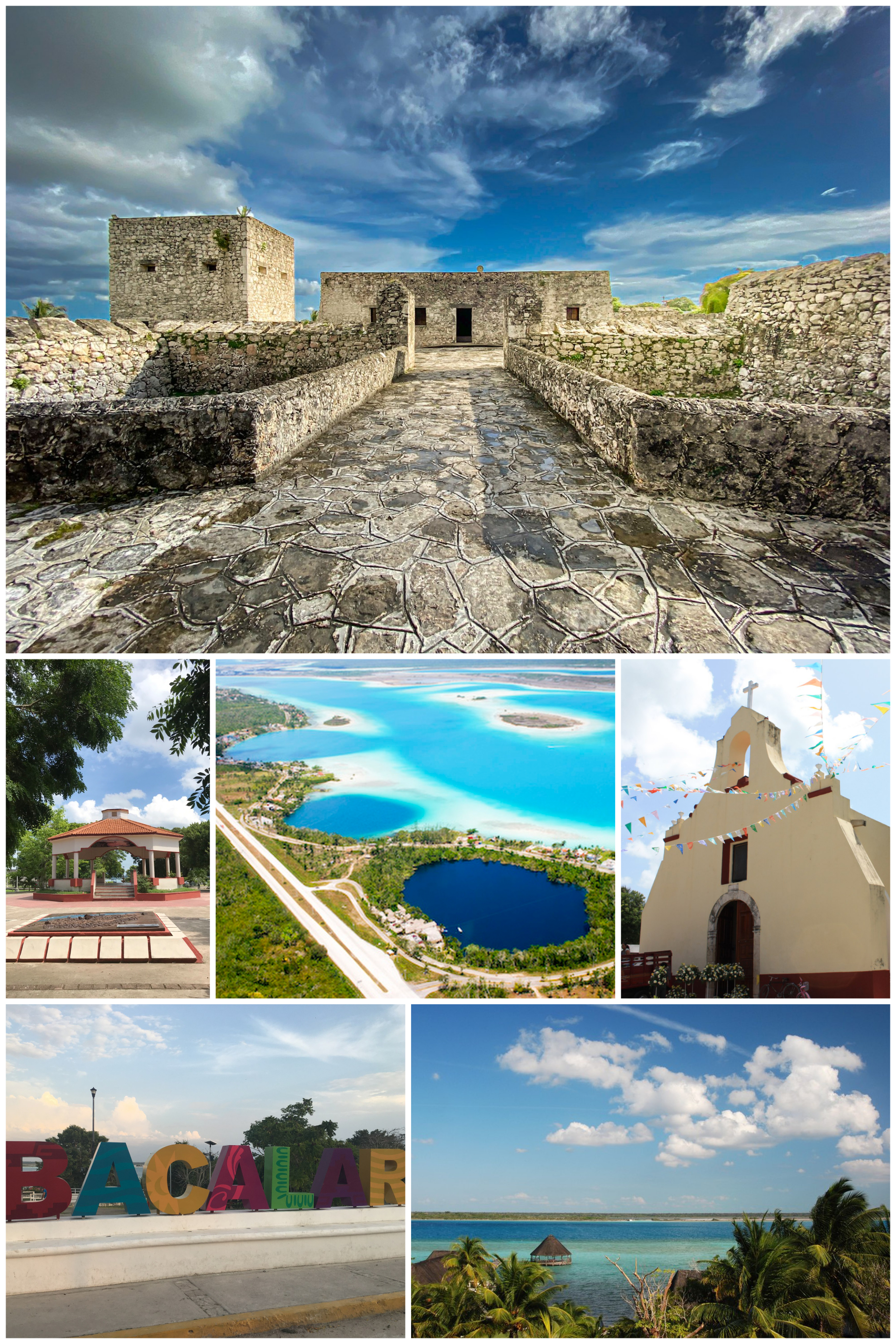
Bacalar is a small town on Mexico's Caribbean coast built around a 42-kilometer lagoon whose water shifts through seven distinct shades of blue and green — one of the most visually distinctive bodies of water in the Americas, best experienced slowly by paddleboard or sailboat.
The Laguna de Bacalar is a freshwater-saline lagoon 42 kilometers long in the southern Quintana Roo state, separated from the Caribbean Sea by a thin band of land and fed by cenotes from below. The water's extraordinary color range — from deep royal blue in the center channels to turquoise, aquamarine, pale green, and near-white over the sandbars — earns it the name 'Lake of Seven Colors.' Unlike the Caribbean beaches of Cancún and Playa del Carmen, Bacalar is not a beach resort and does not pretend to be one. The town has around 12,000 permanent residents, a colonial fort, a small waterfront malecón, and a growing number of eco-lodges and boutique properties on the lagoon's western shore.
The sargassum seaweed accumulation that has plagued Mexico's Caribbean coast since 2015, blanketing beaches from Cancún to Tulum in brown, odorous mats, does not significantly affect Bacalar. The lagoon is separated from the open Caribbean, and while small amounts of sargassum can appear in some lagoon areas after storms, the experience is categorically different from the sargassum-heavy state of the Riviera Maya during peak bloom months. This has made Bacalar increasingly popular with travelers who want Caribbean-quality water without the beach-resort infrastructure or the sargassum uncertainty.
The town's character is changing as its reputation grows — boutique eco-lodges have replaced much of what was previously a backpacker-hostel scene, and day-trippers from Chetumal (the state capital 40 minutes south) and organized tours from Playa del Carmen have increased. The best version of Bacalar still belongs to visitors who rent a kayak or stand-up paddleboard and explore the lagoon's northern end toward the Canal de los Piratas and the Boca Chica cenote in the early morning, when the water is flat and the light is still cool.
The Fuerte de San Felipe, a Spanish colonial fort built in 1729 to defend against English pirates, overlooks the lagoon from the town's highest point and now serves as a museum. The sandbars — shifting shallow areas in the lagoon where the water is only knee-deep over white sand — are accessible by water taxi or kayak and form the lagoon's most photographed scenes. The social infrastructure of the town centers on the malecón and the cluster of restaurants and mezcal bars in the blocks around the main plaza.
The practical bits.
- Best time
-
November – AprilThe dry season delivers the clearest lagoon water, the least wind for paddleboarding, and temperatures of 77–88°F. November through February is cooler and most comfortable. June through October brings humidity, rain, and the occasional tropical storm that churns the lagoon water. Hurricane season peaks in September–October; most years Bacalar is unaffected but risk exists.
- How long
-
4 nights recommended2 nights is enough for the lagoon sampler — a boat tour and an evening on the malecón. 4 nights allows multiple paddleboard sessions, a visit to the Mayan ruins at Kohunlich or Dzibanche, and the pace the lagoon demands. 7 nights is for travelers who want to base here for the southern Yucatán region.
- Budget
-
$130 / day typicalBudget travelers can find small guesthouses for $35–55/night and eat local food for $6–12/meal. Boutique eco-lodges on the lagoon shore run $120–300/night. Paddleboard rentals are $10–15/hour. Sunset catamaran tours average $45–65/person. The town lacks the resort-price inflation of the Riviera Maya.
- Getting around
-
Walking in town; water taxis and kayaks on the lagoonBacalar town is walkable from the malecón to the fort. The lagoon's sandbars and northern features are reached by water taxi ($5–10 one-way) or paddleboard/kayak rental. Chetumal (40 min south) is the nearest city with a bus terminal; buses from Cancún take 5–6 hours via Playa del Carmen and Felipe Carrillo Puerto. Tulum is 3.5 hours north by bus.
- Currency
-
Mexican Peso (MXN)Cash is strongly preferred throughout Bacalar — ATMs in town are limited and sometimes empty. Withdraw sufficient pesos in Chetumal or Cancún before arriving. Cards accepted at higher-end eco-lodges but rarely at smaller restaurants and boat operators.
- Language
- Spanish. More English spoken than in the Yucatán interior but less than in Playa del Carmen or Cancún.
- Visa
- US, Canadian, EU, UK, and most Western passport holders enter Mexico visa-free for up to 180 days. Complete the online FMM tourist form before arrival.
- Safety
- Bacalar is considered safe for tourists. The small-town character keeps the environment low-pressure. Exercise normal precautions: register your boat rental with a reputable operator, heed weather warnings before paddleboarding alone on the open lagoon, and don't leave valuables visible in cars or unattended on the lagoon shore.
- Plug
- Type A / B · 127V — standard Mexican/US outlets.
- Timezone
- CST · UTC-6 (Quintana Roo does not observe daylight saving time — stays on UTC-6 year-round)
A few specific picks.
Hand-picked, not algorithmic. Each of these has earned its space.
A natural deep-water channel in the northern lagoon where the water transitions from the deepest blue to crystalline visibility over white sand bottom. Best reached by paddleboard or water taxi in the early morning before wind picks up.
Shallow white-sand bars in the middle of the lagoon where the water is knee-to-waist deep in the most transparent shade of turquoise. Water taxis deliver you here from the town dock. Swimming and floating in this specific light is the experience that photograph cannot fully reproduce.
The flattest and most rewarding paddleboard destination in Mexico — the lagoon has no ocean swell, the water is transparent over white sand, and the early morning (6:30–9 AM) is glassy and wind-free. Most eco-lodges provide boards; rental shops line the malecón.
Two-hour sunset sailing tours on the lagoon are the town's most popular organized activity — the light turning the seven colors of the lagoon into gold and amber while you swim off the catamaran. Multiple operators; book 24 hours ahead in high season.
The 18th-century Spanish colonial fort built to defend against English pirates raiding from Belize. The ramparts give the best elevated view over the lagoon and town. The small museum inside covers Bacalar's colonial and pirate history. $3 entry; open Tuesday–Sunday.
A large open cenote (freshwater sinkhole) adjacent to the lagoon — deep turquoise water fed directly by the underground water table. Popular with local families and day-trippers. The attached restaurant serves cold beers at the water's edge. Free entry; $2–5 for facilities.
A half-day kayak through the canal network to Boca Chica, a natural pool fed by underground springs. The paddle traverses mangrove channels and open lagoon — excellent birding for egrets, herons, and kingfishers along the way.
Bacalar's small waterfront promenade comes alive in late afternoon — hammocks at the lagoon-edge restaurants, mezcal cocktails at sunset, and the characteristic shift in lagoon color from turquoise to deep blue as the light drops. The best free entertainment in town.
A small natural swimming area at the north end of the lagoon where stromatolites (ancient living rock formations, among the oldest life forms on Earth) line the shoreline. The water here is unusually clear and the stromatolites give the place a prehistoric atmosphere.
Bacalar's designation as a Pueblo Mágico (Magic Town) in 2006 helped fund the renovation of the central park and market. The Sunday artisan market around the main plaza features local crafts, Mayan textiles, and regional food stalls serving sopa de lima and cochinita pibil.
Pick a neighborhood, not a hotel.
Bacalar is a city of neighborhoods. The one you stay in shapes the trip more than the property does.
Different trips for different travelers.
Same city, very different stays. Pick the lens that matches your trip.
Bacalar for slow travelers and digital nomads
Bacalar is one of the best slow-travel bases in Mexico — WiFi is available at most mid-range eco-lodges, the pace is genuinely unhurried, and the lagoon provides a built-in meditative environment. Stays of 1–2 weeks are common among working-remote visitors. Accommodation discounts apply for weekly stays at most properties.
Bacalar for couples and honeymooners
Bacalar's combination of extraordinary water color, eco-lodge accommodation with private dock access, sunset catamaran sailing, and small-town tranquility makes it one of the most romantic destinations in Mexico. The lack of party infrastructure is an advantage for couples seeking quiet.
Bacalar for eco and nature travelers
The lagoon's stromatolites, the mangrove canal paddling, the Morelet's crocodile population, and the proximity to the Maya forest and its associated bird life make Bacalar one of the most nature-rich destinations in the Yucatán Peninsula. The early-morning kayak from town to Cocalitos is a legitimate wildlife-watching experience.
Bacalar for photographers
The lagoon's color gradient is the primary photographic subject — best from the water at dawn or from the fort ramparts in afternoon light. The sandbar aerial images (requiring a drone permit) are the most widely shared. At water level, the saturated turquoise over white sand in soft morning light is exceptional.
Bacalar for travelers avoiding the riviera maya sargassum
This is now a significant driver of Bacalar visits. If traveling April–September when sargassum typically peaks at Cancún–Tulum beaches, Bacalar provides Caribbean-quality water without the open-ocean seaweed issue. Book accommodation early for peak avoidance season.
Bacalar for backpackers and budget travelers
Bacalar's legacy as a backpacker destination means budget options (simple guesthouses, shared dorm rooms) still exist alongside the boutique eco-lodges. Budget $60/day for a comfortable low-cost experience: simple guesthouse, market meals, kayak rental for one session. Cash is essential.
When to go to Bacalar.
A quick year at a glance. Great, good, or skip — see what each month is doing before you book.
High season with excellent lagoon conditions. Norte winds (cold fronts from the US) occasionally make the lagoon choppy for a day.
One of the best months — clear lagoon water, manageable crowds, comfortable temperatures.
Spring break brings significant domestic and international crowds. Book accommodation well ahead. Lagoon conditions excellent.
Easter week (Semana Santa) is the busiest period in Bacalar — prices peak, accommodation fills. Hot but excellent water conditions.
Transition month — getting hot, first afternoon showers appear. Crowds drop after Easter. Decent value.
Rain arrives regularly. Mosquitoes more active evenings. Hurricane season begins technically. Still warm and swimmable.
Regular afternoon storms. Budget season with low prices. The lagoon water remains beautiful between rain.
Peak hurricane season risk. Most years benign; occasional system passes through. Lowest tourist numbers.
Peak hurricane season. Some eco-lodges reduce services or close for maintenance. Not recommended.
Hurricane season technically ends October 31. Late October sees improving conditions. Some lodges reopen.
One of the best months — clear water, cooling temperatures, Día de los Muertos atmosphere in early November.
Christmas and New Year bring significant crowds. Book accommodation months ahead. Excellent lagoon conditions.
Day trips from Bacalar.
When you want a change of pace. Each one's a half-day or full-day out, easy from Bacalar.
Kohunlich Mayan Ruins
1 hour west by carOne of the most visually striking Mayan sites in the Yucatán, with large preserved stucco masks that are rare in this condition. Reached by car or organized day trip ($50–80/person including transport). Open 8 AM–5 PM. Combine with Dzibanche ruins 20 km further north.
Chetumal
40 minutes south by busThe Quintana Roo state capital is primarily a practical stop rather than a tourist destination, but the Museo de la Cultura Maya is surprisingly good. Chetumal Bay has manatees. The main practical reason to visit is withdrawing cash, buying supplies, or catching connections to Belize or Cancún.
Dzibanche Mayan Ruins
90 minutes northwestA large Mayan site in a jungle setting with almost no tourists — multiple pyramids, a ballcourt, and inscribed stone tablets. Best combined with Kohunlich in a full-day car trip. The atmosphere of an uncrowded jungle ruin is the experience here.
Tulum
3.5 hours north by ADO busThe Tulum ruins above the Caribbean sea are among the most dramatically sited in Mexico. Combine with a cenote and beach day. Note sargassum conditions at Tulum beach vary by season. Better as an overnight than a day trip from Bacalar.
San Pedro, Belize (Ambergris Caye)
Chetumal border + water taxiCross at Chetumal to Santa Elena, bus to Belize City, water taxi to San Pedro (Ambergris Caye). The Belize Barrier Reef is second only to the Great Barrier Reef. The full journey is 4.5–5 hours but the diving quality is among the best in the Caribbean.
Southern Lagoon Cenotes
20 minutes south of BacalarSeveral cenotes are accessible along the road south of Bacalar toward Chetumal — Cenote Azul is the most developed but others require asking locals for directions. The freshwater clarity is extraordinary. Combine with a lagoon afternoon for a full day on the water.
Bacalar vs elsewhere.
Quick honest reads on the cities people compare Bacalar to.
Tulum has a Caribbean beach and Mayan clifftop ruins; Bacalar has a seven-color lagoon and no beach. Tulum has a developed boutique hotel and wellness industry with higher prices and more sargassum risk; Bacalar is quieter, cheaper, and less commercialized. They are 3.5 hours apart and pair well.
Pick Bacalar if: You want extraordinary blue water without ocean swell, sargassum, or beach-resort infrastructure — and prefer slow travel over nightlife.
Holbox is an island with beach, flamingos, whale sharks, and a car-free village feel in northern Quintana Roo. Bacalar is a lagoon town in the south with more extraordinary water color and less beach. Both attract the same slow-travel, non-resort visitor type but deliver different experiences.
Pick Bacalar if: You want the most distinctive water color in Mexico and a lagoon-focused experience rather than a beach island.
Playa del Carmen is a busy resort-strip city with beach clubs, international restaurants, and ferry access to Cozumel. Bacalar is a small lagoon town with a fraction of the tourism infrastructure. Playa is better for nightlife, beach access (sargassum permitting), and day-trip logistics; Bacalar is better for tranquility and water color.
Pick Bacalar if: You want peace and extraordinary water over beach clubs and resort convenience.
Both are remarkable inland water bodies with a strong slow-travel culture. Lake Atitlán is surrounded by volcanoes and indigenous villages; Bacalar is a lagoon with Caribbean-influenced culture. Atitlán rewards a week of village-hopping; Bacalar rewards 3–5 days of lagoon immersion.
Pick Bacalar if: You want the Caribbean water color and Mexican cuisine over the highland volcanic drama of Guatemala.
Itineraries you can start from.
Rough shapes for a trip here — a feel for the pace and cost. Find the one that fits you.
Day one: Arrive, paddleboard on the lagoon, malecón sunset. Day two: Canal de los Piratas morning water taxi, sandbar afternoon, sunset catamaran. Day three: Cenote Azul, Fuerte de San Felipe, depart.
Two mornings of early paddleboarding. One full-day kayak to Cocalitos and Boca Chica. Day trip to Kohunlich or Dzibanche ruins. One evening mezcal-tasting session at a lagoon-view bar.
Tulum (2 nights) → Bacalar (4 nights) → Chetumal/Belize border (1 night). Direct ADO buses between each. Combine Riviera Maya sea with Bacalar lagoon. Cross into Belize for optional Belizean Cayes add-on.
Things people ask about Bacalar.
What makes the Laguna de Bacalar's water so colorful?
The lagoon's seven distinct shades of color result from variations in water depth, the white sand bottom, and the mixture of fresh and saline water fed by underground cenotes. The deep channel in the center (the Canal de los Piratas area) gives a deep royal blue where the bottom is 30–50 feet deep.
Does sargassum affect Bacalar?
Bacalar's lagoon is largely protected from the sargassum problem that has plagued Mexico's Caribbean coast since 2015. The lagoon is separated from the Caribbean Sea and is not directly affected by open-ocean seaweed accumulation. Small amounts of sargassum can enter via the southern connection to the sea after storms, and some areas of the lagoon's edges see seasonal accumulation, but the experience is categorically different from what you find on Cancún–Tulum beaches during peak sargassum months (April–August).
How do I get to Bacalar?
The most common route is ADO bus from Cancún airport (5.5–6 hours, runs multiple times daily). From Playa del Carmen, the bus takes about 4–4.5 hours. From Tulum, it is approximately 3 hours. Chetumal, the Quintana Roo state capital 40 minutes south, has a domestic airport with connections to Mexico City and Cancún — worth checking for time savings. Driving from Cancún takes about 5 hours via federal highway 307.
What is the best way to experience the lagoon?
Paddleboarding is the most immersive — you are on the water at eye level, moving slowly enough to see the color gradients below, and early morning glassy conditions make it meditative. Water taxis are faster and cover more ground, getting you to the Canal de los Piratas and the sandbars in 15–20 minutes. Kayaking suits visitors who want a full half-day or full-day water excursion through the mangrove channels. Sunset catamaran tours are the most social option.
Is Bacalar suitable for families with young children?
Yes — the lagoon's calm, shallow sandbars are ideal for families. The water is knee-to-waist deep in many accessible areas with no ocean currents or waves. The town is small and easy to navigate with children. Cenote Azul has a family-friendly restaurant at the water's edge. The main challenges are the limited medical infrastructure (Chetumal is the nearest hospital), the cash-dependent economy that requires advance withdrawal, and the mosquito presence in the evenings from May through October.
What is the social scene in Bacalar like?
Bacalar has evolved from a backpacker-hostel town to a boutique eco-lodge destination, but it retains a genuinely relaxed character compared to the Riviera Maya resort strip. The evening scene centers on the malecón restaurants and the cluster of mezcal bars around the main plaza. Several bars have hammocks and lagoon views for the classic sunset drink.
What time of year is best for paddleboarding in Bacalar?
November through March offers the ideal combination of calm water and comfortable temperatures for paddleboarding. Morning wind is minimal in these months, leaving the lagoon's surface glassy from dawn until about 10 AM. April through May brings stronger prevailing winds (the Easter holiday period is particularly windy). June through October is the rainy season — paddleboarding is still possible between showers, but afternoon thunderstorms arrive unpredictably. Always be off the water before afternoon storm cells develop.
Are there Mayan ruins near Bacalar?
Yes — two significant Mayan sites are within 90 minutes of Bacalar. Kohunlich (60 km west, about 1 hour) is known for its extraordinary stucco masks of the sun god on the Pyramid of the Masks — among the largest and best-preserved carved stucco faces in the Maya world. Dzibanche (90 km northwest) is a less-visited but extensive jungle site with multiple pyramids, ballcourts, and inscribed stone tablets in an atmospheric forest setting.
How does Bacalar compare to Holbox?
Holbox is an island north of Cancún in the Yucatán state with flamingo lagoons, whale shark snorkeling (June–September), and a car-free village feel. Bacalar is a lagoon town in southern Quintana Roo with the seven-color water, less tourism infrastructure, and no beach. Both attract a slow-travel, eco-minded visitor profile. Holbox has beach and island atmosphere; Bacalar has the more extraordinary water color. They are on opposite ends of the Yucatán Peninsula and are rarely visited on the same trip.
What food should I eat in Bacalar?
Bacalar's food scene is more limited than Tulum or Playa del Carmen but has genuine quality at local restaurants. Regional Quintana Roo cuisine features seafood — Tikin Xic (fish marinated in achiote paste and grilled in banana leaf), ceviche de caracol (conch ceviche), and lobster at waterfront restaurants. The Sunday market around the main plaza serves traditional Yucatecan dishes including sopa de lima (lime soup with turkey) and cochinita pibil (slow-roasted pork in achiote).
Should I bring cash to Bacalar?
Yes — carry substantial cash. Bacalar has a limited ATM infrastructure: one or two machines in town that regularly run out of bills on weekends and during holiday periods. Withdraw pesos in Cancún, Playa del Carmen, Tulum, or Chetumal before arriving. Credit cards are accepted at the larger eco-lodges and nicer restaurants but not at boat operators, small guesthouses, or market stalls. Budget $200–300 USD equivalent in cash per person for a 4-night stay at mid-range.
Are there crocodiles in Laguna de Bacalar?
Yes — the lagoon and its connected canals have a population of Morelet's crocodiles (a smaller Central American species), as do most freshwater bodies in Quintana Roo. They are generally shy and avoid heavily trafficked areas of the lagoon. The sandbars, the main swimming areas near the malecón, and the major eco-lodge docks are not areas of concern. The northern lagoon channels and mangrove edges at dusk and dawn are the areas to be appropriately aware.
Is Bacalar near the Belize border?
Yes — the Belize border at Chetumal/Santa Elena is approximately 40 km south of Bacalar. Crossing into Belize by bus or car is straightforward; the border formalities typically take 1–2 hours. From the border, San Ignacio (inland Belize) is 2 hours and San Pedro (Ambergris Caye, via ferry from Belize City) is a 4.5-hour journey. Some travelers use Bacalar as the final Mexico base before crossing into Belize on a Guatemala-bound trip.
What are stromatolites and why does Bacalar have them?
Stromatolites are layered rock structures built by colonies of cyanobacteria — the same microorganisms responsible for producing Earth's first oxygen atmosphere roughly 2.5 billion years ago. The Cocalitos area at the northern end of Laguna de Bacalar hosts one of the most significant living stromatolite communities in Mexico. They grow in the lagoon's specific water chemistry (a mix of fresh and saline water with particular mineral content) and look like rocky bumps along the shoreline.
How far in advance should I book accommodation in Bacalar?
For the December–April high season (particularly Christmas/New Year and spring break), book eco-lodges and boutique properties 2–4 months in advance. The best lagoon-front properties with private dock access have only 5–15 rooms and fill quickly. Budget guesthouses and smaller posadas have more availability but still benefit from 2–4 week advance booking in peak periods. The July–October low season has good walk-in availability at most properties.
Is Bacalar good for solo travelers?
Yes — Bacalar's small scale and the lagoon-oriented activities work well for solo travelers. Paddleboarding and kayaking are inherently solitary activities that the lagoon accommodates perfectly. The social scene at the malecón and the mezcal bars allows easy connection with other travelers. The eco-lodge accommodation model often includes communal breakfast seating and boat-tour pairings with other guests. Female solo travelers report feeling comfortable throughout the town's main areas.
What is the difference between Bacalar and Tulum?
Tulum is a beach and Mayan ruins destination on the Caribbean coast with a large boutique hotel and wellness industry, yoga retreat culture, and a beach club scene. Bacalar is a lagoon town without a beach, significantly smaller, cheaper, and quieter than Tulum. Tulum is heavily impacted by sargassum; Bacalar largely is not. Tulum is a 3.5-hour bus ride north of Bacalar and they are frequently combined on a southern Quintana Roo trip.
Know someone headed to Bacalar?
Send them this guide — real neighborhoods, timing, and prices, with nothing to sign up for.
Copies the link — nothing to install