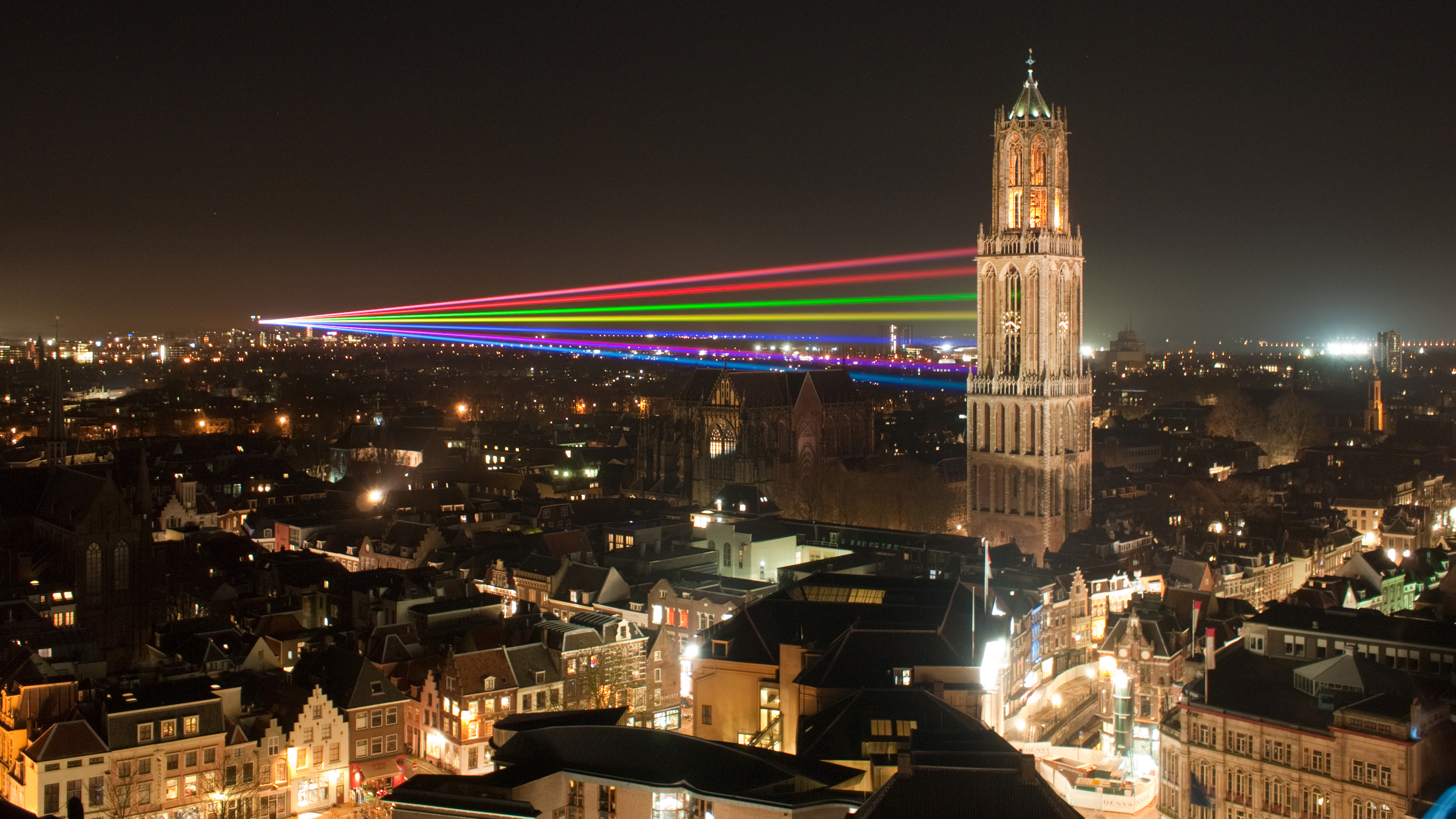
Utrecht
Send it to whoever you'd travel with
Utrecht is the Dutch city that quietly does everything Amsterdam does and a few things it can't — split-level wharf canals you can sit on, the country's tallest medieval tower, a 60,000-student university energy, and a fraction of the tourist crowd.
Utrecht is what Amsterdam looked like before the world arrived. The Oudegracht — the old central canal — has a two-level wharf system unique to the city: a street at upper level and brick wharves at water level, originally for unloading goods directly into cellars, now lined with restaurant terraces. You sit a metre above the water with a beer and watch flat-bottomed boats drift past. No other Dutch city does this.
The Dom Tower rises 112 metres above the medieval centre — the tallest church tower in the Netherlands, separated from its cathedral by a 1674 tornado that nobody quite got around to repairing. The gap between the two halves is now a square. You can climb the tower (465 steps) for views over the city and on a clear day, to Amsterdam. The whole pre-war old town is intact: gabled houses, narrow lanes, hofjes (almshouse courtyards), and Sunday-quiet residential streets.
Utrecht University, founded in 1636, makes this a young city by population. The student population shows up in the bike infrastructure (the largest bike parking facility in the world sits under the station — 12,500 bicycles), the café density, the music scene at TivoliVredenburg, and the casual brilliance of small bars on the Voorstraat. Prices are notably lower than Amsterdam — Utrecht is what you do when you want the Dutch canal-city experience without the Airbnb economy that has hollowed out the capital.
Most international visitors miss it entirely. Utrecht is 30 minutes from Amsterdam Schiphol by direct train and sits at the centre of the Dutch rail network — every direction is easy from here. As a base for a Netherlands trip rather than a stop, it makes more sense than Amsterdam for most people. The argument against it is that there's no single 'wow' building like the Rijksmuseum. The argument for is that Utrecht works as a city and Amsterdam increasingly works as a theme park.
The practical bits.
- Best time
-
April – June · September – OctoberThe wharf terraces along the Oudegracht are the whole point in good weather. May–June and September give the best light and warmest evenings. King's Day (April 27) and the late-September Utrechtse Introductietijd student week both bring city-wide energy.
- How long
-
2 nights recommendedOne night gives Oudegracht walking, Dom Tower climb, dinner on the wharves. Two adds the Centraal Museum, a hofje walk, Rietveld Schröder House. Three lets you use Utrecht as a base and day-trip to Amsterdam, The Hague, or smaller Dutch towns.
- Budget
-
~$160 / day typicalCheaper than Amsterdam by 20%. Mid-range hotels €110–180. Restaurant dinner €30–45pp. A beer on a wharf terrace €5. Bike rental €10/day.
- Getting around
-
Walking and bikingThe old town is small — most of it within a 15-minute walk. Bike rental is cheap and city-appropriate. Buses run by U-OV; trams to Nieuwegein and IJsselstein. Utrecht Centraal is the Dutch rail hub — direct trains to Amsterdam (25 min), The Hague (40 min), Rotterdam (40 min), Schiphol (30 min).
- Currency
-
Euro (€). Cards everywhere; many places card-only.Contactless universal. Visa/Mastercard now broadly accepted. Apple Pay and Google Pay supported.
- Language
- Dutch. English fluency among the highest globally — a student city makes this even more true.
- Visa
- Schengen zone. 90-day visa-free for US, UK, Canadian, Australian passports. ETIAS authorization required from late 2026.
- Safety
- Very safe. Standard awareness around Centraal late at night. The Hoog Catharijne mall area can feel sterile after dark.
- Plug
- Type C / F · 230V — standard European adapter.
- Timezone
- CET · UTC+1 (CEST UTC+2 late March – late October)
A few specific picks.
Hand-picked, not algorithmic. Each of these has earned its space.
The two-level central canal — unique to Utrecht. Street level above, brick wharves at water level lined with restaurant terraces. Sit with a beer at water level on a Friday evening; the whole city seems to be there.
112 metres — the tallest church tower in the Netherlands. Climb the 465 steps (guided tours every 30 min) for views to Amsterdam on a clear day. The tower stands separately from its nave thanks to a 1674 tornado.
Gerrit Rietveld's 1924 De Stijl masterpiece — a UNESCO World Heritage house museum 15 minutes by bus from the centre. The most important small piece of 20th-century Dutch architecture. Pre-book; visits are timed.
Utrecht's main museum — Caravaggisti paintings, the world's largest Rietveld collection, the Dick Bruna (Miffy) gallery, fashion. Underrated and uncrowded.
Archaeological tour beneath the Domplein — visit the Roman fort foundations, the early medieval cathedral, and the 17th-century rubble of the lost nave. Ninety-minute guided experience.
The city's main music venue — five concert halls stacked in one building, programming everything from classical to hip-hop. Architecturally striking and a reliable evening option.
Utrecht has dozens of hofjes — quiet almshouse courtyards tucked behind unremarkable doors. The Pandhof of the Dom (free, attached to the cathedral) is the easiest entry; ask at the tourist office for a hofjes walking map.
Across the street from the Centraal Museum — Dick Bruna's Miffy character was created here, and the museum is built for children under 6. Charming for families; skip otherwise.
Café Olivier is a Belgian beer café in a former clandestine Catholic church — vaulted ceiling, 50 Belgian beers, mussels in season. The Voorstraat behind it is the student bar spine.
Post-industrial west — converted train factories, weekend food markets, the De Stadstuin terraces in summer. Hipster Utrecht. 10 minutes by bike from the centre.
Pick a neighborhood, not a hotel.
Utrecht is a city of neighborhoods. The one you stay in shapes the trip more than the property does.
Different trips for different travelers.
Same city, very different stays. Pick the lens that matches your trip.
Utrecht for amsterdam-avoiders
Same canal city, smaller scale, fewer tourists, lower prices. Many returning Netherlands visitors switch to Utrecht permanently after one Amsterdam trip.
Utrecht for café terrace lovers
The wharf terraces along the Oudegracht are some of the best canal-side café seating in Europe — water level, brick vaults behind you, boats passing. Particularly good May through September.
Utrecht for architecture enthusiasts
Rietveld Schröder House is the De Stijl pilgrimage site. The Dom Tower, the gabled old town, and the post-industrial west add layers. Less monumental than Rotterdam but more varied.
Utrecht for budget travelers
Twenty percent below Amsterdam on hotels and restaurants. The wharf terraces are free to sit on; the old town is free to walk; bike rental is €10/day. Hostel beds from €25.
Utrecht for day-trip base travelers
Utrecht sits at the centre of the Dutch rail network. Every major city is under 45 minutes by direct train. Cheaper to base here than in Amsterdam.
Utrecht for foodies
Karel V for Michelin in a former monastery. Lombok for multicultural cheap eats. The Voorstraat for student-priced bistros. Café Olivier for Belgian beer in a clandestine Catholic church.
When to go to Utrecht.
A quick year at a glance. Great, good, or skip — see what each month is doing before you book.
Quiet. Indoor museum focus. TivoliVredenburg programming strong.
Carnival in the south of the country. Utrecht stays calm.
Wharf terraces start opening cautiously. Days lengthen quickly.
King's Day (April 27) — Utrecht does this exceptionally well. Tulips peaking nearby.
Best spring month. Terraces full, light extending past 9 PM.
Festival season. Park life on the Wilhelminapark. Excellent.
Universities in summer break; city quieter than term-time but still lively.
Locals on holiday. Pleasingly quiet. Good rates.
Students return. City at its energetic peak. UIT introduction week brings street life.
Last good outdoor month. Le Guess Who music festival mid-month.
Indoor month. Sint-Maarten lantern festival evening (Nov 11) charming.
Trajectum Lumen light walk through the old town. Modest Christmas market.
Day trips from Utrecht.
When you want a change of pace. Each one's a half-day or full-day out, easy from Utrecht.
Amsterdam
25 min by trainThe capital is a 25-minute hop. Many travelers base in Utrecht and day-trip the museums of Amsterdam without paying its hotel rates.
The Hague
40 min by trainVermeer's Girl with a Pearl Earring at the Mauritshuis. Add Scheveningen beach in summer.
Rotterdam
40 min by trainCube Houses, Markthal, Erasmus Bridge — entirely different from Utrecht's old centre.
Gouda
20 min by trainThursday morning cheese market April–August. Year-round the Gothic stadhuis on the market square is the draw.
Kinderdijk Windmills
1h 30 min via RotterdamTrain to Rotterdam (40 min), then waterbus to Kinderdijk (50 min). Long day but the classic Dutch landscape.
Kasteel de Haar
30 min by busNeo-Gothic 19th-century reconstruction on medieval foundations. Famously dramatic, surrounded by formal gardens. Half-day.
Utrecht vs elsewhere.
Quick honest reads on the cities people compare Utrecht to.
Amsterdam is the heavyweight — Rijksmuseum, Anne Frank, Vondelpark, mass tourism. Utrecht is the smaller, calmer canal city — wharf terraces, Dom Tower, student energy, 20% cheaper. They're 25 minutes apart and the smart move is both.
Pick Utrecht if: You want canal-city Netherlands without Amsterdam's tourist density.
Leiden is smaller and prettier in a postcard sense — Rembrandt's hometown, canals, very compact. Utrecht is bigger, with the Dom Tower, the wharves, and a more substantial restaurant scene. Leiden is a day; Utrecht is a stay.
Pick Utrecht if: You want a city to base in rather than a town to walk through in an afternoon.
Ghent is Belgian — medieval Gravensteen castle, three church towers in a row, beer culture, harsher and more historic. Utrecht is Dutch — gabled houses, wharf canals, university energy, lighter and more livable. Both two-night cities you should be doing instead of more famous neighbours.
Pick Utrecht if: You want the Dutch canal-city version rather than the Flemish medieval city.
Bruges is the postcard — UNESCO, canals, chocolate, day-tripper crush. Utrecht is the working canal city — student population, wharf terraces, year-round life. Bruges is for two nights; Utrecht for three.
Pick Utrecht if: You prefer a city that has tourists rather than a city that is tourists.
Itineraries you can start from.
Rough shapes for a trip here — a feel for the pace and cost. Find the one that fits you.
Climb Dom Tower, wander the wharves, dinner on the Oudegracht. Late beer at Café Olivier.
Day one: old centre, Dom Tower, wharves. Day two: Rietveld Schröder House, Centraal Museum, dinner in Lombok.
Three nights based in Utrecht with day trips to Amsterdam (25 min), Kinderdijk via Rotterdam, and Gouda. The most efficient Netherlands base if you're not married to Amsterdam.
Things people ask about Utrecht.
Is Utrecht worth visiting?
Yes — it's the best Dutch city most tourists skip. Two-level wharf canals, the country's tallest medieval tower, a major university, and prices 20% below Amsterdam. Two nights is right; three works as a base.
Utrecht vs Amsterdam — which is better?
Utrecht is more livable; Amsterdam is more famous. The canal layout is more interesting in Utrecht (the wharves are unique). Amsterdam has the heavyweight museums. Tourists default to Amsterdam; locals prefer Utrecht. Smart travelers do both.
How many days do you need in Utrecht?
Two nights for the city itself. Three if you want to use Utrecht as a base for day trips to Amsterdam, The Hague, and Kinderdijk — it sits at the centre of the Dutch rail network and every direction is easy.
When is the best time to visit Utrecht?
April–June and September. The wharf terraces are the whole point and they need warm weather. May has King's Day (April 27 — major street party). September is the best month for clear weather and lower hotel prices.
How do I get to Utrecht from Amsterdam?
Direct trains every 10 minutes from Amsterdam Centraal — 25 minutes. From Schiphol airport: 30 minutes direct. Utrecht Centraal is the Dutch rail hub — every line passes through it.
Is Utrecht expensive?
Notably cheaper than Amsterdam — about 20% off on hotels and restaurant prices. Mid-range hotels €110–180. Restaurant dinner €30–45pp. A beer on a wharf terrace €5. Bike rental €10/day.
What's special about the Utrecht canals?
The Oudegracht has a two-level wharf system — a street at upper level, brick wharves at water level, originally for unloading goods directly into cellars. Now the lower wharves are lined with restaurant terraces, so you sit a metre above the water. Unique to Utrecht.
Can I climb the Dom Tower?
Yes — 465 steps to the top, guided tours every 30 minutes. €12.50. On a clear day you can see to Amsterdam. The Dom Tower stands separately from its cathedral thanks to a 1674 tornado that knocked down the nave.
What should I eat in Utrecht?
On the wharves: any of the terraces along the Oudegracht for the view. For something more substantial: Karel V (Michelin in a former monastery), Restaurant Karel Oude Gracht, Le Connaisseur. Café Olivier for Belgian beer in a clandestine church. Lombok for multicultural cheap-eats.
Is Utrecht good as a base for the Netherlands?
Better than Amsterdam for most travelers. Amsterdam (25 min), Rotterdam (40 min), The Hague (40 min), Kinderdijk via Rotterdam (1h 30 min), Gouda (20 min), and Schiphol airport (30 min) are all direct trains. Cheaper accommodation than Amsterdam, more relaxed evenings.
Know someone headed to Utrecht?
Send them this guide — real neighborhoods, timing, and prices, with nothing to sign up for.
Copies the link — nothing to install