Uluru
Send it to whoever you'd travel with
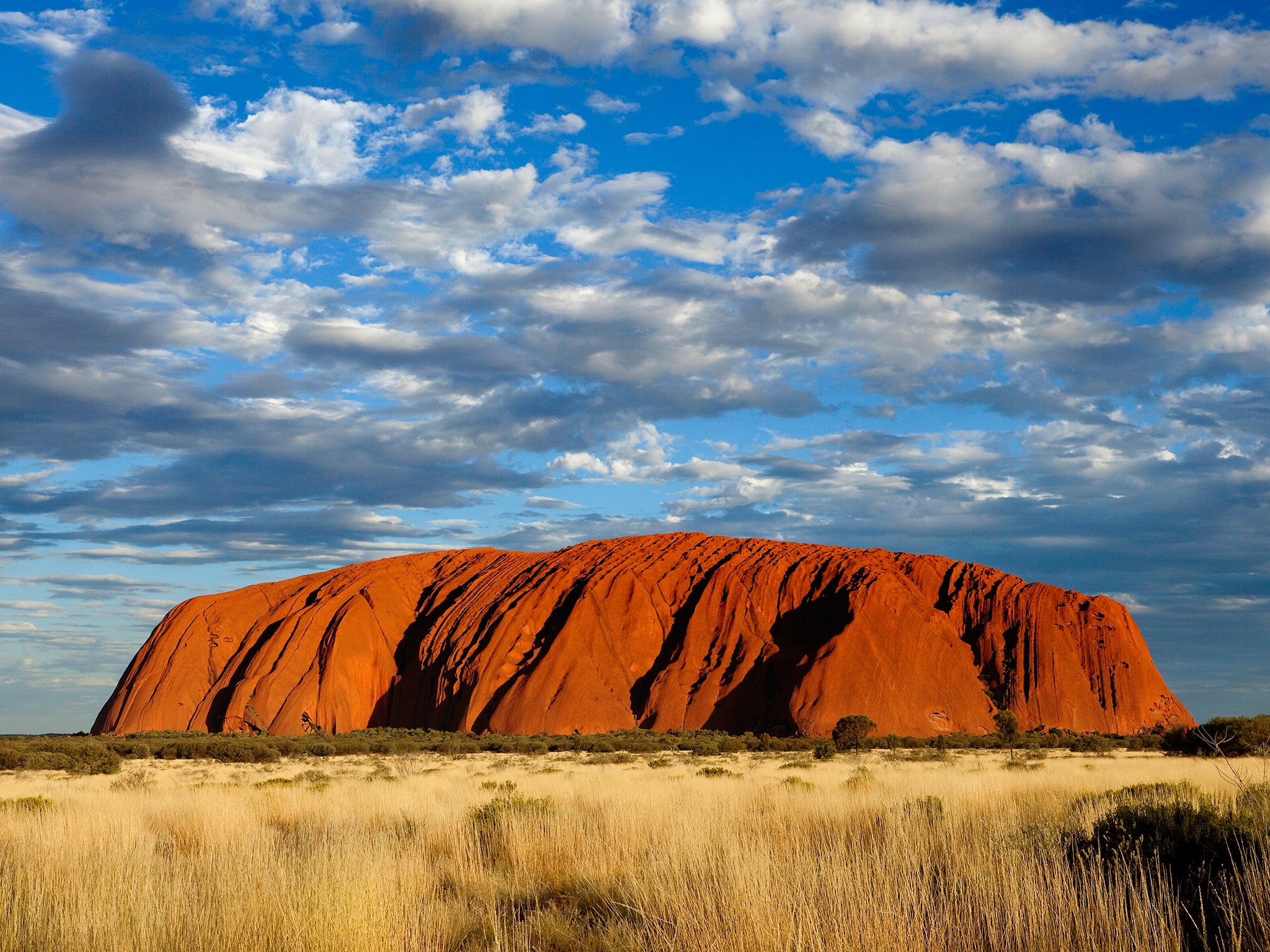
Uluru is a sacred site of the Anangu people that happens to also be the most visually powerful landform in Australia — and since the climbing ban took effect in October 2019, the experience of standing at its base and walking around it is deeper for it.
Uluru is the kind of place where photographs consistently fail. The scale — 348 metres above the plain, 9.4 kilometres in circumference — doesn't translate to a lens. The colour changes — orange at dawn, red-ochre at midday, purple and then fiery vermilion at sunset — are not effects achievable in post-production. And the sense of scale only arrives when you are standing at the base of a vertical sandstone wall that curves away from you in both directions and appears to have grown from the earth itself.
The climbing ban, which took permanent effect on 26 October 2019, changed the site in ways that most visitors find were worth the wait. The Anangu traditional owners had asked visitors not to climb for decades, citing the sacred significance of the route (the Mala people's ancestors ascended the rock along this path during ceremonies the Anangu do not wish to share). The boardwalk and base-walk infrastructure has been significantly improved since then, and the experience of circumnavigating the entire 10.6-km base on foot — with its secret water holes, cave paintings, and rock faces that change character every 100 metres — is now clearly the right way to experience it.
The Field of Light installation by Bruce Munro, first installed in 2016 and now a permanent feature, has added a sunset-to-dawn experience that didn't previously exist. Fifty thousand solar-powered glass spheres bloom in concentric fields around a gentle desert rise at dusk and make the approach to Uluru from the south an extraordinary dual experience — the monolith at sunset, then the glowing field in darkness.
Kata Tjuta — the Olgas — is the other formation 50 km west of Uluru that many visitors underestimate or skip. The 36 domed rock formations, including the Walpa Gorge walk between two of the highest domes, are a different encounter — plural, enveloping, and in the case of the Valley of the Winds walk, genuinely demanding. Most visitors who spend three nights at Yulara find that they wished they'd spent more time at Kata Tjuta and less time managing their sunset viewing spot at Uluru.
The practical bits.
- Best time
-
April – June · August – OctoberThe desert is extreme in summer (December–February), with temperatures regularly exceeding 45°C, causing the park to close some tracks and imposing real risk. April through June and August through October are ideal — 20–28°C days, cold clear nights for the star-gazing experience, and minimal rain. July is peak season: cold nights, clear skies, and all walks fully open, but maximum crowds.
- How long
-
3 nights recommendedTwo nights for the two main sites (Uluru full base walk, Kata Tjuta half day). Three nights allows one sunrise, one sunset, the Field of Light, and the Valley of the Winds walk at Kata Tjuta properly. Four days adds a guided cultural walk and time to process the landscape.
- Budget
-
$280 / day typicalUluru is one of Australia's most expensive destinations in proportion to its size — everything must be shipped in, and there is only one resort complex (Yulara). The entry fee to Uluru–Kata Tjuta National Park is $38 AUD per adult for three days. Budget travelers can stay in hostel-style rooms at the Outback Pioneer Lodge from $50/night.
- Getting around
-
Free shuttle buses within Yulara · hired car for park freedomThe Ayers Rock Resort runs free shuttle buses between accommodation and the major sunrise and sunset viewing areas. Hire cars from the Yulara car rental desks give the most flexibility — particularly for the Kata Tjuta Valley of the Winds walk, which requires an early start (the second lookout closes when temperatures exceed 36°C). No public transport exists within the park.
- Currency
-
Australian Dollar (AUD) · cards universalAll Yulara resort facilities accept cards. The IGA supermarket and the Outback Pioneer Hotel bar are card-friendly. Carry some cash for the Cultural Centre's Maruku Arts store, which sells directly on behalf of Anangu artists.
- Language
- English. Anangu park rangers and cultural guides speak Pitjantjatjara or Yankunytjatjara as first language; the Cultural Centre has bilingual staff throughout.
- Visa
- Electronic Travel Authority (ETA) required for US, UK, Canadian, and most Western passports — $20 AUD online, instant approval.
- Safety
- The main physical hazard is heat. In summer, temperatures above 38°C trigger track closures and a heat advisory from the resort. The Uluru base walk takes 3–4 hours; carry at least 2 litres of water per person and begin before 8 AM in all but the coolest months. Fly nets are useful in certain seasons when bush flies are active.
- Plug
- Type I · 230V — bring an adapter.
- Timezone
- ACST · UTC+9:30 (Northern Territory has no daylight saving)
A few specific picks.
Hand-picked, not algorithmic. Each of these has earned its space.
The 10.6-km circuit around the entire base of Uluru takes 3–4 hours and changes character completely every 200 metres. The Mutitjulu waterhole, the Kantju gorge, and the cave paintings at the western face are the unmissable sections. Walk clockwise from the Cultural Centre car park to end at the Mala walk section in better morning light.
The dedicated sunrise viewing area north of the rock, with tiered terracing and good sightlines. The rock starts grey-blue in pre-dawn darkness and transitions through orange to deep red as the sun climbs. The entire spectrum change takes about 25 minutes. Bring layers — desert mornings are cold enough for a jacket in April–September.
The most-attended single event in the Australian Outback. The western viewing area is the standard sunset spot; the Talinguru Nyakunytjaku area north gives a different perspective. The most dramatic light occurs about 15 minutes before sunset when the rock turns vivid vermilion. Many operators supply complimentary champagne and canapés at dedicated viewing platforms.
Bruce Munro's permanent installation of 50,000 illuminated glass spheres blooming in the desert at dusk. The tour includes a base from which Uluru's silhouette is visible by starlight beyond the lit field. Pre-book through Ayers Rock Resort. A twilight and dawn version is available; both are worth considering over a single-viewpoint sunset.
The 7.4-km Valley of the Winds circuit between the 36 domed formations of Kata Tjuta is the most physically demanding and most rewarding walk in the park. Begin before 8 AM — the second lookout closes at 36°C. The scale of the gorge at the Karingana lookout is unlike anything at Uluru.
The park entry point and cultural introduction, operated with significant Anangu involvement. The Maruku Arts and Crafts section sells authentic Anangu art directly at prices set by the artists. The building's architecture itself — designed by Gregory Burgess with strong Anangu input — is worth 20 minutes of attention.
A 2-km walk along the northern base of Uluru led by Anangu park rangers or cultural guides. The guided format explains the tjukurpa (Dreaming law) associated with specific rock formations and provides context that is impossible to access from signage alone. One of the best-value interpretive walks in Australia.
A formal dinner at a sandstone plinth overlooking the desert with Uluru and Kata Tjuta on the horizon, followed by guided star-gazing with a telescope. The desert sky is extraordinary — 6,000-plus stars visible in the absence of light pollution. Pre-book through Ayers Rock Resort; it sells out daily during peak months.
A shorter and less strenuous alternative to the Valley of the Winds at Kata Tjuta — 2.6 km return through a narrow gorge between two of the highest domes. The scale of the walls above you is the experience. Best in the cooler morning hours.
The Red Centre has some of the darkest skies in the Southern Hemisphere — Uluru sits at the convergence of two global dark-sky corridors. The Milky Way is visible to the naked eye from the hotel lawns on any clear winter night. The Sounds of Silence dinner incorporates a structured version; lying on the desert ground and looking up unguided is equally valid.
Pick a neighborhood, not a hotel.
Uluru is a city of neighborhoods. The one you stay in shapes the trip more than the property does.
Different trips for different travelers.
Same city, very different stays. Pick the lens that matches your trip.
Uluru for cultural and spiritual travelers
The guided Mala Walk and the Cultural Centre are essential. The Maruku Arts section purchases directly support Anangu artists. Allow more time at the base walk than feels necessary — the cave paintings, the weathering patterns, and the changing character of the rock face reward patience. The climbing ban has returned agency to the place.
Uluru for photographers
Dawn and dusk are the only times worth photographing. The blue pre-dawn light on the rock before the colour transitions, and the full vermilion of the last 10 minutes before sunset, are the two target windows. The Field of Light works in long-exposure from the viewing platform. Sunrise at the Talinguru Nyakunytjaku faces east; the rock faces west for sunset light from the western viewing area.
Uluru for couples
The Sounds of Silence dinner is the signature special-occasion experience. A Longitude 131 tented camp stay provides luxury in a location no hotel can match. The Field of Light at dusk followed by the star-gazing session is a non-theme-park evening for two that is difficult to replicate elsewhere in the world.
Uluru for families with older children
Appropriate for children aged 10 and above for the full base walk. Younger children can be carried for sections of the walk. The Cultural Centre is engaging. The Field of Light tour is appropriate for all ages. The Kata Tjuta Valley of the Winds rim walk is appropriate for older teens with regular walking experience.
Uluru for active walkers
The Valley of the Winds circuit at Kata Tjuta (7.4 km, 200m ascent) and the Uluru base walk (10.6 km, flat) on the same day is a full-day undertaking for the fittest visitors. Kings Canyon rim walk adds another full day for a three-night Red Centre circuit.
Uluru for star-gazing enthusiasts
The Red Centre has Bortle Class 1–2 dark skies — the standard ranking for astronomy is 1–9 (darkest to most light-polluted); most metropolitan areas are 8–9. The Milky Way, Magellanic Clouds, and the Coal Sack Nebula are naked-eye visible on any clear winter night. May–August are the best months for both weather reliability and galaxy positioning.
When to go to Uluru.
A quick year at a glance. Great, good, or skip — see what each month is doing before you book.
Track closures at temperatures above 36°C. Very dangerous for the base walk midday. Not recommended.
Same conditions as January. Occasional rain brings brief colour to the desert but heat is the dominant challenge.
Transitional. Some track closures still possible. Better than summer but shoulder-season risks remain.
Very good month. Crowds beginning to build. Full track access. Clear nights for star-gazing.
One of the best months. Nights cold (8–12°C) requiring layers. All walks fully open. Peak crowd arrival begins.
Peak season. Outstanding conditions — nights cold enough for the best star-gazing. Book months ahead.
Maximum crowds, peak prices, best weather. Nights can reach 4°C. Schools holidays (mid-July) at peak.
School holidays ending. Slightly fewer crowds than July. Still excellent conditions.
Very good shoulder month. Warmer than June–August; nights less cold. Good value compared to peak.
Good first half; track closure risk increasing in second half as heat climbs. Finish walks before 9 AM.
Early month is marginal. Second half approaches dangerous territory. Crowd numbers drop.
Christmas at Uluru exists and is quiet — but the heat makes it uncomfortable and potentially dangerous.
Day trips from Uluru.
When you want a change of pace. Each one's a half-day or full-day out, easy from Uluru.
Kata Tjuta Valley of the Winds
50 min by car from YularaAllow a full morning — depart by 7 AM for the Valley of the Winds to guarantee access to both lookouts. The Walpa Gorge walk (2.6 km return) is the shorter alternative if the second lookout has closed due to heat. Both are worth doing on separate mornings if you have three nights.
Uluru Sunrise
30 min by car from YularaThe sunrise viewing area (Talinguru Nyakunytjaku) is north of the rock, with tiered boardwalks and good sightlines. First light arrives 20–30 minutes before the sun appears; the full colour change from grey-blue to orange-red takes 30 minutes after that. Arrive 40 minutes before the published sunrise time.
Kings Canyon (Watarrka National Park)
3h 30m by carThe rim walk (6 km, 2–3 hours) is one of central Australia's best half-day walks — but begins with a steep 30-minute climb and should not be attempted after 9 AM in summer. Kings Canyon Resort has accommodation if making this an overnight rather than a 7-hour round trip from Yulara.
Alice Springs
4h 30m by car or 45 min by planeMost visitors fly Alice Springs to Uluru or reverse. Driving allows stops at the Erldunda roadhouse, the Stuarts Well outback station, and the Henbury Meteorites Conservation Reserve. Alice Springs itself warrants one night for the Desert Park's nocturnal native animal shows and the best Aboriginal art galleries in the Red Centre.
Guided Mala Cultural Walk
On-site at UluruA free ranger-led walk departing from the Mala Walk car park most mornings during the dry season. The 2-km walk covers the tjukurpa associated with the northern rock features and the cave paintings at the Kantju gorge. The only way to properly understand what you are walking past.
Field of Light by Bruce Munro
On-site at Uluru resort areaDepart Yulara 45 minutes before sunset. The installation activates as the sun drops. Viewing platforms provide elevated sightlines over the sphere field with Uluru on the southern horizon. The astronomer-guided telescope session follows. Pre-book through Ayers Rock Resort; peak season tours sell out weeks ahead.
Uluru vs elsewhere.
Quick honest reads on the cities people compare Uluru to.
Kings Canyon is 330 km northeast and is a geologically distinct experience — a sandstone-walled canyon with a 6-km rim walk above the gorge floor. Most three-night Red Centre itineraries include both; they are different enough that neither substitutes for the other. Kings Canyon has no equivalent to Uluru's cultural significance.
Pick Uluru if: You want to combine the world's most sacred Aboriginal monolith with a serious half-day canyon walk on the same Red Centre circuit.
Both sites are within the same national park and a single Uluru–Kata Tjuta park pass covers both. They are not alternatives; Kata Tjuta's Valley of the Winds complements the Uluru base walk as a different kind of scale and physical experience. Visiting only Uluru without Kata Tjuta is the most common regret of Red Centre visitors.
Pick Uluru if: Always visit both — they are 50 km apart and offer genuinely complementary landscape experiences.
Monument Valley is a Navajo Nation landscape with entirely different geology and cultural heritage. Both are sacred sites on Indigenous land. Uluru is a single monolith of singular scale; Monument Valley is a cluster of sandstone buttes with a different visual character. No reasonable direct comparison exists.
Pick Uluru if: You want the Southern Hemisphere's most significant Aboriginal sacred site in the world's most remote desert landscape.
Alice Springs is a regional town 460 km north — the functional base for Red Centre activities including Uluru day trips, Kings Canyon, and the Aboriginal art galleries. Uluru is the site; Alice Springs is the access hub. The two are paired on most Red Centre itineraries.
Pick Uluru if: Uluru is the destination; Alice Springs is the departure airport. Visit both on any Red Centre trip.
Itineraries you can start from.
Rough shapes for a trip here — a feel for the pace and cost. Find the one that fits you.
Arrive afternoon, sunset viewing, star gazing. Full base walk at dawn next day. Kata Tjuta Walpa Gorge afternoon. Sunset dinner at a viewing platform. Fly out morning of day three.
Sunset and Field of Light on arrival evening. Dawn base walk next morning. Valley of the Winds at Kata Tjuta on day two (early start). Cultural Centre and guided Mala Walk. Sounds of Silence dinner. One final sunrise before departure.
Three nights Yulara covering Uluru base walk, Kata Tjuta Valley of the Winds, Field of Light, guided cultural walk, and Sounds of Silence dinner. Drive or fly to Alice Springs for one night — Alice Springs Desert Park and the Araluen Cultural Precinct before flying on.
Things people ask about Uluru.
Can you still climb Uluru?
No. The Anangu traditional owners requested that visitors not climb Uluru for decades, citing the route's sacred significance in their Tjukurpa (Dreaming law). The permanent climbing ban took effect on 26 October 2019. The chain and anchor infrastructure has been removed. The base walk and all surrounding walks remain open; the experience at ground level is considered by most visitors to be richer than the climb ever was.
When is the best time to visit Uluru?
April through June and August through October are the ideal windows — 20–28°C days, cold clear nights (perfect for star-gazing), and all walks fully open. July is peak season with the best weather but maximum crowds. Summer (December–February) regularly reaches 45–50°C, causes track closures, and is genuinely dangerous without extreme precautions. The desert in winter (June–July) can drop to 4–8°C before dawn — bring a warm layer for sunrise.
How do I get to Uluru?
The Ayers Rock Airport (Connellan Airport) is 5 km from Yulara and receives direct flights from Sydney, Melbourne, Brisbane, and Alice Springs. Qantas, Jetstar, and Virgin Australia serve the route. The alternative is self-driving from Alice Springs — 460 km, 4.5 hours on the Stuart and Lasseter Highways, feasible in a 2WD conventional car.
What is the Field of Light installation?
A permanent outdoor light installation by British artist Bruce Munro, consisting of 50,000 illuminated glass spheres on slender stems planted across a desert plain, with Uluru visible as a silhouette on the southern horizon. The spheres change colour slowly through the night. Tours depart from the resort at dusk and include a viewing platform with telescope access. Pre-booking through Ayers Rock Resort is essential.
What is Kata Tjuta and should I visit?
Kata Tjuta (meaning 'many heads') is a group of 36 large dome-shaped rock formations 50 km west of Uluru, reaching 546 metres above the plain — higher than Uluru. The Valley of the Winds walk (7.4 km circuit) between the highest domes is the most dramatic walk in the park and arguably more scenically varied than the Uluru base walk. Most visitors who skip it or spend only 30 minutes there regret it.
Why is climbing Uluru banned and why does it matter?
The Uluru climbing route follows the path that Mala ancestral beings took during their arrival at the site in the Tjukurpa, Anangu Law. The Anangu requested visitors not to climb from 1985, when they regained ownership of the land, because the route holds deep spiritual significance they did not wish to share with visitors for recreational purposes. The ban formalised a 34-year request. For visitors, understanding the reason changes the experience of standing at the base — it is a site of lived religious significance, not a geological curiosity.
How long does the Uluru base walk take?
The full circumnavigation (10.6 km) takes 3–4 hours at a moderate pace. The path is flat and largely compacted dirt with one brief steep section; it is not technically demanding but requires adequate water in warm months. A 2-litre minimum per person is the recommendation for temperatures above 25°C. Begin before 8 AM in summer months to finish before the heat peaks.
Is Uluru worth the expense?
Yes, for most travelers. The site is genuinely extraordinary at ground level and the combination of the base walk, the cultural walks with Anangu guides, the Field of Light, and the night sky makes three nights feel substantive rather than thin. The distance and cost are the barriers; for travelers who have come to Australia and are willing to make the Red Centre journey, the regret rate for skipping it is notably high.
What is Yulara and what accommodation is there?
Yulara is the self-contained resort complex 20 km from Uluru, operated by Ayers Rock Resort. The accommodation range runs from hostel-style dormitories at the Outback Pioneer Lodge ($50–70/night) through mid-range rooms at the Desert Gardens and Sails in the Desert hotels ($200–350) to the luxury Longitude 131 tented camp ($1,500–2,500 per couple per night). There is no other accommodation within 250 km.
What is the Sounds of Silence dinner?
A formal outdoor dinner experience on a sandstone platform in the desert, with views toward Uluru and Kata Tjuta on the horizon. After dinner, an astronomer gives a structured 45-minute star-gazing session with a telescope. The desert sky in the absence of light pollution is remarkable — 6,000-plus stars and the Milky Way clearly visible. Costs $235 AUD per adult; pre-book months ahead for June–September.
What should I pack for Uluru?
Sun protection is non-negotiable — the desert UV is extreme year-round. Pack SPF 50 sunscreen, a wide-brim hat, long sleeves for the midday sun, and two litres of water per person for any walk. Mornings and evenings in winter (May–August) require a genuine warm layer — desert night temperatures drop to 5–10°C. Walking shoes (not thongs) for the base walk. A headlamp for the Field of Light tour.
Is the star-gazing at Uluru as good as people say?
Better than most people expect. The Red Centre sits within one of the darkest zones in the Southern Hemisphere — no city within 450 km. On a clear winter night from the resort lawns, the Milky Way is visible as a dense luminous band, and 6,000–7,000 individual stars are resolvable by naked eye. The Southern Cross, Magellanic Clouds, and the Coal Sack Nebula are all visible without equipment. The Sounds of Silence telescope session adds structured context.
What is the Valley of the Winds walk at Kata Tjuta?
A 7.4-km circuit through the interior of the Kata Tjuta dome complex, gaining 200 metres in elevation through narrow gorges and open saddles between the highest formations. The Karingana Lookout at the circuit's high point looks down into a bowl of domed rock. The second viewpoint (Karu) closes when temperatures exceed 36°C; begin by 7 AM in summer to guarantee access to the full circuit. Allow 3–4 hours.
How cold does it get at Uluru in winter?
Nights in June and July frequently drop to 4–7°C; the record low at Yulara is -6°C. Dawn at the sunrise viewing area feels genuinely cold in these months — visitors in shorts and T-shirts are unprepared. Days are clear and pleasant at 20–22°C. The cold is a feature, not a problem, for the star-gazing experience: cold clear desert nights with no humidity produce the best seeing conditions.
Can I photograph Uluru?
Photography of the landscape is entirely permitted from public areas and viewing platforms. The Cultural Centre and various Anangu-managed areas have signage indicating restricted-photography zones, specifically areas of cultural sensitivity including certain cave painting sections and the Mutitjulu Waterhole surrounds. Always follow the on-site guidance. Commercial drone photography requires a National Parks permit.
What is the best way to experience Uluru as an Anangu cultural site rather than just a landscape?
Book the guided Mala Walk (free, ranger-led, morning departure from the Mala Walk car park) or the Kuniya Walk (shorter, self-guided with ranger interpretation at key points). The Cultural Centre adjacent to the base walk start is well-designed with significant Anangu input — allow 40 minutes. The Maruku Arts section sells direct from Anangu artists and the purchases support the community. Read the publicly available tjukurpa summaries about specific rock formations before walking the base.
What else is in the Red Centre near Uluru?
Kings Canyon (Watarrka National Park) is 330 km northeast — the 6-km rim walk above a sandstone gorge is one of the great walks in central Australia, passable in a conventional 2WD on sealed road. Alice Springs is 460 km north — the Alice Springs Desert Park and the Araluen Cultural Precinct have strong Aboriginal art collections. Both are typically visited on a three-to-four-day Uluru road trip connecting with an Alice Springs departure.
Know someone headed to Uluru?
Send them this guide — real neighborhoods, timing, and prices, with nothing to sign up for.
Copies the link — nothing to install