Saint-Malo
Send it to whoever you'd travel with
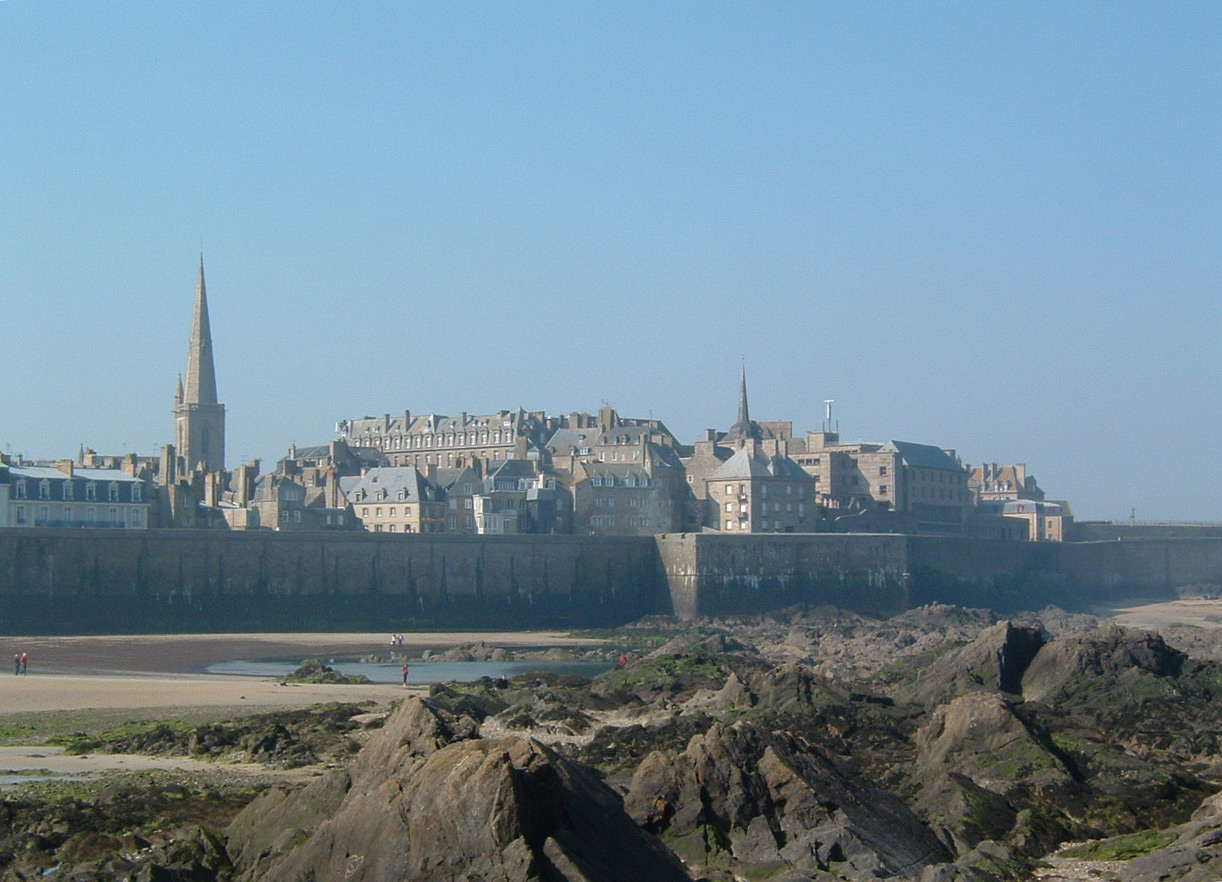
Saint-Malo is Brittany's granite walled city — a corsair capital rebuilt stone by stone after 1944, where the tidal sea walls define the daily rhythm and the oysters of Cancale are 15 minutes east.
Saint-Malo was bombed to near total destruction in August 1944 during the Allied siege of its German garrison. What stands today within the walls is a faithful reconstruction — by 1960, 80% of the intra-muros had been rebuilt stone by stone using original granite, following pre-war plans with obsessive accuracy. The result is a fortified city that looks ancient but is in many places only sixty years old, a fact that most visitors never suspect. The reconstruction is so seamless that UNESCO considers it a success story rather than a falsification.
The walls themselves are the experience. The rampart walk circumnavigates the intra-muros in 45 minutes, with the sea on the northern and eastern sides, the tidal harbour to the south, and the Rance estuary visible to the west. At high tide, the Atlantic breaks directly against the base of the walls on the north face; at low tide, the beaches stretch several hundred metres. The tidal range here runs to 12 metres at grande marée — the difference between high and low tide is visible on the walls' stone face as a dark waterline.
The city's history is genuinely extraordinary. The corsairs — licensed privateers operating under the French crown — made Saint-Malo fabulously wealthy through three centuries of raiding English, Dutch, and Portuguese shipping. Jacques Cartier sailed from the harbour to discover Canada. Robert Surcouf terrorised the East India Company. The explorer Mahé de la Bourdonnais governed Mauritius. The writer Chateaubriand is buried on the Grand Bé tidal island, accessible at low tide by walking across the sand.
The modern Saint-Malo beyond the walls is a working port city — ferries to the Channel Islands (Jersey, Guernsey) and the UK (Poole, Portsmouth) run from the ferry terminal east of the city. The ferry terminal and the industrial port are not beautiful, but they connect Saint-Malo to something wider. The best evening strategy is the simplest: walk the ramparts at dusk, then find a table at a crêperie in the winding streets of the intra-muros and order cider and galettes.
The practical bits.
- Best time
-
May – SeptemberThe tides and sea walls are dramatic year-round, but summer brings warmer days for beach use, sailing in the estuary, and the full restaurant calendar. The Festival Étonnants Voyageurs (travel literature, May) and the Route du Rhum yacht race (October, every 4 years) are the headline events. Spring and early autumn avoid summer crowds.
- How long
-
2 nights recommended1 night covers the ramparts and dinner. 2 nights adds Cancale and the Cézembre island boat. 3–4 nights allows ferry day trips to Jersey or a coastal Côte d'Émeraude drive.
- Budget
-
$195 / day typicalSaint-Malo is moderately priced for French coastal tourism. Intra-muros hotels command a premium for the rampart proximity. Galette-crêpe meals run €12–18; restaurant fish menus €25–45. The ferry to Jersey (from €50 return) is the main optional added cost.
- Getting around
-
Walking within walls + bus or car outsideThe intra-muros is entirely walkable — no cars within. Parking is in the large car park at the city gate (Porte Saint-Vincent) or the esplanade along the south wall. The town of Saint-Malo outside the walls requires a bus or car. Cancale is 15 minutes by car. Mont-Saint-Michel is 45 minutes.
- Currency
-
Euro (€) · widely acceptedCards accepted everywhere including most crêperies and oyster stands. Carry €20 cash for market purchases and the Cézembre boat.
- Language
- French. English is spoken in hotels, many restaurants, and at the ferry terminal. Breton cultural identity is strong — you may see Breton signage alongside French.
- Visa
- EU Schengen. Visa-free 90 days for US, UK, Australian, and most Western passports. ETIAS required from late 2026.
- Safety
- Very safe. The tidal risk is the primary safety consideration: Chateaubriand's Grand Bé island and some tidal beaches become isolated at high tide — check the tidal schedule before crossing.
- Plug
- Type E · 230V — standard French plug.
- Timezone
- CET · UTC+1 (CEST UTC+2 late March – late October)
A few specific picks.
Hand-picked, not algorithmic. Each of these has earned its space.
The 45-minute circuit of the medieval walls offers sea views on three sides and the tidal harbour on the fourth. Best at dusk or high tide when the Atlantic breaks directly against the north face. Free to walk.
Reachable at low tide by crossing the sand from the Plage de l'Eventail. Chateaubriand's tomb is here — a simple stone slab on a granite promontory with sea views. Check tidal times carefully before crossing.
The Pointe de la Chaîne market sells oysters directly from the farming families — a dozen for €6, eaten standing at the sea wall. Cancale supplies much of France's restaurant trade; these are as fresh as it gets.
The long sandy beach stretching east from the city walls — popular in summer, dramatic at high tide when the sea wall separates the beach from the city. Swimming is safe; the long promenade walk is excellent at any season.
The city history museum in the castle keep near the main gate covers the corsair era, Jacques Cartier, and the 1944 reconstruction in detail. Particularly good on the post-war rebuilding story.
A small island 5 km offshore with a sandy beach, no permanent inhabitants, and a German WWII bunker (still radioactive at its centre). Seasonal boats from the harbour run in summer. Clear water, no crowds after July.
The 12th–16th century cathedral where Jacques Cartier was blessed before sailing for Canada in 1534. Partly Romanesque, partly Gothic, with a beautiful rose window. The façade was reconstructed post-war.
Buckwheat galettes (savoury) with Gruyère, ham, and egg; sweet crêpes with salted caramel — the Breton classics. Crêperie la Brigantine and Crêperie de Pico are consistently recommended. Order local Breton cider alongside.
The main gateway into the walled city — double drawbridge, 17th-century construction, and the view back from the gate to the intra-muros skyline. The obvious orientation point for any visit.
A 17th-century fort designed by Vauban, accessible at low tide on foot across the rocks. Guided tours explain the corsair defence of the harbour. Only open in summer; check tidal access times.
Pick a neighborhood, not a hotel.
Saint-Malo is a city of neighborhoods. The one you stay in shapes the trip more than the property does.
Different trips for different travelers.
Same city, very different stays. Pick the lens that matches your trip.
Saint-Malo for history and maritime travelers
The corsair era, Jacques Cartier, the 1944 bombing and reconstruction, and the medieval fortifications give Saint-Malo exceptional historical content. The city museum in the castle keep is the best introduction.
Saint-Malo for food lovers
Breton galettes and crêpes, Cancale oysters, fresh Atlantic fish, salted Breton butter, and kouign-amann make Saint-Malo one of the best food destinations on the French Atlantic coast.
Saint-Malo for couples
Rampart walk at dusk, high-tide waves against the north wall, galette dinner in a cobbled alley, and a ferry morning to Jersey. Saint-Malo has genuine romance that doesn't require planning.
Saint-Malo for families with children
Beach, tidal island exploration, fort access, the Cézembre island boat, and the corsair history all work well for children. The car-free intra-muros is safe and endlessly explorable.
Saint-Malo for sailors and ferry travelers
The harbour and marina have a working maritime culture. Brittany Ferries connects to Poole and Portsmouth. Condor Ferries to Jersey and Guernsey. The Route du Rhum race start (every 4 years) is a genuine spectacle.
Saint-Malo for budget travelers
Saint-Malo is accessible budget territory by French standards. Hotels outside the walls from €80. A galette dinner with cider costs €20. Cancale oysters are €6 a dozen. The rampart walk is free.
When to go to Saint-Malo.
A quick year at a glance. Great, good, or skip — see what each month is doing before you book.
The coast at its most Atlantic. Empty city, dramatic winter tides. Most crêperies open; some tourist services closed.
Still quiet. February equinoctial tides can be dramatic — grandes marées above coefficient 100. School holidays create brief midweek crowds.
Spring equinox tides are some of the year's best. The city starts reopening for the tourist season.
Easter weekend brings crowds; otherwise April is excellent. Good light, manageable visitor numbers, all crêperies open.
Étonnants Voyageurs literary festival at Pentecost. One of the best months — pleasant weather, not yet peak crowds.
Summer season beginning. Cézembre island boats start. Still manageable crowds before July.
Busiest month. Beaches full, restaurants crowded, intra-muros dense. Book hotels months ahead. The city handles it well.
Peak of French school holidays. Very crowded. Ferries to Jersey full. The beaches and tidal atmosphere remain excellent.
Excellent month — summer warmth, lower crowds, autumn tides beginning. September equinoctial tides are spectacular.
Very pleasant for walking the coast and coast. Route du Rhum race departure (every 4 years) is extraordinary if timed correctly.
Off-season. Ferry service to Jersey reduced. Crêperies and hotels open; tourist numbers minimal. Authentic city atmosphere.
Christmas week brings some visitors. Otherwise very quiet and atmospheric — the walled city in winter light is beautiful.
Day trips from Saint-Malo.
When you want a change of pace. Each one's a half-day or full-day out, easy from Saint-Malo.
Cancale
15 min by carThe Pointe de la Chaîne oyster market is the main draw — a dozen oysters for €6–8 eaten standing. The coastal walk east toward the Pointe du Grouin is excellent.
Mont-Saint-Michel
45 min by carThe most popular day trip from Saint-Malo. Better done as an overnight to experience the dawn atmosphere. Check the tidal schedule for a grande marée crossing.
Jersey, Channel Islands
1 hr 10 min by ferryCondor Ferries runs seasonal fast ferries. Jersey is distinctly different from Brittany — English-speaking, separate tax jurisdiction, excellent seafood. Passport required.
Dinan
1 hr by roadOne of the best-preserved medieval towns in Brittany — cobbled streets, timber-framed houses, and a 14th-century castle. Very different from Saint-Malo's coastal character.
Dinard
15 min by ferry across the RanceThe small ferry across the Rance estuary to Dinard runs regularly in summer. The resort has a Victorian character — British holidaymakers settled here in the 19th century, and the Belle Époque villas are well-preserved.
Cap Fréhel
1 hr by carThe highest point of the Côte d'Émeraude — pink granite cliffs above the Atlantic, a working lighthouse, and gannet colonies on the offshore rock stacks. One of Brittany's most dramatic coastal landscapes.
Saint-Malo vs elsewhere.
Quick honest reads on the cities people compare Saint-Malo to.
Mont-Saint-Michel is a singular tidal island monument; Saint-Malo is a liveable walled city with restaurants, beaches, and a working port. Saint-Malo is better for a 2-night stay; Mont-Saint-Michel for a single overnight.
Pick Saint-Malo if: You want a city with restaurants, beaches, and coastal activities rather than a pure monument visit.
Honfleur is a smaller, more picturesque Norman harbour with a strong Impressionist art heritage. Saint-Malo is larger, more dramatic coastally, and has the walled city character. Both are excellent; Saint-Malo has more to do.
Pick Saint-Malo if: You want the corsair history, Cancale oysters, and Channel Islands ferry access.
Dinard is directly across the Rance — a Victorian resort with Belle Époque villas and a gentler character. Saint-Malo has the historical depth and the better food scene. They are better visited together than chosen between.
Pick Saint-Malo if: You want the medieval walled city rather than a Victorian resort — though a short ferry gets you both.
Dinan is an inland medieval town on the Rance — cobbled streets, timber frames, and a well-preserved medieval quarter. Saint-Malo is the coastal counterpart. Both are in Brittany; combine them rather than choosing.
Pick Saint-Malo if: You want the sea, the tides, and the Cancale oysters over a medieval inland town.
Itineraries you can start from.
Rough shapes for a trip here — a feel for the pace and cost. Find the one that fits you.
Day 1: Rampart walk at high tide, Grand Bé at low tide, galette dinner intra-muros. Day 2: Morning drive to Cancale oysters, afternoon Cézembre island boat.
Add a Mont-Saint-Michel overnight (45 min away) on night 3. Cover the tidal island at dawn before driving back for a final dinner in the intra-muros.
2 nights in Saint-Malo, 1 night on Jersey by ferry, 1 night return. Jersey adds cliff walks, Liberation Square, and a different English Channel perspective.
Things people ask about Saint-Malo.
What is Saint-Malo known for?
Saint-Malo is the walled corsair city of Brittany — a granite-fortified port that was the base for licensed privateers who raided foreign shipping for the French crown from the 16th to 18th centuries. Jacques Cartier sailed from here to discover Canada in 1534. The city was rebuilt after 1944 bombing with remarkable fidelity to its pre-war appearance.
Is Saint-Malo worth visiting?
Yes, particularly if you combine it with Cancale and Mont-Saint-Michel nearby. The intra-muros rampart walk, the tidal beach dynamics, the Breton food culture, and the corsair history give Saint-Malo a distinct character among French coastal cities. Two nights is the sweet spot — enough to absorb the walls and the surrounding bay.
How do you get to Saint-Malo?
By train: TGV from Paris Montparnasse to Rennes (1h 30m), then regional train to Saint-Malo (1h). Total: 2h 30m from Paris. By car from Paris: approximately 4 hours on the A11. Brittany Ferries runs overnight services from Poole (7h) and Portsmouth (9h). The ferry approach is particularly atmospheric.
What is the best thing to do in Saint-Malo?
Walk the ramparts at dusk or high tide. The 45-minute circuit around the intra-muros walls with the Atlantic on the north and the harbour on the south is the quintessential Saint-Malo experience. At high tide on a windy day, waves break against the north face and spray crosses the walkway — worth planning around the tidal schedule.
Can you swim at Saint-Malo?
Yes — Plage du Sillon east of the city is the main beach, a long sandy curve safe for swimming in summer. The water is Atlantic — cooler than Mediterranean beaches, averaging 18–20°C in July and August. The tidal range creates dynamic conditions; check the tidal schedule for the best swimming windows around high tide.
What are the Cancale oysters and how do you eat them?
Cancale, 15 minutes east of Saint-Malo, is the source of some of France's finest flat oysters (Belons) and the standard curved huîtres plates. At the Pointe de la Chaîne market, oysters are sold directly from the farming families for €6–8 per dozen. You eat them standing at the sea wall looking out at the oyster beds. A slice of buttered rye bread and a glass of muscadet is optional but correct.
What is Grand Bé island?
Grand Bé is a tidal island north of the city walls, accessible on foot across the sand at low tide. The writer Chateaubriand, born in Saint-Malo, is buried there — a simple slab over a granite promontory. The island takes about 20 minutes to walk to and back from the beach. Check the tidal schedule carefully; the island becomes isolated within 30 minutes of the rising tide.
How far is Saint-Malo from Mont-Saint-Michel?
45 minutes by car (55 km). This makes Saint-Malo the most convenient base for a Mont-Saint-Michel overnight — most travelers do one night in each. The coastal road via Cancale and the bay is more scenic than the inland route. Bus connections also exist but are slower.
Can you take a ferry from Saint-Malo to the Channel Islands?
Yes — Condor Ferries runs from Saint-Malo to Jersey (1h 10m by fast ferry) and Guernsey (2h 40m). Seasonal service April to October. The Channel Islands connection is one of Saint-Malo's natural extensions — Jersey in particular makes an excellent day trip or overnight. Passports required (Jersey and Guernsey are British Crown Dependencies, not EU).
What is the best food to eat in Saint-Malo?
Buckwheat galettes with local andouille (Breton sausage), Gruyère, and egg — washed down with Breton cidre. Oysters from Cancale. Grilled fish and langoustines at the harbour restaurants in Saint-Servan. Salted-butter caramel crêpes. Kouign-amann (the Breton butter cake) from any bakery. The food culture is distinctly Breton rather than Parisian French.
Is Saint-Malo suitable for families?
Yes. The beach, the rampart walks, the tidal island exploration, and the ferry to Jersey all work well for children. The corsair history with the city museum engages older children. The intra-muros streets are car-free and safe for children to walk freely. The Cézembre island boat in summer is a favourite for children.
What is the Festival Étonnants Voyageurs?
The Festival Étonnants Voyageurs (Astonishing Travellers) is an annual travel literature and world fiction festival held in Saint-Malo over the Pentecost weekend in May. One of France's major literary events, it draws French and international travel writers, novelists, and adventurers. It fits Saint-Malo's corsair-explorer identity well.
How do you get around inside the walled city?
Entirely on foot — no cars operate within the intra-muros. The walled city is compact: walking from the main gate (Porte Saint-Vincent) to the furthest point takes about 15 minutes. Tidal timing matters more than transport — check whether low tide coincides with when you want to reach Grand Bé or Fort National.
What is the Fort National and how do I visit it?
Fort National is a 17th-century fortification designed by Vauban on a tidal rock north of the city walls — visible from the ramparts. It is accessible on foot at low tide. Guided tours run in July and August. The walk across the rocks requires reasonable footwear — the surface is uneven and slippery at the tidal margin.
Is Saint-Malo expensive?
Moderately priced for French coastal tourism. Hotels within the walls cost €120–250/night depending on season; mainland hotels €80–140. Galette meals run €12–18 per person with cider; restaurant fish menus €25–40. The main premium is accommodation proximity to the walls. Cancale oysters are excellent value compared to what they cost at Paris restaurants.
What is the Route du Rhum yacht race?
The Route du Rhum is a solo transatlantic yacht race from Saint-Malo to Guadeloupe, held every four years (2022, 2026...). Race start brings hundreds of thousands of spectators to the harbour area. If your visit coincides with a race start — typically in early November — it is one of the great maritime spectacles in France.
What should I pack for Saint-Malo?
A windproof rain jacket regardless of season — the Atlantic coast is exposed and the weather changes quickly. Comfortable walking shoes with grip for the ramparts and rocky tidal surfaces. A mid-layer even in summer, particularly for evening rampart walks. Tide table: download the Maree app or check the Saint-Malo port authority tide schedule.
Know someone headed to Saint-Malo?
Send them this guide — real neighborhoods, timing, and prices, with nothing to sign up for.
Copies the link — nothing to install