Zakopane
Send it to whoever you'd travel with
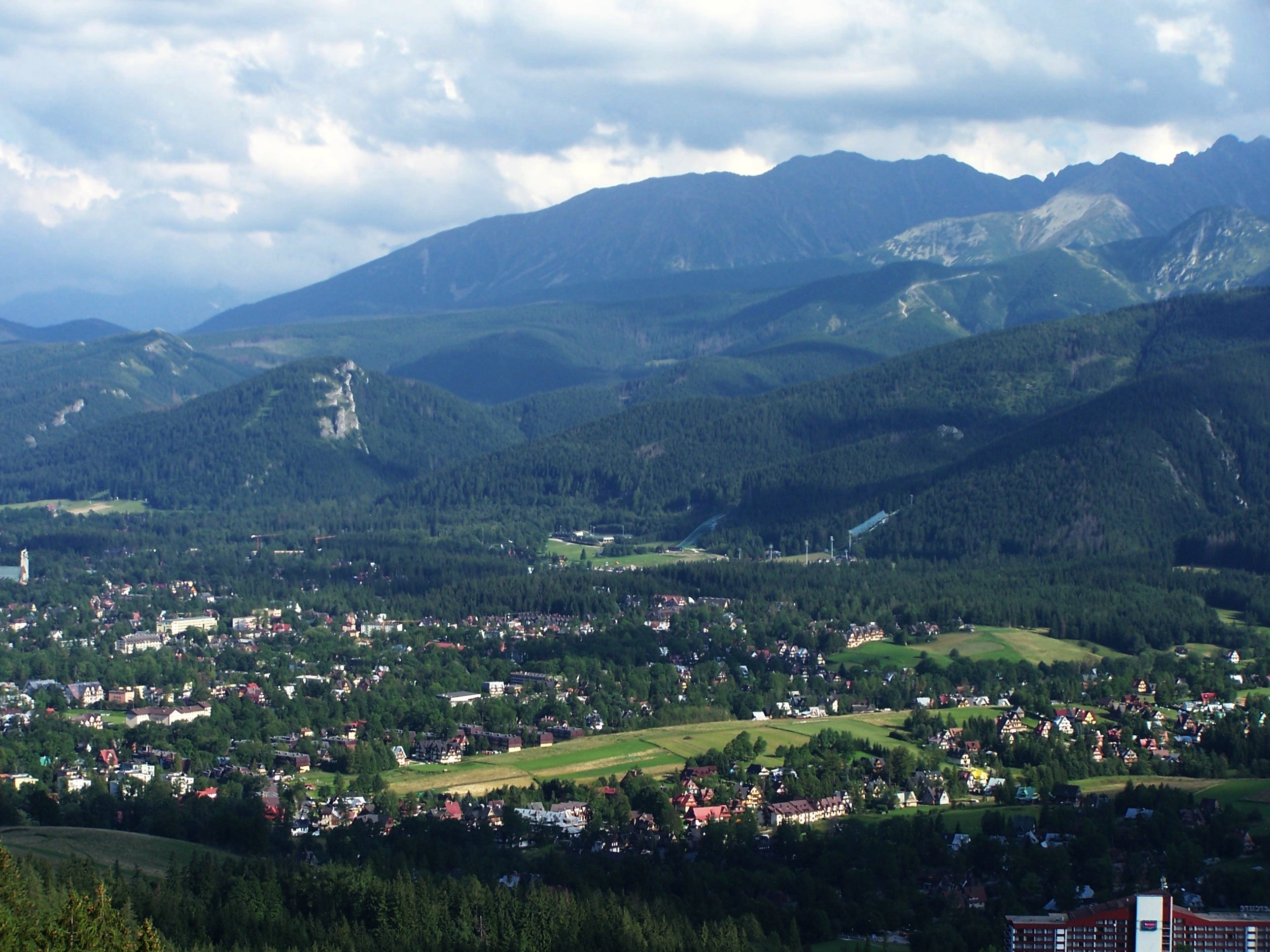
Zakopane is Poland's mountain capital — at the foot of the High Tatras, packed with hikers in summer, skiers in winter, and the kind of thermal bath and smoked-cheese culture that makes a rest day between trail days feel genuinely earned.
Zakopane sits at 800 metres above sea level in the Podhale valley, backed by the dramatic limestone peaks of the High Tatras. It's been Poland's official mountain capital since the 19th century, when Warsaw intellectuals discovered it and the highlander (góral) culture — wooden architecture, embroidered folk dress, distinctive music, and smoked oscypek cheese — became fashionable. The tourist infrastructure is now firmly established: two cable cars, a gondola to Kasprowy Wierch (1,987m), a ski area, thermal baths, and a pedestrian street (Krupówki) lined with regional food stalls and souvenir shops of varying authenticity.
The hiking is the genuine draw. Morskie Oko — a glacial lake at 1,395m at the end of a 9km paved valley road — is the most visited trail in Poland for good reason: the lake is extraordinary, ringed by 2,000m peaks. Kasprowy Wierch (cable car or 4-hour trail ascent) gives access to the Tatras ridge with views into Slovakia. The Dolina Kościeliska valley is the family-friendly alternative — a wide limestone gorge with waterfalls and caves accessible for all fitness levels. For experienced hikers, the ridge traverse from Kasprowy to Giewont (the distinctive 1,895m peak with the steel cross) is the classic Zakopane full day.
The thermal baths (Terma Bania in Białka Tatrzańska, 20 minutes from Zakopane, or Aqua Park Zakopane in town) provide the essential recovery option after serious hiking days. The concept of a Polish mountain town with geothermal pools — warm water, mountain views, the smell of pine — is one of the more genuinely pleasant experiences in the region.
Zakopane has a significant accommodation range from budget mountain hostels (schronisko górskie) in the Tatras themselves to mid-range guesthouses (pensjonaty) and a few upmarket hotels. The town itself is slightly commercial but the mountains are always five minutes away. Krupówki pedestrian street is touristy; the góral food stalls serving oscypek, kiełbasa, and żurek are the honest version of the local culture.
The practical bits.
- Best time
-
June – September (hiking) · December – March (skiing)Hiking season runs mid-June to mid-September — trails below snowline open June, upper Tatras trails in late June. September is the best hiking month: autumn colours, smaller crowds than July–August, still good weather. Skiing is December–March (snow-dependent). Avoid late October–November and April–May: trails icy or muddy, ski lifts closed.
- How long
-
4 nights recommendedTwo nights: Morskie Oko hike and Kasprowy cable car. Four nights: add Dolina Kościeliska, Giewont summit, and thermal baths. Seven nights: serious multi-day hiking in the Tatras with mountain hut stays (schronisko).
- Budget
-
~$110 / day typicalModerate for Poland. Pensjonat rooms €40–70/night. Restaurant meals PLN 40–80 (€9–18). Tatra National Park entry: 10 PLN (€2.50) adults. Cable car: PLN 80–90 return (€18–20). Bus from Kraków: PLN 20–30 (€5–7).
- Getting around
-
Bus from Kraków + local PKS busesZakopane has no train station (the main train line bypasses it). Bus from Kraków central bus station runs every 30–60 minutes, taking 2h (PLN 20–30). PKS buses from Zakopane connect to Morskie Oko starting point (Palenica Białczańska, 30 min). Dolina Kościeliska: local bus 15 min. A car is helpful for flexibility but parking can be challenging in summer.
- Currency
-
Polish zloty (PLN). €1 ≈ 4.30 PLN. Poland is NOT in the Eurozone. Cards accepted widely; cash useful for smaller mountain stalls and some trail cafés.Cards and contactless standard at most businesses. Cash for trail-side food stalls, some mountain huts, and smaller pensjonaty.
- Language
- Polish. English spoken well in the tourist center (Krupówki area) and at most accommodation. Góral dialect is distinctive from standard Polish — locals use it with pride.
- Visa
- Poland is in Schengen. US, UK (visa-free), Canadian, and Australian passport holders enter Schengen visa-free for 90 days. ETIAS required from late 2026.
- Safety
- Very safe. Mountain safety is the primary concern — weather in the Tatras changes rapidly. Check TOPR (Tatra Volunteer Mountain Rescue) conditions before attempting ridge routes. Thunderstorms develop quickly in summer afternoons; start ridge hikes by 7–8 AM. Mountain rescue services are well-organized (TOPR operates 24h).
- Plug
- Type C / F · 230V
- Timezone
- CET · UTC+1 (CEST UTC+2 summer)
A few specific picks.
Hand-picked, not algorithmic. Each of these has earned its space.
Poland's most visited trail: 9 km along a paved valley road to a glacial lake at 1,395m, ringed by 2,000m+ peaks. Allow 4–5 hours return at a comfortable pace. Horses and carriages carry visitors to the 2km mark (PLN 15–20 each way). The lake is genuinely extraordinary.
A gondola cable car to 1,987m — the only cable car to the Tatras summit zone. Views into Slovakia from the ridge. Access point for serious hiking or a dramatic summit visit. Book cable car tickets online; sells out in summer.
The distinctive 1,895m peak above Zakopane with a steel cross on the summit — the city's skyline icon. A serious 5–6 hour return hike from town with chains and ladders on the final section. Thunderstorm risk requires early starts.
The most accessible Tatras valley — a wide limestone gorge with waterfalls, caves (Jaskinia Mroźna cave, guided tours), and flat trails suitable for families. 15 min by local bus from Zakopane center.
Zakopane's pedestrian main street — góral food stalls serving smoked oscypek cheese, grilled sausage, żurek soup, and regional pastries. Touristy but good food. The social hub of the town.
Poland's best mountain thermal baths — geothermal pools at varying temperatures, slides and outdoor pools with Tatras views. 20 minutes from Zakopane by car. The essential recovery day activity between hiking days.
The Tatra Museum in the Villa Koliba (a fine example of Witkiewicz's Zakopane Style architecture) covers góral culture, natural history of the Tatras, and the city's role in Polish intellectual history.
A network of PTTK mountain huts in the Tatras offers overnight stays on multi-day routes. Schronisko nad Morskim Okiem (at the lake) and Schronisko Murowaniec (on the plateau) are the most popular. Book ahead in summer.
Pick a neighborhood, not a hotel.
Zakopane is a city of neighborhoods. The one you stay in shapes the trip more than the property does.
Different trips for different travelers.
Same city, very different stays. Pick the lens that matches your trip.
Zakopane for hikers and trekkers
The core traveler type for Zakopane — serious day hiking on trails up to Giewont, multi-day schronisko routes, and the iconic Morskie Oko lake trail. The Tatras have trails for every fitness level.
Zakopane for skiers
Poland's best skiing is here — modest by Alpine standards but excellent for Polish conditions. Kasprowy Wierch has reliable snow and challenging terrain. December–March season.
Zakopane for family travelers
Dolina Kościeliska valley, Morskie Oko with the horse carriages, and the thermal baths at Terma Bania are all excellent family options. The town center is compact and child-friendly.
Zakopane for góral culture enthusiasts
The highlander (góral) culture — wooden Zakopane Style architecture, folk music (muzykowanie), embroidered costume, and oscypek cheese — is one of Poland's most distinctive regional cultures. The Tatra Museum and Krupówki food stalls give an accessible introduction.
Zakopane for weekend escape from kraków
Zakopane is the standard Kraków-based day trip or weekend escape. 2h bus from Kraków makes it entirely feasible for a single long hiking day at Morskie Oko.
When to go to Zakopane.
A quick year at a glance. Great, good, or skip — see what each month is doing before you book.
Peak ski season. Kasprowy Wierch fully operational. Excellent conditions for skiing and snowshoe walks.
Best ski month. Long days, reliable snow. Book accommodation ahead.
Good late ski season. Trails opening cautiously below snowline.
Shoulder season — ski area closing, upper trails still icy. Not ideal.
Lower trails opening. Upper routes still patchy. Morskie Oko accessible.
Hiking season opens properly mid-June. Upper routes clear. Good conditions.
Peak season. All trails open. Crowded on Morskie Oko and Kasprowy. Book everything.
Very busy. Start all ridge hikes early. Book cable car online.
The best hiking month. Autumn colours, smaller crowds, excellent visibility.
Upper routes closing with first snow. Valley trails still good. Lower crowds.
The worst month — trails icy and muddy, ski area not open. Avoid.
Ski season opening (snow-dependent). Christmas atmosphere on Krupówki.
Day trips from Zakopane.
When you want a change of pace. Each one's a half-day or full-day out, easy from Zakopane.
Terma Bania Thermal Baths
20 min by carPoland's best mountain thermal complex in Białka Tatrzańska — outdoor geothermal pools at various temperatures with Tatras views. The essential non-hiking day.
Kraków
2h by busThe natural pairing — most visitors to Zakopane start or end with Kraków. Wawel Castle, the Cloth Hall, and Kazimierz Jewish Quarter are all within walking distance of the old town.
Slovak Tatras (Jasná)
45 min by carThe Slovak side of the Tatras (accessible via the Łysa Polana border crossing) has the Jasná ski resort and the Slovak national park. Better skiing runs than the Polish side.
Dunajec River Gorge
1h by carTraditional wooden raft trip through the Dunajec River limestone gorge — 23 km between high limestone cliffs. Very family-friendly; a completely different landscape from the high Tatras.
Zakopane vs elsewhere.
Quick honest reads on the cities people compare Zakopane to.
The Slovak side has better skiing infrastructure, more hiking variety at higher elevation, and slightly less commercial town atmosphere. The Polish side has better bus access from Kraków, stronger góral culture, and Morskie Oko. Both sides of the same mountain range are worth visiting.
Pick Zakopane if: You want the Polish cultural character, Morskie Oko, and easy Kraków connection over the Slovak side's better ski infrastructure.
Innsbruck has more dramatic Alpine infrastructure, international airline access, and skiing that definitively surpasses Zakopane. Zakopane is significantly cheaper, has a unique góral cultural character, and the Tatras are dramatic in their own limestone way.
Pick Zakopane if: You want authentic Polish mountain culture and budget-friendly hiking over Austrian Alpine polish.
Bled has the most photogenic lake in the Alps (Lake Bled with Bled Island). Zakopane has the more serious hiking terrain and the góral cultural identity. Both are excellent; they serve different trip types.
Pick Zakopane if: You want serious Tatras hiking and Polish highland culture over the Slovenian Alpine lake experience.
Itineraries you can start from.
Rough shapes for a trip here — a feel for the pace and cost. Find the one that fits you.
Day one: Morskie Oko hike (full day, 5–6h return). Day two: Kasprowy Wierch cable car and ridge walk. Evening: oscypek and sausage on Krupówki, Tatra Museum if energy allows.
Add Dolina Kościeliska family valley walk. Giewont summit (experienced hikers only — early start, full day). Half-day at Terma Bania thermal baths. Witkiewicz wooden architecture walk.
Use mountain huts (schronisko) for a 3-night Tatras traverse. Kasprowy → Murowaniec → Morskie Oko → Palenica descent. Full Tatras immersion. Requires hiking experience and weather monitoring.
Things people ask about Zakopane.
Is Zakopane worth visiting?
For hikers, skiers, and those interested in Polish highland (góral) culture — yes, strongly. The Tatras are the most dramatic mountain range in Poland and the hiking is genuinely excellent. The town itself is commercialized but the mountains are always minutes away.
How do I get to Zakopane from Kraków?
Bus from Kraków Dworzec Główny (central bus station) — runs every 30–60 minutes, takes 2 hours, costs PLN 20–30 (€5–7). Book in advance for weekends and peak season. There is no train to Zakopane (the line bypasses the town).
Is Morskie Oko a hard hike?
No — Morskie Oko is accessible for all fitness levels. The 9 km trail along a paved road gains 500m elevation. Horses and carriages cover the first 2 km for visitors who prefer a shorter walk. Allow 4–5 hours round trip. The lake at the end is the most beautiful in Poland.
When should I start hiking in the Tatras?
Early — by 7–8 AM for ridge routes (Kasprowy, Giewont). Summer afternoon thunderstorms develop rapidly and are a genuine lightning risk on exposed ridges. Check TOPR weather forecasts the evening before. If clouds build by noon, turn back from exposed positions.
What is oscypek?
The regional smoked cheese of the Podhale region — made from salted sheep's milk (with some cow's milk), formed into spindle shapes, and cold-smoked over spruce wood. Protected designation of origin (PDO). Best grilled and served with cranberry jam. The food stalls on Krupówki are the right place to try it.
Do I need to book the Kasprowy Wierch cable car in advance?
Yes, in July and August. The cable car sells out and waiting times without a booking can be 2–3 hours. Book online at pkl.pl. In shoulder season (June, September) walk-up tickets are usually available.
Is skiing good at Zakopane?
Zakopane has the best skiing in Poland but the lifts and runs are modest by Alpine standards. Kasprowy Wierch ski area has the best snow and most challenging terrain. The season runs December–March (snow-dependent). For serious Alpine skiing, the Slovak High Tatras (Jasná) just across the border are better.
What are the Tatra mountain huts?
A network of PTTK mountain huts (schronisko górskie) at strategic points in the Tatras — Schronisko nad Morskim Okiem (at the lake), Schronisko Murowaniec (on the plateau), Dolina Pięciu Stawów (Five Lakes Valley). Offer dormitory accommodation, hot meals, and a genuinely alpine atmosphere. Book well ahead in summer.
Know someone headed to Zakopane?
Send them this guide — real neighborhoods, timing, and prices, with nothing to sign up for.
Copies the link — nothing to install