Merzouga
Send it to whoever you'd travel with
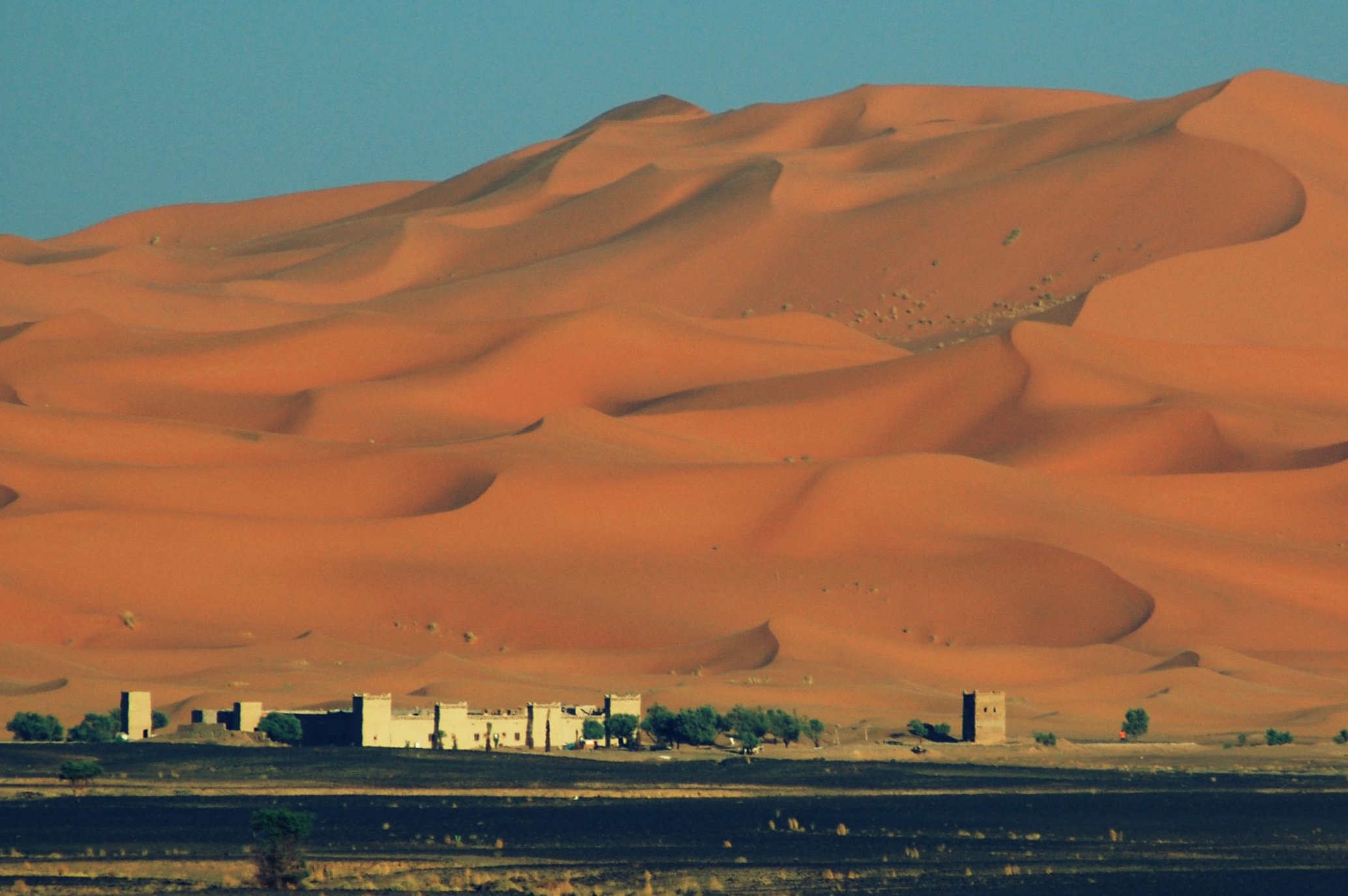
Merzouga sits at the edge of the Sahara where the Erg Chebbi dunes rise 150 meters from flat hammada — a camel trek at dusk and a night in a desert camp under an unpolluted sky is exactly what it sounds like, and it delivers.
The Sahara is a disappointment if you come expecting Hollywood vastness and find a single orange hill behind a tourist village. Erg Chebbi — the dune sea that starts at Merzouga's eastern edge — is the real thing: 22 kilometers long, up to 150 meters tall, genuinely silent beyond the first ridge, and deep enough that a 20-minute camel walk from the road puts you in a landscape with no visible sign of human settlement except the stars.
Merzouga is a small Berber town that has organized itself around the dune experience with more competence than many similar desert gateways. The overnight desert camp, reached by camel at sunset, is the centerpiece — a cluster of traditional-style tents with rugs, lanterns, and a communal campfire, positioned behind the first or second dune ridge depending on price and operator. Dinner under the open sky, a Gnawa musician playing around the fire, and the silence after midnight are the things travelers write home about.
Beyond the camp, Merzouga has other draws. Nomad visits with a 4WD to the semi-permanent camps deeper in the erg. The Gnawa music culture — Merzouga is one of the centers of this trance-music tradition rooted in sub-Saharan Africa, with regular festivals. The Dayet Srji lake in the wet season, which attracts flamingos and migratory birds. The fossil merchants and Berber silver markets on the main street.
Practically, Merzouga is reached from either Fes (via the Ziz Gorges and the Tafilalt oasis palm grove) or from Marrakech over the High Atlas via Ouarzazate — both routes are classic Morocco road trips that justify the journey as much as the destination. Flying into Errachidia and driving in is the shortcut.
The practical bits.
- Best time
-
October – AprilThe desert is extreme in summer — July and August see daytime temperatures reaching 42–48°C, making dune activities genuinely dangerous. October through April brings comfortable daytime warmth and cold nights (0–5°C in December–January), ideal for camel trekking. March brings the Sahara International Marathon and is busy. February to April is the most balanced season.
- How long
-
2 nights recommendedOne night covers the classic dune camp experience. Two nights adds a deeper desert 4WD excursion, a nomad visit, and proper exploration. Three to four nights suits those using Merzouga as a base for Draa Valley and Todgha Gorge circuits.
- Budget
-
$100 / day typicalBudget travelers can do the camp for $50–80 including camel transfer. Mid-range private tent with private bathroom runs $100–150 all-in. Luxury camps with climate control and butler service exist at $250–500 per night.
- Getting around
-
Private car or organized tour recommended; local taxis availableMerzouga is 350 km from Marrakech and 500 km from Fes — usually covered by private car, organized desert tour, or shared long-distance taxi. Once in Merzouga, camels and 4WD vehicles access the dunes. The town itself is walkable.
- Currency
-
Moroccan Dirham (MAD)Cash only in Merzouga — no reliable ATM in the town itself. The nearest ATM is in Rissani (18 km). Bring enough dirham from Fes, Errachidia, or Ouarzazate. Some upscale camps accept cards.
- Language
- Tamazight Berber is the local first language. Darija Arabic and French are widely spoken. English is spoken at most hotels and camps catering to international visitors.
- Visa
- US, UK, EU, Canadian, and most Western passports enter Morocco visa-free for 90 days.
- Safety
- Very safe. The main precautions are practical: protect against sun and heat even in the cool season, drink plenty of water, and ensure your camel guide knows the terrain. Avoid cheap, unlicensed operators whose camps may be positioned dangerously close to the road without actual dune immersion.
- Plug
- Type C / E · 220V — standard European adapter works.
- Timezone
- WET · UTC+0 (UTC+1 during summer DST)
A few specific picks.
Hand-picked, not algorithmic. Each of these has earned its space.
The camel trek that departs Merzouga at 4–5 PM and arrives at camp as the sun sets behind the dunes. The light on the dune faces turns orange then red. Every camp operator offers this; the experience is genuinely consistent across the dune.
Trad-style tent camps behind the first or second ridge. Dinner, campfire, Gnawa music, and the dawn dune climb for sunrise are the standard elements. Choose a camp positioned at least 1 km into the dunes — the cheapest ones sit just behind the first ridge with road noise.
The 20-minute climb up the high dune face at 5:30 AM in cold pre-dawn quiet — the summit of the main ridge gives a 360° view of the dune sea and the flat hammada stretching to Algeria. The most photographed moment of any Sahara trip.
A morning excursion by 4WD into the hammada (rocky desert) beyond the dunes to visit a semi-nomadic Berber family. Tea in a tent, goat cheese, and a window into desert pastoral life. Arrange through your camp or a licensed local agency.
Merzouga is one of the centers of Gnawa — a trance-music tradition brought by Sub-Saharan African slaves and integrated into Moroccan Berber culture. An evening performance at camp or at the Café Tingitana in town is one of the most distinctive cultural experiences in Morocco.
After winter rains, a shallow lake forms south of the dunes and attracts pink flamingos, egrets, and migrating birds. Usually present December through March. One of the Sahara's stranger sights — flamingos against the dune backdrop.
Before the camel tours begin, at 6–7 AM, walk to the dune base alone. The dunes are cold, quiet, and unmarked by footprints from the previous day's wind. This free, uncurated experience is worth an early alarm.
The Saharan south of Morocco is rich in fossils — trilobites, ammonites, and orthoceras laid in polished plates. The market in Merzouga and Rissani has genuine specimens alongside reproductions. Ask your guesthouse to recommend an honest dealer.
Several operators offer basic sandboards for the steep dune faces. It's more fun than graceful and requires hiking up the dune with the board — but the runs down the 40–50° slopes are fast and ridiculous.
The major weekly market of the Tafilalt region — camels, livestock, spices, second-hand goods — on Tuesdays, Thursdays, and Sundays. The largest souk in the Saharan south, little visited by foreign tourists.
Pick a neighborhood, not a hotel.
Merzouga is a city of neighborhoods. The one you stay in shapes the trip more than the property does.
Different trips for different travelers.
Same city, very different stays. Pick the lens that matches your trip.
Merzouga for first-time sahara visitors
Merzouga is the most accessible serious Sahara experience in Morocco — a reliable operator market, established camp infrastructure, and the real dune landscape without the extreme remoteness of the Algerian or Libyan Sahara. The overnight camp experience is genuine.
Merzouga for couples and honeymooners
The private tent option at a luxury camp with dinner by lantern, a Gnawa musician at the campfire, and the sunrise dune climb together is one of the more romantic experiences on the continent. Book the private-bathroom tent option.
Merzouga for photographers
The dune light at dawn and dusk is extraordinary — the soft, raking shadows across the dune faces, the pink-to-orange transition at sunset. Bring a wide-angle and a telephoto. The Milky Way is a reliable subject on any moonless night.
Merzouga for morocco road-trippers
Merzouga is a natural terminus of the Fes-to-Marrakech (or reverse) road circuit via the Atlas, Ziz Gorges, and the Draa Valley. Almost no one who does this drive wishes they'd skipped the dunes.
Merzouga for culture-focused travelers
The Gnawa music tradition, the Tafilalt oasis and Rissani souk, the nomad family visits, and the living archaeology of the ancient Trans-Saharan trade routes give Merzouga substantial cultural depth beyond the dune scenery.
Merzouga for stargazers
For travelers whose primary goal is dark-sky stargazing, Merzouga offers some of the most accessible zero-light-pollution skies in the world. New-moon windows in December–February give the clearest Milky Way visibility. Several camps offer telescopes.
When to go to Merzouga.
A quick year at a glance. Great, good, or skip — see what each month is doing before you book.
Excellent clear skies. Cold desert nights (0 to -3°C) require proper sleeping bag. Very few tourists. Flamingos at the lake if it has formed.
One of the best months — warming but still cold at night, excellent light, migrant birds on the lake. Quiet before spring.
Music festival season. Warming fast. Occasional dust winds but manageable. Popular month.
Excellent dune conditions. Days warm, nights comfortable. Increasingly busy.
Getting hot for midday activity but evenings are still pleasant. Chergui wind possible.
Approaching the limits of comfort for outdoor activity. Dawn and dusk camel treks only. Fewer tourists.
Dangerous daytime conditions. Camel treks can only be safely done before 7 AM and after 7 PM. Not recommended.
Hottest month. Only for travelers who specifically want the extreme-heat experience. Most camps reduce operations.
Heat persists through September. Late month starts to become manageable for early-morning activity.
Desert season reopens. Comfortable daytime temperatures, cool nights. Good light for photography.
Excellent quiet month. Date harvest season in the palm groves. Few tourists, all camps operating.
Best stargazing of the year. Cold but manageable with proper gear. Christmas week brings European visitors.
Day trips from Merzouga.
When you want a change of pace. Each one's a half-day or full-day out, easy from Merzouga.
Rissani & Tafilalt Oasis
30 min by roadThe old capital of the Tafilalt oasis region — Sijilmassa was once a major Trans-Saharan trade hub. The Tuesday, Thursday, and Sunday souks are the most authentic market in the Saharan south, with livestock, traditional crafts, and date farmers.
Todgha Gorge
2.5 hours by roadThe 300-meter-high limestone gorge is one of Morocco's most dramatic natural sites. Usually done as an overnight from Merzouga (stay in a gorge-side guesthouse) rather than a rushed day trip.
Dades Gorge & Valley of Roses
2 hours by roadThe road into the Dades Gorge climbs through some of Morocco's most photogenic kasbah villages. The Valley of Roses near Kelaat M'Gouna blooms in May — rose water production is the local industry.
Ait Ben Haddou
3 hours by roadThe iconic mud-brick fortified village on the Draa Valley road. Best as an overnight stop on the Merzouga–Marrakech return route rather than a day trip, but reachable in a long day.
Erfoud Fossil Factories
50 min by roadThe Erfoud area sits on ancient Devonian seabed rich in fossils. Workshop tours show how trilobite marble floors and ammonite plates are cut and polished. A short detour of genuine interest.
Deep Erg Chebbi by 4WD
Half day from MerzougaA 4WD excursion beyond the standard camel trek zone into the wider erg — visiting nomadic Berber families, desert wells, and the larger dune architecture further from the road. The deeper desert experience for those who want more than the camp.
Merzouga vs elsewhere.
Quick honest reads on the cities people compare Merzouga to.
Zagora accesses the Draa Valley and smaller Erg Chigaga dunes — a longer camel ride (2 days) to smaller dunes. Merzouga's Erg Chebbi is larger, more dramatic, and more accessible. Erg Chigaga is more remote and less visited.
Pick Merzouga if: You want the most dramatic dune scenery and the most reliable camp infrastructure in Morocco.
Douz is Tunisia's main Sahara gateway with smaller dunes but a distinct culture and easier logistics from European hubs. Erg Chebbi is significantly more dramatic. Morocco's overall travel infrastructure is more developed.
Pick Merzouga if: You are traveling Morocco already and want the most impressive dune landscape on your route.
Wadi Rum is red sandstone canyon desert — spectacular but different in character from Erg Chebbi's sand dunes. Both offer overnight camp experiences; Wadi Rum is more accessible from Europe and has jeep tours. Erg Chebbi is a purer dune landscape.
Pick Merzouga if: You specifically want a classic sand-dune Sahara experience rather than the red-canyon desert of Jordan.
Egypt's White Desert is a unique chalk-formation landscape near Farafra — ghostly white rock sculptures, very different from sand dunes. More adventurous to reach. Morocco's safety reputation and infrastructure are considerably better for most travelers.
Pick Merzouga if: You want the classic rolling sand dunes of the Sahara edge rather than the geological formations of the Egyptian Western Desert.
Itineraries you can start from.
Rough shapes for a trip here — a feel for the pace and cost. Find the one that fits you.
Arrive late afternoon. Camel at sunset to the desert camp. Dawn dune summit. Day two: 4WD nomad excursion, Rissani souk, afternoon departure.
Two nights in Merzouga, then drive to Todgha Gorge and Dades Valley for two more nights — one of Morocco's great road trip combinations.
Drive from Fes via Ifrane, Midelt, the Ziz Gorges, and Tafilalt to Merzouga. Two nights in the dunes. Drive back via Todgha Gorge, Ouarzazate, and Ait Ben Haddou to Marrakech.
Things people ask about Merzouga.
When is the best time to visit Merzouga and the Sahara?
October through April is the reliable window — comfortable daytime temperatures (20–30°C), cold nights, and active dunes. February through April is arguably the sweet spot: warm days, dramatic dune light, and spring migrant birds on the seasonal lake. Avoid July and August, when daytime temperatures reach 42–48°C and camel treks become genuinely dangerous.
How do you get to Merzouga?
The most practical approach is a rental car or organized tour from Fes (6–7 hours via the Ziz Gorges) or from Marrakech (8–9 hours via Ouarzazate and the Draa Valley). The mountain and desert road scenery makes both drives worthwhile. Alternatively, fly into Errachidia from Casablanca or Fes and take a shared taxi 2 hours south. Direct buses run from Marrakech and Fes but require a transfer at Errachidia.
Is the desert camp experience genuine or is it very touristy?
It depends on which camp and how deep into the dunes you go. Camps positioned close to the road behind the first ridge are noticeably touristy — you can see other tent lights and hear generator noise. Camps 1–2 km into the dunes, positioned behind the second or third ridge, are genuinely isolated. Ask your operator exactly where the camp sits. Spending more on a higher-category camp usually buys better positioning as much as better bedding.
How cold is the Sahara at night?
In the peak October–April season, nights drop to 0–8°C and feel colder in the open desert with wind. Even in November, a proper sleeping bag (not just extra blankets) makes the difference. December and January nights can drop to -3 or -4°C. Most camps provide warm blankets; confirm your camp has real insulation before booking budget options.
Do you have to ride a camel to reach the camp?
No — 4WD vehicles can reach most camps faster and are the option for those with mobility constraints or who prefer not to ride a camel. But the camel trek at dusk is the signature experience and takes only 45–90 minutes depending on camp location. Dromedaries (one hump) are used here; they are gentle and the ride is slow.
Is stargazing good in Merzouga?
Exceptional — among the best accessible stargazing in the world. The Sahara has minimal light pollution, and clear skies are the norm October through April. The Milky Way is visible with the naked eye on any moonless night. Come during a new moon if stargazing is a priority. Several camps offer telescope viewing; the naked-eye view is already extraordinary.
What is Gnawa music and where can you hear it?
Gnawa is a spiritual trance-music tradition brought to Morocco by Sub-Saharan African communities and incorporated into Berber culture. It uses the guembri (bass lute), metal qraqebs (castanets), and call-and-response singing in ceremonies (lilas) that were originally healing rituals. In Merzouga, most camps include a Gnawa musician at the campfire; the annual Merzouga International Music Festival in spring features full lilas.
How do you avoid tourist traps in Merzouga?
Book your camp directly through your guesthouse or via a reputable travel agency that discloses the camp's location. Avoid touts who approach you near the dune entrance offering 'private deals.' Ask specifically: how far into the dunes is the camp, and does it have private toilet facilities? Cheap camps that promise the same experience as mid-range ones typically compromise on dune depth, hygiene, and food quality.
What is the Tafilalt oasis and is it worth visiting?
The Tafilalt is one of the largest palm-date oases in Morocco, stretching around Rissani and Erfoud — historically significant as the origin region of the Alaoui dynasty that rules Morocco today. Date palms as far as you can see, ancient ksar (fortified village) ruins, and the Sijilmassa archaeological site are the draws. Rissani's souk is the most authentic market in the region, largely untouched by tourism.
What is the Algeria border situation?
Merzouga is approximately 30 km from the Algerian border, which has been closed to general crossings since 1994. The border area is off-limits to visitors. This is not a practical concern for tourism — you will not accidentally approach the border on standard tourist routes. The dunes themselves are well within Moroccan territory.
Can you visit Merzouga without an organized tour?
Yes — independent travelers with a rental car can drive directly to Merzouga, choose a guesthouse on arrival or via direct booking, and arrange camel and 4WD excursions locally. The town has a well-established independent tourism infrastructure. The only challenge is the long drive (6–9 hours from Fes or Marrakech), which makes having a car or organized transfer important.
What should I wear in the Sahara?
Layers are essential — desert temperatures swing dramatically between day and night. For the camel trek: a light base layer, fleece or down jacket, wind-resistant outer layer, and a headscarf or shemagh to wrap against sand. For the day: lightweight breathable clothing, sun hat, and high-SPF sunscreen. Good walking shoes or desert boots (not sandals) for the dune climb.
Are there flamingos at Merzouga?
Yes, seasonally. After sufficient winter rainfall, the Dayet Srji seasonal lake south of the dunes fills and attracts hundreds of lesser flamingos, as well as herons, egrets, and other waterbirds. The lake is most reliably present December through March. It varies year to year depending on rainfall; ask locally before making this a primary reason to visit.
Is the Fes-to-Merzouga drive worth doing independently?
The drive through Ifrane's cedar forests, Midelt's Atlas views, and the Ziz Gorge palm groves is one of Morocco's most varied landscapes and is genuinely excellent with a rental car. Five to six hours in a day is manageable; two days allows stops at Azrou (Barbary macaques in the cedar forest), the Ziz viewpoint, and Erfoud. Most rental cars from Fes or Marrakech permit this route.
What happens if a sandstorm hits during my camp stay?
Sandstorms (called 'sirocco' locally when hot, or chergui winds) do occasionally blow through. Your camp will have preparations — moving to the sheltered side of the tent, keeping everything sealed. They are usually short-lived; the dramatic sky beforehand is actually a photographic event. In a serious storm, staying in the tent is the right call. Your guide will know the signs.
Is Merzouga good for families with children?
Yes, for families with children old enough to ride a camel and sleep in a tent. Children often find the camel trek and the sand dunes more exciting than any museum. The cold nights require proper sleeping gear for small children. Bring sand toys for the dunes — spending the morning after the camp climbing and rolling down the dune faces is genuinely memorable.
What is the Merzouga International Music Festival?
Held annually in spring (typically March or April), the festival brings together Gnawa musicians from Merzouga and across Morocco with international desert-music artists. Performances are held around campfires in the dunes and in the village. It's one of the few Saharan festivals that remains relatively small and authentic rather than commercially organized.
Know someone headed to Merzouga?
Send them this guide — real neighborhoods, timing, and prices, with nothing to sign up for.
Copies the link — nothing to install