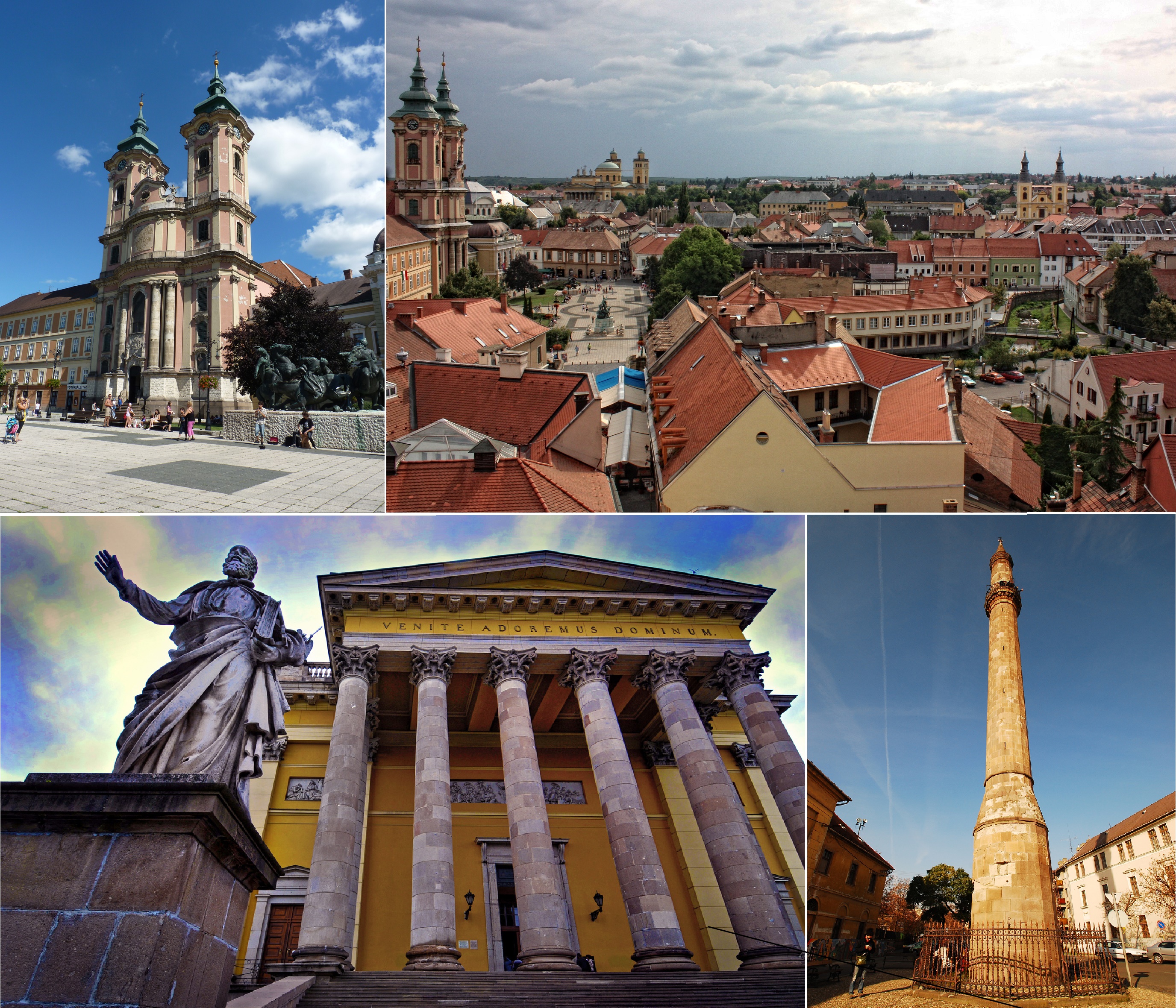
Eger
Send it to whoever you'd travel with
Eger is Hungary's most charming Baroque city — a hilltop castle, a Turkish minaret, the Valley of Beautiful Women where wine is poured straight from the barrel, and the famous Bull's Blood red wine that the city has been making since the Ottoman siege of 1552.
Eger is the city that stopped the Ottomans in 1552 — a garrison of 2,000 Hungarian and Slovak soldiers held the castle against a Turkish army of 150,000 for 38 days, a victory that became Hungary's defining national legend. The story goes that the defenders drank wine mixed with bull's blood to gain strength, turning their beards red and terrifying the Turks. The wine is still called Egri Bikavér (Bull's Blood) and it remains the most famous Hungarian red wine, made from Kékfrankos and Kadarka grapes in the hills around the city.
The city itself is a textbook Central European Baroque — rebuilt after the Ottomans left in 1687, with a coherent ensemble of Baroque churches, episcopal palace, town houses, and the Archbishop's Garden that makes it feel like a stage set designed for an 18th-century court. The Turkish minaret (the northernmost surviving Ottoman minaret in Europe, 40 metres tall) is a striking anachronism in the middle of the Baroque skyline — it outlasted the empire that built it and is now the city's most photographed landmark.
The Szépasszonyvölgy (Valley of Beautiful Women) is Eger's most specific institution — a horseshoe valley south of the city where more than 40 wine cellars are carved into the soft tuff rock. The cellars have been here for centuries; today they pour Egri Bikavér, Egri Csillag (the local white blend), and various varietal wines directly from the barrel, with simple wooden tables outside and an informality that feels genuinely old. The valley is best visited in the late afternoon when local Eger families join the tourists and the atmosphere becomes genuinely festive.
Hungary uses the forint (HUF): €1 ≈ 390 HUF. Eger is among the most affordable cities in Hungary — a full wine tasting session with barrel wine in the valley costs €8–15, a restaurant dinner €15–25. Thermal baths (Eger has a good one, Eger Thermal Bath, renovated) add to the standard Hungarian wellness culture.
The practical bits.
- Best time
-
May – June · September – OctoberSpring and autumn are ideal — comfortable temperatures for castle walks and valley wine sessions, and the surrounding hills in bloom or harvest colour. September is the wine harvest month and the valley is at its most active. July–August is hot and busier with Budapest day-trippers.
- How long
-
2 nights recommendedOne night covers the castle, minaret, and Valley of Beautiful Women. Two nights adds the Basilica, Eger Thermal Bath, and a slower pace through the Baroque streets. Three nights makes Eger a wine country base for Tokaj (1.5h east) and the Mátra hills.
- Budget
-
~$90 / day typicalVery affordable. Mid-range hotel HUF 18,000–35,000 (€46–90)/night. Restaurant dinner with wine HUF 5,000–10,000 (€13–26). Barrel wine in the valley HUF 400–700 per decilitre (€1–2). Castle entry HUF 2,400 (€6).
- Getting around
-
Walking + taxi for ValleyEger is entirely walkable for the center, castle, and Basilica. The Valley of Beautiful Women is a 20-minute walk south of the center or a short taxi ride (HUF 1,500, €4). Budapest to Eger: direct trains from Keleti station, 2h, HUF 2,500–5,000 (€6–13). No direct service from Bratislava — change in Budapest.
- Currency
-
Hungarian forint (HUF). €1 ≈ 390 HUF. Hungary is NOT in the Eurozone. Cards accepted at hotels and most restaurants. Cash preferred at the valley wine cellars and some smaller restaurants.Cards at hotels and restaurants. Cash strongly preferred at valley wine cellars and market stalls.
- Language
- Hungarian. English spoken at hotels, restaurants, and tourist sites. Basic Hungarian courtesy phrases appreciated.
- Visa
- Hungary is in Schengen. US, UK, Canadian, Australian passports visa-free. ETIAS from late 2026.
- Safety
- Very safe. Eger has very low crime. Standard city awareness applies.
- Plug
- Type C / F · 230V
- Timezone
- CET · UTC+1 (CEST UTC+2 summer)
A few specific picks.
Hand-picked, not algorithmic. Each of these has earned its space.
The site of the 1552 siege — Gothic bishop's palace, underground casemates showing fortress life, Heroes' Hall, and panoramic views of the city and Bükk hills. The history museum inside is good for context.
A horseshoe valley with 40+ wine cellars carved into tuff rock. Barrel wine poured at wooden tables outside. Best in late afternoon when locals join the atmosphere. The most distinctively Hungarian wine experience in the country.
The most famous Hungarian red wine — a Kékfrankos and Kadarka-dominant blend with complex, sometimes austere character. Best producers: Tibor Gál, St. Andrea, Thummerer. Available throughout the valley and at Eger restaurants.
The northernmost surviving Ottoman minaret in Europe — 40 metres of carefully preserved tuff stone. 97 steps spiral to the top (very narrow). Views of the Baroque city and surrounding hills.
The second-largest church in Hungary — a neoclassical basilica built 1831–1837 with a massive organ (5,765 pipes) and free lunchtime organ concerts every day in summer. The largest outdoor staircase in Hungary.
A renovated thermal bath complex with indoor and outdoor geothermal pools at 28–36°C. The standard Hungarian wellness addition to a castle and wine day.
The inner city ensemble — Dobó István tér (the main square named for the 1552 castle defender), the Minorite Church, the Archbishop's Palace, and the Archbishop's Garden. Coherent Baroque architecture from a single rebuilding period.
Hungary's most famous wine region — sweet Aszú wines from Furmint grapes. UNESCO-listed wine landscape. A full day by car or bus from Eger. The natural wine country pairing for a Bull's Blood and Aszú tasting comparison.
Pick a neighborhood, not a hotel.
Eger is a city of neighborhoods. The one you stay in shapes the trip more than the property does.
Different trips for different travelers.
Same city, very different stays. Pick the lens that matches your trip.
Eger for wine travelers
Eger is Hungary's second most important wine region (after Tokaj) and the Valley of Beautiful Women is the most immediately enjoyable wine tasting experience in the country. Bull's Blood, Egri Csillag, and barrel wine at outdoor tables.
Eger for ottoman heritage travelers
The minaret, the castle casemates from the 1552 siege, and the city's role in the Ottoman-Habsburg frontier make Eger excellent for travelers interested in the Ottoman Empire's European reach.
Eger for baroque architecture travelers
Eger is the most coherent Baroque provincial city in Hungary — rebuilt systematically after 1687 with a unified architectural character that Prague and Vienna have more of but Eger concentrates in a single viewable core.
Eger for budapest visitors extending their trip
The 2h train from Budapest makes Eger the easiest and most rewarding Hungarian daytrip or overnight extension. Castle, minaret, wine valley — a completely different register from Budapest.
Eger for thermal bath travelers
Eger Thermal Bath is a good mid-sized thermal complex — not Budapest's Széchenyi scale but comfortable and genuinely therapeutic after a day of castle stairs and valley wine.
When to go to Eger.
A quick year at a glance. Great, good, or skip — see what each month is doing before you book.
Off-season. Few tourists. Castle and museum visits. Good hotel prices.
Still quiet. Wine bars open.
City emerging. Valley wine cellars reopening for the season.
Good spring conditions. Valley wine season beginning. Low crowds.
Best spring month. Valley at its most pleasant. Castle walks comfortable.
Excellent. Basilica organ concerts begin. Long valley evenings.
Busiest with Budapest day-trippers. Hot but full atmosphere in valley.
Hot. Pre-harvest season. Valley very lively. Castle early morning best.
Harvest season — the best month for wine. Valley at peak atmosphere. Comfortable temperatures.
Excellent. Harvest complete, autumn foliage on Bükk hills. Good prices.
Quieter. Some valley cellars closing. Good for uncrowded castle visits.
Low season. Christmas market on Dobó tér. Cold but atmospheric.
Day trips from Eger.
When you want a change of pace. Each one's a half-day or full-day out, easy from Eger.
Tokaj Wine Region
1.5h by car/busHungary's most famous wine designation — botrytis-affected Furmint grapes producing Aszú (the original dessert wine). Wine houses along the main street. UNESCO-listed wine landscape.
Bükk National Park
30 min by busForested limestone hills above Eger — Szalajka Valley has a waterfall and narrow-gauge railway. Good half-day hiking accessible by local bus.
Budapest
2h by trainThe natural pairing. Budapest 2h by train — combine Eger wine country with Budapest's thermal bath culture and Parliament panorama for a complete Hungary trip.
Eger vs elsewhere.
Quick honest reads on the cities people compare Eger to.
Budapest is one of Europe's great capitals — dramatic Danube panorama, Széchenyi thermal baths, the Parliament. Eger is a fraction of the size with wine country, a siege castle, and an Ottoman minaret. Budapest for grandeur; Eger for intimacy and wine.
Pick Eger if: You want the most charming Hungarian wine town experience in a Baroque city without Budapest's scale and crowds.
Pécs in southern Hungary has more substantial Ottoman remains (the Gázi Kászim Pasha Mosque, now a church) and a stronger arts scene. Eger has the better castle story and the Valley of Beautiful Women. Both are excellent Hungarian provincial cities.
Pick Eger if: You want Bull's Blood wine, the siege castle legend, and the most visited wine valley in Hungary over Pécs's Ottoman mosque and arts scene.
Tokaj is Hungary's most prestigious wine designation — UNESCO-listed, Furmint and Aszú are internationally famous. Eger has better urban heritage and the Valley of Beautiful Women atmosphere. For wine connoisseurs: Tokaj. For the complete city-plus-wine experience: Eger.
Pick Eger if: You want a Baroque city with a castle and informal wine valley culture over Tokaj's prestige wine landscape.
Itineraries you can start from.
Rough shapes for a trip here — a feel for the pace and cost. Find the one that fits you.
Morning: Eger Castle (2h). Turkish Minaret climb. Baroque center walk and Basilica organ concert (summer). Afternoon: Valley of Beautiful Women wine session (3–4 cellars, 2–3 hours). Dinner in the center with Bull's Blood. Return train to Budapest or overnight.
Add Eger Thermal Bath (morning recovery). Bükk Hills half-day hike (the forest hills above the city, with the Szalajka Valley waterfall). Evening second visit to the valley with different cellars.
Add Tokaj day trip (1.5h east by car) — Hungary's most famous wine region with Aszú sweet wine. Compare the Bull's Blood of Eger with the Furmint and Aszú of Tokaj in the same trip.
Things people ask about Eger.
Is Eger worth visiting?
Strongly yes — it's Hungary's most complete and charming Baroque provincial city. The castle, the minaret, the Valley of Beautiful Women, and the wine are all genuinely excellent, and it's significantly cheaper than Budapest. Two nights is ideal.
How do I get to Eger from Budapest?
Direct train from Budapest Keleti station — 2 hours, runs several times daily, costs HUF 2,500–5,000 (€6–13). The train station is 15 minutes walk from the castle. Eger is not on the main rail network; the line serves it as a spur from Füzesabony.
What is Egri Bikavér (Bull's Blood)?
Hungary's most famous red wine — a blend dominated by Kékfrankos and Kadarka, with complex, sometimes earthy character. Named for the legend of the 1552 siege. The wine style has evolved significantly in the last 20 years under quality-focused producers (St. Andrea, Tibor Gál, Thummerer). Best tasted in the Valley of Beautiful Women directly from barrel or at a good Eger restaurant.
What is the Valley of Beautiful Women?
Szépasszonyvölgy — a horseshoe valley south of Eger's city center where 40+ wine cellars are carved into soft tuff stone. Local producers pour from barrel at wooden outdoor tables. The atmosphere in late afternoon, when Eger families join the tourists, is the most genuinely Hungarian wine experience available in the country.
Is cash necessary in the valley?
Yes — most wine cellar operators strongly prefer or require cash. Bring HUF. Wine is sold by the decilitre (deci): expect HUF 400–700 per deci, and a standard tasting of 3–4 wines costs HUF 2,000–5,000 (€5–13).
What is the Turkish Minaret?
The northernmost surviving Ottoman minaret in Europe — built in the late 17th century when Eger was part of the Ottoman Empire, survived the Ottoman withdrawal in 1687, and stands in the middle of the Baroque city as a 40-metre anachronism. 97 narrow spiral steps lead to the gallery. Worth the climb.
Are there thermal baths in Eger?
Yes — the Eger Thermal Bath (Eger Termálfürdő) has indoor and outdoor geothermal pools at 28–36°C, recently renovated. A standard Hungarian thermal bath experience — good for recovery after the castle climb and valley wine session.
Can I visit Tokaj from Eger?
Yes — 1.5h by car or bus. Tokaj is Hungary's most famous wine region (UNESCO-listed), producing sweet Aszú and dry Furmint white wines. A full day trips comfortably from Eger. Compare the earthy Bull's Blood of Eger with the mineral-sweet character of Tokaj Aszú.
Know someone headed to Eger?
Send them this guide — real neighborhoods, timing, and prices, with nothing to sign up for.
Copies the link — nothing to install