Hannover
Send it to whoever you'd travel with
Hannover is the German city most travelers skip on the way to Berlin or Hamburg, and it quietly rewards anyone who gets off the ICE — Royal Herrenhausen Gardens, a green walking line (the Red Thread) through the centre, and one of the most underrated museum quarters in northern Germany.
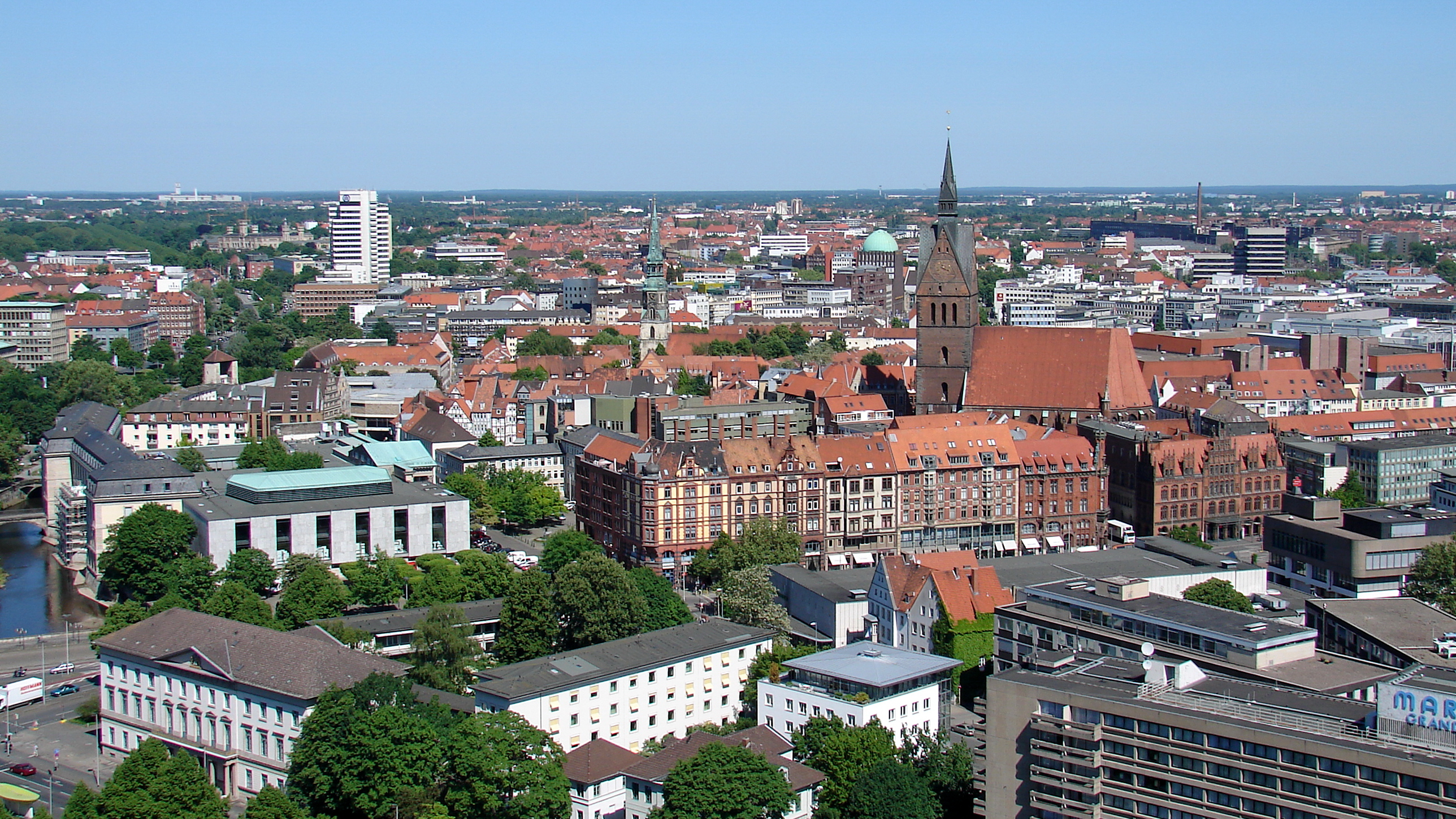
Hannover spends its life being underestimated. It's the capital of Lower Saxony, a Hanoverian royal seat that supplied four kings to Britain, and host city to the world's largest trade fairs — yet most travelers know it only as an ICE-train interchange. The city was levelled in 1943, rebuilt in postwar pragmatism, and as a result reads as less photogenic than Hamburg or Munich on the first glance. The second glance is where Hannover gets interesting.
The Herrenhausen Gardens are the trump card — one of the most important Baroque garden complexes in Europe, designed in the late 17th century for Sophia of Hanover and largely intact. The Great Garden's parterre, the maze, the grand cascade, and the summer fountain displays make a full half-day. The adjacent Berggarten is a serious botanical garden with palm and orchid houses. This single complex alone justifies a Hannover stop.
The Red Thread (Roter Faden) is Hannover's other clever move — a 4.2-kilometre painted red line on the pavement that walks you past 36 numbered city sights with a small free brochure. It's the most efficient self-guided city walk in Germany, and it surfaces the surviving fragments of old Hannover (the Marktkirche, the Altes Rathaus, the half-timbered cluster around Kreuzkirche) that the postwar rebuild left between the modernist blocks.
The trade-offs are real. Hannover is not a place that grabs you by the lapels — it's a place that gradually convinces you. The Old Town is a fraction of what survived in Lübeck or Regensburg. Hotels fill and prices spike to ridiculous levels during the major trade fairs (Hannover Messe in April, IAA in September). Pick wrong week and a €90 mid-range room becomes €350. Pick the right week and you have one of Germany's most pleasant mid-sized cities largely to yourself.
The practical bits.
- Best time
-
May – SeptemberHannover's centre of gravity is outdoor: Maschsee lake, Eilenriede city forest, and Herrenhausen Gardens. May–June are the most pleasant; the great Herrenhausen fountain season runs through summer. August adds the Maschseefest lake festival. October colours in Eilenriede are excellent.
- How long
-
2 nights recommendedOne night handles the Red Thread walk and Herrenhausen. Two adds the Sprengel Museum, Maschsee walk, and an Eilenriede stroll. Three only makes sense if you're using Hannover as a base for Hameln, Hildesheim, or Celle.
- Budget
-
~$130 / day typicalStandard German mid-size city pricing — significantly cheaper than Munich or Hamburg outside trade-fair weeks. Mid-range hotels €80–140/night. Restaurant lunch €15–25. The exception: trade-fair weeks (April, September), when hotels triple.
- Getting around
-
Walking + Stadtbahn (light rail)The Stadtbahn network connects the centre with Herrenhausen (line 4 or 5) and the trade-fair grounds (line 8). A day ticket is €6.20. The centre itself is small enough to walk; the Red Thread is the easiest self-guided route. Hannover Airport (HAJ) is 20 minutes from the centre by S-Bahn 5.
- Currency
-
Euro (€). Cards widely accepted but Germany retains stronger cash preference than the Netherlands or France — carry €50–100 for smaller bakeries and bars.Most hotels and restaurants take cards. Smaller cafés, bakeries, and traditional pubs (Kneipen) often still cash only or set a card minimum.
- Language
- German. English widely spoken in the trade-fair core, hotels, and by most under-40 Germans. A few German courtesy phrases appreciated.
- Visa
- Schengen zone. 90-day visa-free for US, UK, Canadian, and Australian passports. ETIAS authorization required from late 2026.
- Safety
- Very safe. Hannover has below-average crime for a German trade-fair city. Standard awareness near the Hauptbahnhof late at night. Eilenriede forest is fine by day, sensible avoidance after dark.
- Plug
- Type C / F · 230V — standard European adapter.
- Timezone
- CET · UTC+1 (CEST UTC+2 late March – late October)
A few specific picks.
Hand-picked, not algorithmic. Each of these has earned its space.
One of Europe's most important surviving Baroque garden complexes — the Great Garden with its parterre, maze, and Grand Cascade, plus the Berggarten botanical collection. Allow a half-day minimum. Summer evening fountain illuminations are spectacular.
A 4.2 km painted red line on the pavement walking past 36 numbered city sights with a free brochure from the tourist office. The most efficient introduction to Hannover — about 2.5 hours at a leisurely pace.
An immense 1913 wedding-cake town hall on a small lake. The diagonal lift inside the cupola tilts as it climbs — one of the most unusual elevators in Europe. The view over Hannover is the best panorama in the city. €4.
An artificial 2.4 km lake built in the 1930s, ringed by a 6 km walking and cycling path. The default summer activity — pedal boats, lakeside cafés, and the August Maschseefest. The most pleasant urban water in Lower Saxony.
One of the best 20th-century art museums in Germany — Picasso, Léger, Klee, Beckmann, and a serious holding of Kurt Schwitters (Hannover's home-grown Dada figure). Often overlooked for the bigger Munich and Berlin museums.
Hannover's 'green lung' — at 640 hectares, one of the largest urban forests in Europe. Walking and cycling paths, beer gardens, a small wildlife enclosure. The Hannover equivalent of London's Hampstead Heath.
A small cluster of restored half-timbered houses around the Kreuzkirche and Ballhof — what survived 1943. Look for the Leibniz House and the Marktkirche brick Gothic. Smaller than Lübeck or Celle but real.
A 19th-century covered market hall — fishmongers, butchers, cheese counters, and a clutch of standing-room food stalls. The lunchtime classic for trade-fair visitors and locals. Tapas, currywurst, oysters, Asian noodles — proper market eating.
Kurt Schwitters built the original Merzbau in his Hannover apartment in the 1920s–30s — a sculptural total installation. The original was destroyed in 1943. A 1980s reconstruction inside the Sprengel Museum is the closest you can get.
Pick a neighborhood, not a hotel.
Hannover is a city of neighborhoods. The one you stay in shapes the trip more than the property does.
Different trips for different travelers.
Same city, very different stays. Pick the lens that matches your trip.
Hannover for garden and landscape travelers
Herrenhausen alone justifies the trip — one of the most important Baroque garden complexes in Europe, with a serious Berggarten botanical collection adjacent. Add Eilenriede forest for the urban-green contrast.
Hannover for museum-hopping urbanists
The Sprengel Museum (20th-century art with major Schwitters holdings) and the Landesmuseum (a serious regional history collection) together make a full-day museum quarter that's punched above its size for years.
Hannover for trade-fair attendees and business travelers
Hannover Messe is the world's largest industrial trade fair; CeBIT was, until it ended. The Messe grounds and Stadtbahn 8 are built for this — but book accommodation 6 months ahead or stay outside the centre.
Hannover for stopover travelers
Hannover is a major ICE junction — Hamburg–Frankfurt and Berlin–Cologne both pass through. A one-night stopover for Herrenhausen + the Red Thread is the most efficient way to add a German mid-size city to a north–south itinerary.
Hannover for architecture and modernism fans
The postwar rebuild gave Hannover one of Germany's most representative collections of 1950s reconstruction architecture. The Anzeiger-Hochhaus by Fritz Höger is north-German expressionism at its best. Schwitters Merzbau reconstruction at Sprengel.
Hannover for budget travelers
Outside trade-fair weeks, Hannover is one of the better value mid-size German cities — €25 hostel beds, €15 restaurant lunches, €6.20 day transit. Notably cheaper than Munich, Berlin, or Hamburg.
When to go to Hannover.
A quick year at a glance. Great, good, or skip — see what each month is doing before you book.
Lowest hotel rates. Museum-focused visits work. Christmas market closed early January.
Quiet. Best Sprengel Museum visits. Carnival period brings minor street activity.
Gardens beginning to wake up. Tulip beds at Herrenhausen late month. Indoor visits still primary.
Herrenhausen comes into bloom. Hannover Messe (~late April) spikes hotel prices — book very early or visit outside the fair week.
Best spring month. Fountain season starts at Herrenhausen. Maschsee comes to life.
Long daylight, full garden season, Eilenriede at its greenest. Fest der Sinne festival.
Peak summer. Schützenfest Hannover (world's largest marksmen's fair) early month — fun, loud, fully booked.
Maschseefest (lake festival) draws a million visitors over three weeks. Vibrant lakeside atmosphere.
Excellent weather. IAA Transportation trade fair (biennial, even years) spikes hotel prices when on.
Eilenriede and Herrenhausen Berggarten autumn colours are excellent. Good prices.
Quietest month. Late-November Christmas market opening.
Christmas markets at Marktkirche, Kröpcke, and the Altstadt. Smaller than Nuremberg but pleasant.
Day trips from Hannover.
When you want a change of pace. Each one's a half-day or full-day out, easy from Hannover.
Hildesheim
30 min by trainSt Mary's Cathedral and St Michael's Church together form a UNESCO World Heritage site — two of the most important Romanesque survivors in northern Europe. The thousand-year-old rose bush against the cathedral apse is the local symbol.
Celle
40 min by trainOne of the prettiest small towns in Lower Saxony — 400 half-timbered houses around a ducal palace. Largely undamaged in WWII. A 4-hour visit is enough; combine with a Lüneburg Heath drive in summer.
Goslar
90 min by trainA UNESCO mining town at the foot of the Harz mountains — the Rammelsberg mine and old town are both on the World Heritage list. Combine with Quedlinburg (another UNESCO town) for a serious half-day.
Hameln (Hamelin)
50 min by trainThe Pied Piper town — half-timbered Weser Renaissance facades and street markers that retell the rat catcher legend. A 3-hour visit is plenty; the Sunday open-air Pied Piper play runs May to September.
Wolfsburg / Autostadt
30 min by trainVW's hometown — the Autostadt is a 25-hectare visitor complex with brand pavilions and the factory tour. Even non-car-enthusiasts find the Porsche and Audi pavilions impressive. The new pickup tower system for VW deliveries is its own attraction.
Hannover vs elsewhere.
Quick honest reads on the cities people compare Hannover to.
Hamburg is significantly more dramatic — the harbour, the Elbphilharmonie, the Reeperbahn, and Germany's most international urban scene. Hannover is quieter, cheaper, less touristed, and built around one world-class garden complex.
Pick Hannover if: You want a calm, manageable mid-sized German city with one outstanding attraction rather than a major harbour metropolis.
Bremen has the better-preserved medieval old town (the Schnoor, the Marktplatz Roland, the UNESCO town hall). Hannover has the bigger museum quarter, Herrenhausen Gardens, and better long-distance train connections.
Pick Hannover if: You want gardens and Northern German practicality over fairytale Hanseatic old-town romance.
Leipzig has the more interesting cultural scene (music, the post-reunification creative quarters, Bach), a livelier old centre, and a stronger evening identity. Hannover is the more polished, the more western-feeling, and the better gateway to the Harz and Lower Saxony.
Pick Hannover if: You want the Western-Germany economic-capital register over the post-DDR cultural creative-capital register.
Hildesheim is essentially a Hannover day trip — UNESCO Romanesque churches but no real city beyond. Hannover is the staying base. The right approach is both: sleep in Hannover, day-trip to Hildesheim.
Pick Hannover if: You need a city to base in. Hildesheim is not that; Hannover is.
Itineraries you can start from.
Rough shapes for a trip here — a feel for the pace and cost. Find the one that fits you.
Arrive midday. Walk the Red Thread, climb the Neues Rathaus cupola, dinner in the Markthalle area. Morning: Herrenhausen Gardens before the train onwards.
Day one: Red Thread, Markthalle lunch, Sprengel Museum. Day two: full Herrenhausen, Maschsee walk, Linden for dinner.
Add a Hildesheim day trip for the UNESCO Romanesque churches, or Celle for the half-timbered ducal old town. Hannover as the regional base.
Things people ask about Hannover.
Is Hannover worth visiting?
Yes, but with calibrated expectations. Hannover isn't a tourist headliner — it's an honest mid-sized German city with one world-class attraction (Herrenhausen Gardens), one excellent museum (Sprengel), a clever self-guided walk (Red Thread), and prices noticeably lower than Munich or Hamburg outside trade-fair weeks. Two nights is right.
When is the best time to visit Hannover?
May to September. The Herrenhausen fountains run, Maschsee is in full use, and Eilenriede forest is at its best. October has nice autumn colour. Avoid trade-fair weeks (Hannover Messe in late April, IAA Transportation in September) when hotels triple in price.
How many days do you need in Hannover?
Two nights covers Herrenhausen, the Red Thread, Sprengel Museum, and the Maschsee. One night works for a stopover. Three only makes sense if you want regional day trips to Hildesheim or Celle.
How expensive is Hannover?
Standard mid-sized German pricing — cheaper than Munich and Hamburg outside trade-fair weeks. Mid-range hotels €80–140/night, restaurant mains €15–25, public transport €6.20/day. Trade-fair weeks (April, September) are exceptions; hotel rates can triple.
What is the Red Thread in Hannover?
A 4.2 km red line painted on the pavement that connects 36 numbered city sights. Pick up the free brochure at the tourist office near the Hauptbahnhof — each numbered point gets a paragraph of context. It's the best self-guided city walk in Germany and takes about 2.5 hours.
Is Herrenhausen Gardens worth visiting?
Strongly yes. It's one of the most important Baroque garden complexes in Europe — designed in the late 17th century for Sophia of Hanover, with parterres, a maze, a Grand Cascade, and the Berggarten botanical collection alongside. The summer fountain illuminations are spectacular. Allow a half-day.
How do I get from Hannover Airport to the city?
S-Bahn 5 runs from the airport (HAJ) to Hannover Hauptbahnhof in 20 minutes for about €3.80. Trains run every 30 minutes. A taxi takes 15–20 minutes and runs €30–40.
Hannover vs Hamburg — which should I visit?
Hamburg is significantly more touristed — bigger, more dramatic, with the harbour and the Reeperbahn. Hannover is quieter, cheaper, with one outstanding garden and a more local feel. Hamburg if you have one week; Hannover as a 2-night side trip when you're already routing through northern Germany.
Is Hannover a good base for day trips?
Yes — ICE trains put Hildesheim (UNESCO Romanesque churches) at 30 minutes, Celle (half-timbered ducal town) at 40 minutes, Goslar (UNESCO Harz mining town) at 90 minutes, and Hameln (Pied Piper) at 50 minutes. Lower Saxony's most interesting smaller towns are all within an hour.
What should I eat in Hannover?
Lower Saxon cuisine is hearty: Lüttje Lage (a paired beer and schnapps drunk simultaneously from two glasses), Kohl und Pinkel (kale with smoked sausage, winter), Rouladen (rolled beef), Schmorgurken (braised cucumbers). The Markthalle is the best single-room food survey. For modern: 11A on the Aegi or 5th Avenue Kitchen in Linden.
Is Hannover safe?
Yes — Hannover has below-average crime for a German city. Standard awareness near the main station (Hauptbahnhof) late at night, the same as any European mid-sized city. Walking the centre and Maschsee at night is comfortable.
Does Hannover have a Christmas market?
Yes — the Hannover Christmas market spans the Marktkirche, the Kröpcke, and the Altstadt streets from late November to December 22. Smaller than Nuremberg or Cologne, but well-organised and pleasantly walkable. The Finnish Christmas village (open fires, salmon, schnapps) is a local favourite.
Know someone headed to Hannover?
Send them this guide — real neighborhoods, timing, and prices, with nothing to sign up for.
Copies the link — nothing to install