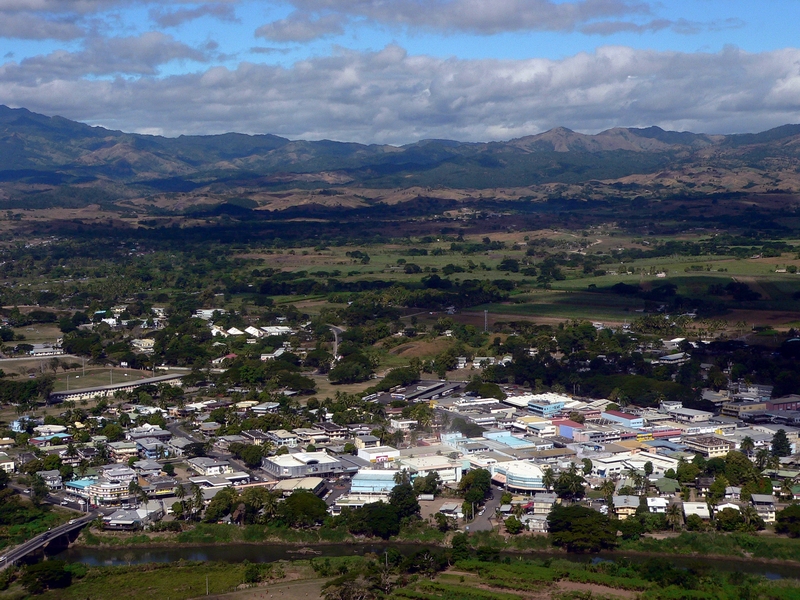
Nadi
Send it to whoever you'd travel with
Nadi is Fiji's gateway — few people come here as the destination, but the best trips to the Mamanuca and Yasawa island chains, the Coral Coast, and the Fijian interior all start here, and the town itself has more character than its airport-hub reputation suggests.
Nadi's job in the Fijian tourism ecosystem is to funnel people onto boats and small planes. The Mamanuca Islands — 20 resorts on atolls and volcanic islands 30 minutes to two hours by fast catamaran — are accessible only through Nadi. The Yasawa archipelago, a 90-kilometre chain of volcanic islands with some of the most spectacular cliff and beach scenery in the Pacific, is reached via the Yasawa Flyer departing Port Denarau Marina. Nearly every Fiji trip begins and ends in Nadi, yet most guidebooks write it off as a transit point.
That dismissal misses something real. The town along Queens Road has an Indo-Fijian market, a line of curry houses that are genuinely excellent, a Hindu temple complex (the Sri Siva Subramaniya Swami Temple) that is the largest in the southern hemisphere, and a Saturday market in the central bus terminal that mixes vegetables, kava root, and woven mats in proportions that reveal Fiji's Indo-Fijian and iTaukei cultural complexity. Nadi is not a resort, but it is a place.
The broader question when planning a Fiji trip is which islands to combine with the Nadi base. The Mamanucas (Castaway, Malolo, Tokoriki) are the most accessible and family-oriented — resorts are well developed, transfers fast, and snorkelling excellent. The Yasawas are more remote, slower, with cliff-diving, cave swimming, and traditional village visits on smaller islands that don't get the same jet-ski traffic. The Coral Coast (Sigatoka) is an underrated land-based alternative for families, accessible by rental car and offering hot springs, sand dunes, and jungle interior.
Cyclone season runs November through April and is a genuine planning concern — Fiji sits in the south-west Pacific cyclone belt and receives hits most years somewhere in the archipelago. Travel insurance is essential during this window. The dry season (May–October) is when Fiji is at its most reliable: trade winds keep temperatures comfortable, rainfall is minimal on the western side of Viti Levu where Nadi sits, and visibility underwater is at its annual best.
The practical bits.
- Best time
-
July – SeptemberThe dry season runs May–October, but July–September is the sweet spot — trade winds cool the western coast reliably, minimal rain, and water clarity for snorkelling and diving is at its best. April–June and October are solid shoulder months with lower prices. November–April is cyclone season; visits are possible but travel insurance is mandatory and disruption risk is real.
- How long
-
7 nights total (2 Nadi + island chain) recommendedNadi itself needs 1–2 nights maximum. The value of a Fiji trip lies in the island chains. A week minimum lets you spend 5 meaningful nights at one or two outer islands.
- Budget
-
$200 / day typicalFiji is one of the more affordable South Pacific destinations. Nadi guesthouses run $50–80/night. Mid-range Mamanuca resorts: $200–350/night. Premium resorts (Laucala Island, Kokomo): $2,000+/night. Eating at local curry houses in Nadi: $8–15 per meal.
- Getting around
-
Fast catamaran, small aircraft, rental carPort Denarau Marina (10 min from Nadi centre) is the hub for Mamanuca and Yasawa ferries. South Sea Cruises and Awesome Adventures run regular schedules. For the Yasawas, the Yasawa Flyer departs daily — journey time to the far end is 6–8 hours. Domestic flights via FijiAirways Sunbird are faster. Rental cars ($60–80/day) work well for Coral Coast and Nadi Valley exploration.
- Currency
-
Fijian Dollar (FJD) · ~2.25 FJD to 1 USDCards accepted at resorts and larger businesses. ATMs widely available in Nadi. Carry FJD cash for markets, local restaurants, village kava ceremonies, and bus fares.
- Language
- English is an official language and universally spoken. Fijian (iTaukei) and Hindi are co-official languages. All tourism infrastructure operates in English.
- Visa
- Visa-free for US, UK, EU, Australian, Canadian, and New Zealand passports for up to 4 months. Most Pacific Island nationals also enter visa-free. Check current requirements at Fiji Immigration.
- Safety
- Generally safe. Petty theft occurs in Nadi town and at the main beach areas; keep valuables secure. Swimming safety matters most — strong currents around reef passages on the outer islands; always follow resort guides. Cyclone preparedness: know your resort's procedures if visiting November–April.
- Plug
- Type I · 240V — same as Australia and New Zealand. North American and European travelers need an adapter.
- Timezone
- FJT · UTC+12 (FJST UTC+13 during summer daylight saving)
A few specific picks.
Hand-picked, not algorithmic. Each of these has earned its space.
The largest Hindu temple in the southern hemisphere — Dravidian architecture with elaborately painted gopuram towers, maintained by Fiji's substantial Indo-Fijian community. Respectful dress required; guided visits available.
The reefs around Malolo Lailai, Mana, and Tokoriki are among Fiji's most accessible. Soft coral density is high; visibility in the dry season exceeds 25 metres. Day-trip operators from Port Denarau run snorkel circuits.
Traditional iTaukei village visits with kava ceremonies are a genuine cultural experience on the outer Yasawa islands. Protocol matters: bring kava root (sevusevu), remove shoes, and accept any offering graciously.
The best single hour in Nadi — fresh tropical produce, kava root vendors, local snacks, women weaving mats in the back corner. Saturday mornings are the most alive. The attached bus terminal turns it into a working people's hub.
Fiji's first national park — active and parabolic sand dunes up to 60 metres high at the mouth of the Sigatoka River, with archaeological sites revealing 3,000 years of human habitation. An hour's drive from Nadi along Queens Road.
Former private orchid collection of Raymond Burr, now a 50-hectare botanical garden set against the Sabeto Range. Over 2,000 orchid varieties and one of the few proper garden walks near Nadi. Best visited early morning.
Natural volcanic mud pools and hot springs in the shadow of the Sabeto mountain range. A 20-minute drive from Nadi — chaotic and fun, not spa-like. Popular with families and backpackers.
A limestone cave system accessible only by boat in the northern Yasawa chain, with an inner swimming chamber accessible through an underwater passage. Best reached on a Yasawa Flyer multi-day pass or through local Yasawa island resorts.
The three-tier Tavoro Falls in the Bouma Heritage Park on Taveuni Island are among Fiji's most spectacular. Requires flying to Taveuni; worthwhile as a 2-night extension from Nadi for serious nature travelers.
A multi-deck floating bar and pizzeria moored in the open lagoon, accessible by boat charter or through tour operators from Port Denarau. The kind of absurd and enjoyable Fiji institution that works better than it has any right to.
Pick a neighborhood, not a hotel.
Nadi is a city of neighborhoods. The one you stay in shapes the trip more than the property does.
Different trips for different travelers.
Same city, very different stays. Pick the lens that matches your trip.
Nadi for families with children
Fiji is the Pacific's premier family destination. The Fijian warmth towards children is exceptional. Mamanuca resorts (Castaway, Treasure Island) have dedicated children's programmes. Water activities are the centrepiece for all ages.
Nadi for budget backpackers
The Yasawa Flyer Bula Pass remains the classic budget Fiji experience. Budget bures on Nacula and Naviti islands run $50–80/night with meals. The Nadi backpacker strip at Wailoaloa Beach starts around $25 per person in a dorm.
Nadi for honeymooners
The premium Mamanuca resorts (Tokoriki, Likuliku) specialise in couples and honeymoon experiences. Overwater bures exist at Likuliku — the only authentic overwater bungalows in Fiji. The value proposition versus Bora Bora is significant.
Nadi for divers
Fiji is a world-class diving destination. The Mamanucas have excellent reef diving; the Rainbow Reef on Taveuni is the specialist target for soft coral; Beqa Lagoon delivers the best multi-species shark diving in the Pacific. Base from Nadi, then fly to Taveuni for the pinnacle.
Nadi for cultural travelers
The Sri Siva Subramaniya temple, the Nadi market, village visits with kava ceremony, and the Sigatoka Valley Archaeological Park reveal the remarkable cultural complexity of Fiji — Melanesian, Polynesian, and Indian influences in a single archipelago.
Nadi for surfers
Fiji has world-class surf. Cloudbreak, one of the world's most powerful and perfectly shaped left-handers, breaks off Tavarua Island near Nadi. Namotu Left, Restaurants, and other Mamanuca breaks serve intermediate surfers. Surf resorts on Tavarua and Namotu cater exclusively to surf travelers.
When to go to Nadi.
A quick year at a glance. Great, good, or skip — see what each month is doing before you book.
Peak cyclone risk. Frequent heavy rain. Not recommended without travel insurance.
Cyclone risk continues. Heaviest rainfall month. Visibility poor for diving.
Rain still significant but cyclone risk decreasing. Transitional.
Shoulder season. Reasonable conditions on the western (Nadi) side. Prices drop.
Good conditions emerging. Crowds and prices still low. Solid choice.
Excellent month. Comfortable temperatures, good visibility. Pre-peak pricing.
Peak season with best conditions. Bula Festival in Nadi. Book ahead.
Best conditions persist. Busiest month. Budget more lead time for bookings.
Very good conditions, slightly fewer crowds than July–August.
Rain beginning to return. Still predominantly dry on the western coast.
Cyclone season opens. Travel insurance essential. Rain increasing.
Christmas demand spikes prices during wet and cyclone-risk conditions.
Day trips from Nadi.
When you want a change of pace. Each one's a half-day or full-day out, easy from Nadi.
Mamanuca Day Snorkel
45 min catamaran from Port DenarauSouth Sea Cruises and Ocean Sports run full-day snorkel trips to multiple Mamanuca reef sites. Departs Port Denarau 8:30 AM, returns by 5:30 PM. One of the most satisfying single days in Fiji.
Sigatoka Sand Dunes
1 hour drive from NadiFiji's only national park. Guided walks explain the archaeological significance — pottery sherds and human remains from pre-Lapita cultures have been found in the dunes. Open daily; small entrance fee.
Viseisei Village
10 min from Nadi airportThe village that Fijians trace as the first iTaukei settlement on Viti Levu. Guided visits organised by the village community include a kava ceremony and craft demonstration. Bring sevusevu.
Garden of the Sleeping Giant
25 min from Nadi50 hectares of orchid gardens set against the Sabeto Range. Best in the early morning before the heat builds. Combine with the Sabeto mud pools for a full valley day.
Cloud 9 Floating Pontoon
1.5 hours by boat from Port DenarauDepartures through South Sea Cruises and direct charters. Best on a calm-sea day. Combines well with a Mamanuca island transfer.
Beqa Lagoon Bull Shark Dive
2 hours drive from NadiPacific Harbour's Beqa Lagoon is home to one of the world's most famous shark dives — up to 8 species including bull and tiger sharks in open water, managed by trained shark masters. Experienced divers only. Operators include Aqua-Trek Beqa.
Nadi vs elsewhere.
Quick honest reads on the cities people compare Nadi to.
Bora Bora has the more iconic overwater bungalow experience and the postcard turquoise lagoon. Fiji is cheaper, more culturally diverse, has better surf, and a wider range of accommodation options. For the premium tropical resort, Bora Bora; for value and cultural variety, Fiji.
Pick Nadi if: You want a culturally rich Pacific destination with excellent value and a wide range of island options.
Rarotonga is smaller, simpler, and more intimate. Fiji has far more variety — 300+ islands, more cultural complexity, better diving and surfing infrastructure, and a wider accommodation range. Rarotonga suits those wanting a compact, single-island experience.
Pick Nadi if: You want multiple island options, world-class diving and surfing, and the most developed tourism infrastructure in the Pacific.
French Polynesia (Tahiti/Bora Bora) is more expensive with a French cultural overlay and the overwater bungalow prestige. Fiji is cheaper, more culturally warm in a Melanesian sense, and has better surf. Both have outstanding reefs.
Pick Nadi if: You want more accessible pricing, genuine local warmth, and a destination suited to active travel.
Vanuatu is rawer, cheaper, and has the Tanna volcano experience. Fiji is more developed for tourism, has better infrastructure, more island options, and is easier to navigate as a first Pacific destination.
Pick Nadi if: You want well-developed tourism infrastructure and the widest range of island experience options in the South Pacific.
Itineraries you can start from.
Rough shapes for a trip here — a feel for the pace and cost. Find the one that fits you.
One night Nadi (temple, curry house dinner). Six nights at a mid-range Mamanuca resort (Malolo or Mana) — snorkelling, kayaking, village visit. Fast catamaran transfer each way.
One night Nadi. Yasawa Flyer multi-stop pass for nine nights — Blue Lagoon, Nacula, village ceremonies, cliff snorkelling, and budget bure accommodation. The backpacker-classic Fiji itinerary.
Two nights Nadi (temple, market, Sigatoka dunes), four nights Yasawa (village culture, caves), six nights Mamanuca premium resort. Island-hop via catamaran and domestic flight.
Things people ask about Nadi.
Is Nadi worth visiting or just a stopover?
Nadi works well as a 1–2 night stopover with real things to do: the Sri Siva Subramaniya temple is one of the most impressive Hindu structures in the southern hemisphere, the municipal market is an excellent local experience, and the curry houses along Queens Road serve genuinely good food at local prices. Beyond two nights, most travelers are better served by heading to the island chains.
What is the best time to visit Fiji?
July through September is the ideal window — the western side of Viti Levu (where Nadi sits) is reliably dry, trade winds keep temperatures comfortable in the low 20s°C, and underwater visibility is at its best. May–June and October are solid shoulder months with lower prices. November through April is cyclone season; not impossible to visit but travel insurance is essential and disruption is a real possibility.
Which islands should I visit from Nadi?
The Mamanucas (Malolo, Castaway, Tokoriki) are the most accessible — fast catamaran, 30–90 minutes, well-developed resorts, excellent family options. The Yasawas are for travellers who want traditional culture, fewer crowds, and more rugged scenery — the Yasawa Flyer runs daily and you can island-hop with a multi-stop pass. For a nature and diving focus, Taveuni (the Garden Island) requires a domestic flight but delivers the country's best soft coral reefs.
How do I get from Nadi airport to the Mamanuca Islands?
South Sea Cruises and Awesome Adventures run regular catamarans from Port Denarau Marina, 10–15 minutes from the airport by taxi ($15–20 FJD). Journey time to the nearest Mamanuca resorts is 30–60 minutes; Yasawa destinations take 3–8 hours. Most resorts include the transfer in their package. Seaplane transfer (Island Hoppers) is faster and more expensive — worthwhile for the far Yasawa islands or if time is short.
Is Fiji good for families?
Fiji is widely regarded as one of the best family destinations in the Pacific. The Fijian warmth towards children is genuine — kids are welcomed everywhere with enthusiasm. The Mamanuca resorts (Castaway, Treasure Island) have strong children's programs, calm lagoon swimming, and activities for different ages. The Coral Coast has more self-contained resort clusters accessible by car. Plan for the Sabeto mud pools and the Garden of the Sleeping Giant as family activity days around Nadi.
What is kava and should I try it?
Kava (yaqona) is a mildly narcotic drink made from the root of the Piper methysticum plant, central to iTaukei Fijian social and ceremonial life. It tastes like muddy water with a slight numbing effect on the lips and tongue. Trying it at a village ceremony is the respectful and culturally appropriate thing to do; refusing is considered impolite. The effect is mild — relaxing but not impairment-level at ceremony doses. It is not alcohol.
How safe is Fiji for tourists?
Fiji is generally safe by Pacific standards. The main concern in Nadi is petty theft — keep bags secure in the town market area and around the bus terminal, particularly after dark. Resorts are very safe. Water safety is the most significant hazard: rip currents at reef passes and surge on outer islands; always follow local guide advice. Political stability has been consistent since the 2013 constitution; the country is safe to visit without political concern.
Do I need travel insurance for Fiji?
Strongly recommended year-round, essential if visiting November–April during cyclone season. Medical facilities in Nadi are limited (Colonial War Memorial Hospital in Suva is the main hospital); for serious injury or illness, medical evacuation to Australia or New Zealand is required — the cost without insurance is substantial. Cyclone disruption insurance is equally important in the wet season window.
What currency does Fiji use?
The Fijian Dollar (FJD), approximately 2.25 FJD to 1 USD. ATMs are widely available in Nadi town and at Port Denarau. Resorts bill in FJD and accept international cards. Carry cash for local markets, buses, village purchases, and taxi fares. US dollars are sometimes accepted at larger resorts but the exchange rate is worse than using local ATMs.
Is Fiji good for snorkelling and diving?
Fiji is among the world's top diving destinations. The Mamanuca Islands have excellent and accessible reef snorkelling. The Yasawas have more unspoiled reefs with less traffic. The Rainbow Reef between Vanua Levu and Taveuni (the 'Soft Coral Capital of the World') and Beqa Lagoon's bull shark dive near Pacific Harbour are the standout specialist experiences. Water visibility in the dry season exceeds 20–30 metres.
How does the Yasawa Flyer work?
The Yasawa Flyer is a large catamaran operated by Awesome Adventures that departs Port Denarau Marina at 9 AM daily, stopping at islands along the Yasawa chain before overnighting at Nacula and returning the next day. You can buy a 5-day, 8-day, or 15-day Bula Pass that allows you to hop on and off at any island. Accommodation at each island is booked separately. The full journey to the far north takes about 8 hours.
What should I eat in Nadi?
The curry houses along Queens Road near the market — Mama's Restaurant and several others — serve Fijian-Indian food (lamb curry, dhal, roti) for $8–15 that is significantly better than anything you will find at the airport or Port Denarau. The municipal market has fresh tropical fruit, cassava bread, and cooked snacks. For local Fijian food, look for kokoda (Fijian poisson cru in coconut milk) at local restaurants near the bus terminal.
Can I visit a Fijian village?
Yes, and village visits are one of Fiji's most rewarding cultural experiences. The protocol is important: bring sevusevu (kava root, available at any market), dress modestly (cover shoulders and knees), remove shoes before entering a home or bure, and wait to be seated before entering. Most resort-based village visits follow these protocols. Independent visits to villages near Nadi (Viseisei village, the oldest iTaukei village in Fiji, is 10 minutes from Nadi) are also possible with proper introduction.
What is the Coral Coast?
The Coral Coast is a 50-kilometre stretch of the southern coast of Viti Levu (Fiji's main island), running east from Nadi towards Suva along the Queens Road. It has the most developed resort infrastructure on Fiji's main island, several family resorts (Outrigger, Warwick, Shangri-La), the Sigatoka Sand Dunes, and Pacific Harbour (known for bull shark diving at Beqa Lagoon). Accessible by rental car from Nadi in 1–1.5 hours.
What is the cyclone season in Fiji?
November through April, with peak risk in January and February. Fiji averages two to three cyclones somewhere in the archipelago each year. Category 5 Cyclone Winston in 2016 was the most powerful recorded in the Southern Hemisphere. The western side of Viti Levu (Nadi) receives less rain due to a rain shadow effect, but cyclones affect the whole archipelago. Travel insurance with cyclone disruption cover is essential if visiting this window.
Is Fiji expensive?
Fiji has a wide price range. Budget travelers staying in backpacker bures on the Yasawas and eating local spend $60–80/day. Mid-range Mamanuca resorts with meals included run $200–400/day. Luxury resorts (Laucala, Kokomo, Turtle Island) charge $2,000–5,000/night. Nadi itself is cheap for food and accommodation — the resort mark-up only kicks in when you cross the water. Fiji is generally cheaper than French Polynesia.
How far is the Mamanuca Islands from Nadi?
The closest Mamanuca islands (Malolo Lailai, Bounty Island) are 30–45 minutes by fast catamaran from Port Denarau. The mid-range islands (Mana, Castaway, Tokoriki) are 60–90 minutes. Port Denarau Marina is itself 10–15 minutes from Nadi Airport. Seaplane transfer (Island Hoppers) cuts the time to any island to 10–25 minutes but costs significantly more — roughly $200–400 FJD per person each way.
What is the Bula Festival?
The Bula Festival is Nadi's main annual cultural celebration, typically held in July. It includes traditional Fijian dance and music, an Indo-Fijian cultural programme, a parade, and food stalls. 'Bula' is the Fijian word for life and the universal greeting — hearing it shouted at you repeatedly is part of the Fiji experience and intended warmly. The festival adds a lively dimension to any July visit.
Know someone headed to Nadi?
Send them this guide — real neighborhoods, timing, and prices, with nothing to sign up for.
Copies the link — nothing to install