Cuenca
Send it to whoever you'd travel with
Cuenca is Ecuador's most livable Andean city — a UNESCO colonial center where cathedrals and flower markets meet a genuine café culture, and where the Panama hat is actually made, despite what the name suggests.
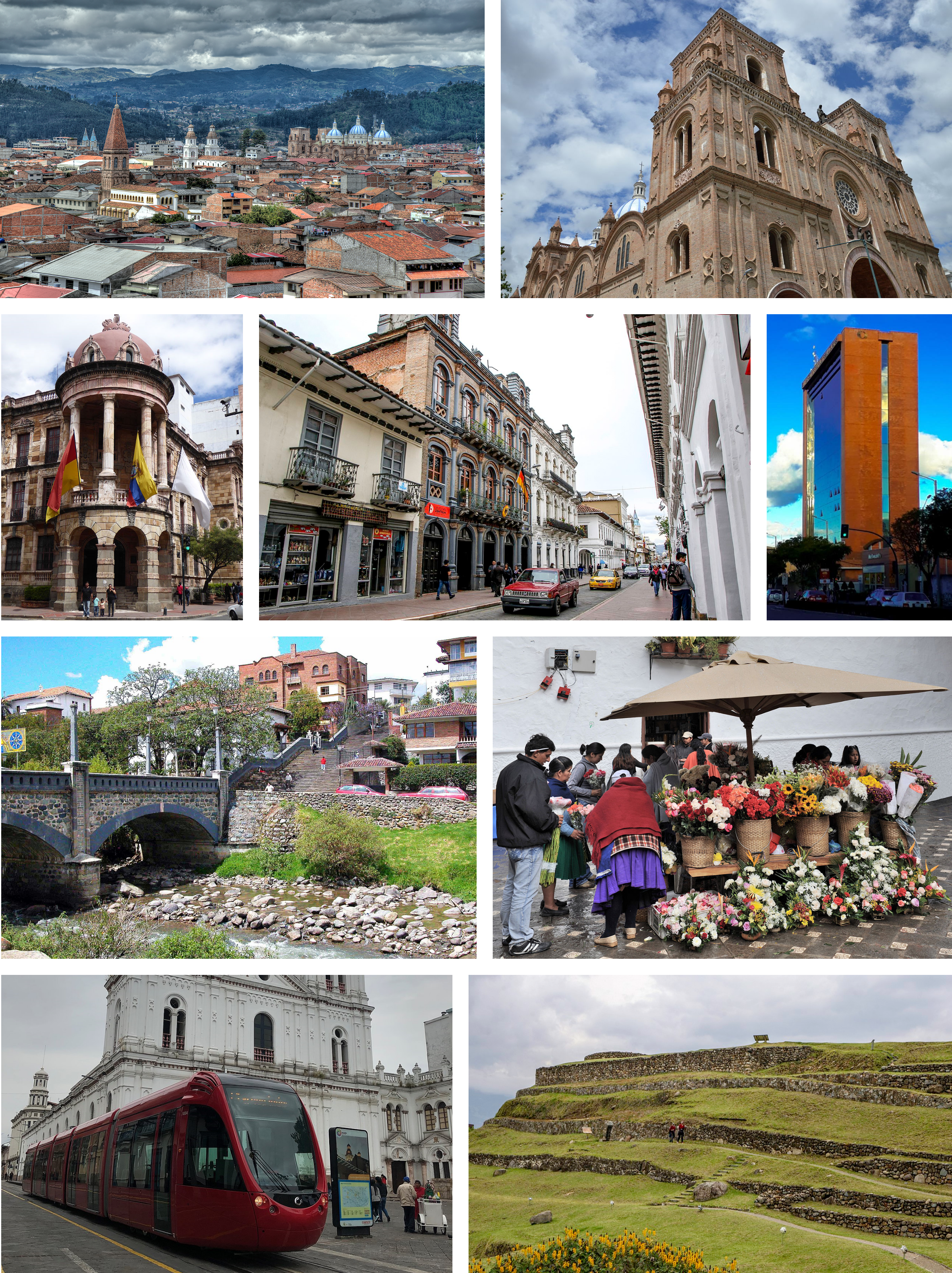
Cuenca sits in a high Andean valley at 2,560 meters, surrounded by four rivers and ringed by eucalyptus hills that glow in the late afternoon light. Its colonial center — a UNESCO World Heritage Site since 1999 — is the most intact in Ecuador: white-plastered buildings with blue-painted ironwork, cobbled streets that actually get swept, and the two domes of the New Cathedral rising above the main plaza in a shade of blue that changes with every hour of daylight.
The city is famous internationally for two things that are often confused. First: the Panama hat. Despite the name's persistent misdirection, the finest toquilla-straw hats in the world are made in the villages around Cuenca — specifically in Montecristi and the nearby highland communities. Several hat workshops in Cuenca sell and sometimes demonstrate the weaving; the finest superfino hats can take months to make and cost several hundred dollars.
Second: the expat retirement community. Cuenca has become one of the world's most popular retirement destinations for North Americans and Europeans, attracted by the climate (spring-like year-round), the safety, the low cost of living, and the city's genuine sophistication. The presence of several thousand long-term foreign residents has created a restaurant and café scene that significantly exceeds what the city's population alone would support — there are good wine bars, farm-to-table restaurants, and specialty coffee shops that feel European in quality.
Beyond the city, the Cajas National Park is 30 minutes to the west — a high paramo landscape of glacial lakes, tussock grass, and polylepis forest at 3,000–4,000 meters. Cajas is outstanding for trekking, birding (condor, hummingbirds, Andean duck), and the kind of big-sky empty-landscape silence that Cuenca's pleasant streets don't provide. The combination of colonial city and highland wilderness within a short distance of each other is the particular quality that keeps travelers in Cuenca longer than they planned.
The practical bits.
- Best time
-
June – September · December – FebruaryCuenca sits near the equator at altitude, so seasons are marked by rain rather than temperature. June through September is drier and sunnier. December to February has a partial dry spell. March, April, and May are the wettest months. The weather is never extreme — Cuencanos call it 'eternal spring' — but the wet season brings afternoon showers that make outdoor sightseeing less comfortable.
- How long
-
4 nights recommendedTwo nights covers the colonial center and markets. Four nights adds Cajas National Park, a hat workshop visit, and a day in the Ingapirca ruins. Seven nights suits those on an extended Ecuador trip or considering a longer stay.
- Budget
-
$70 / day typicalCuenca is very affordable. Set-menu lunches (almuerzos) cost $3–5. Budget guesthouses $20–40. Mid-range boutique hotels $60–120. Restaurants catering to the expat market run $15–30 per person. Cajas tours run $30–50.
- Getting around
-
Walking in the colonial center; taxis for day tripsThe colonial center is walkable — most sights are within 20 minutes on foot. Taxis are cheap ($2–4 across the city, metered). The tram (tranvía) connects the center to the northern and southern ends of the city. For Cajas or Ingapirca, hire a private taxi or join an organized tour.
- Currency
-
US Dollar (USD) — Ecuador uses the US dollar as its official currencyCards accepted at most restaurants and hotels. ATMs widespread. Small markets and almuerzo restaurants are cash-only. Prices are very reasonable in USD.
- Language
- Spanish. English is spoken in tourist hotels and many restaurants; less so in markets and local buses. Spanish basics are helpful.
- Visa
- US, EU, UK, Canadian, and most Western passports enter Ecuador visa-free for 90 days. No advance authorization required.
- Safety
- Cuenca is one of Ecuador's safest cities. The colonial center is safe to walk at all hours. Standard urban precautions apply: don't flash expensive cameras on quiet streets at night, and take registered taxis rather than street hails. Petty theft is the main concern, not violent crime.
- Plug
- Type A / B · 110V — same as the US; no adapter needed for American devices.
- Timezone
- ECT · UTC-5 (Ecuador does not observe daylight saving time)
A few specific picks.
Hand-picked, not algorithmic. Each of these has earned its space.
The landmark of Cuenca — twin blue domes that dominate the skyline from every angle. The interior is richly decorated; climb the dome via a guided tour for views over the colonial center and the Andes. The exterior at different light — dawn blue, sunset orange — is worth photographing from across the plaza.
A 28,000-hectare paramo plateau of glacial lakes (280 of them), polylepis forest, and ancient Inca roads. Altitude ranges 3,000–4,600m. Condors and Andean hummingbirds are regular. The combination of blue-black lake water against the tussock grass against the sky is completely unlike any other Andean landscape.
The Homero Ortega workshop on Gil Ramírez Dávalos demonstrates the full toquilla-straw hat-making process and sells hats from $20 everyday styles to $300+ superfinos. Rafael Paredes & Sons and the Artesanías del Cuenca market are also reliable. Understand before buying: the price difference between a $25 hat and a $300 hat is real — look at the stitch count.
The flower sellers at the 10 de Agosto market are one of Cuenca's most photographed sights — elderly women in traditional pollera skirts surrounded by buckets of fresh-cut flowers from the Andean farms. The attached food market has excellent almuerzo (set-menu lunch) counters.
The main arts and nightlife street — contemporary galleries, bars in repurposed colonial buildings, craft workshops. Runs parallel to the Tomebamba River with terraces overlooking the Barranco. At night, the liveliest strip in the city.
The dramatic bank where the colonial center drops down to the Río Tomebamba — washing women below (historically; some still), the modern city visible across the river, and the best afternoon light in Cuenca. Walk the Bajada de Todos Santos staircase for the classic view.
The Inca site of Pumapungo (the old city of Tomebamba) sits at the eastern edge of the colonial center with excavated foundations, a ceremonial center, and a surprisingly rich site museum with Cañari and Inca artifacts. Free admission, undervisited.
The daily set-price lunch (sopa, segundo, jugo) for $3–5 at one of the Cuenca market restaurants or local fondas is one of the best-value meals in South America. Try locro de papa (potato soup), seco de pollo (chicken stew), and humitas (steamed corn parcels).
The hilltop lookout above the city — the full panorama of Cuenca's colonial domes, the four-river valley, and the Andean ridgeline behind. Best at dusk. Accessible by taxi ($4) or a 30-minute uphill walk.
The quieter, less tourist-oriented colonial neighborhood west of the center — whitewashed walls, elderly residents, a small plaza with a weekly craft market, and several of Cuenca's best specialty coffee shops.
Pick a neighborhood, not a hotel.
Cuenca is a city of neighborhoods. The one you stay in shapes the trip more than the property does.
Different trips for different travelers.
Same city, very different stays. Pick the lens that matches your trip.
Cuenca for culture and colonial architecture enthusiasts
Cuenca's UNESCO historic center is the main event. The preservation quality, the working cathedral, the flower market, and the unhurried pace make it the most rewarding Andean city walk in Ecuador.
Cuenca for slow travelers and long-stayers
Cuenca rewards staying longer — specialty coffee shops, good restaurants, the expat café culture, and proximity to Cajas make a week or two pass pleasantly. Monthly apartment rentals are affordable and easy to arrange.
Cuenca for craft and artisan shoppers
Panama hats, ikat textiles, filigree jewelry, and hand-painted ceramics are the standout purchases. Quality is high and prices are honest compared to Quito's tourist markets. The Homero Ortega workshop is the best introduction to serious hat culture.
Cuenca for nature and hiking travelers
Cajas National Park is a world-class paramo destination 30 minutes from the city. Multi-day trekking in the park and the surrounding highlands is possible for experienced hikers. Birders find Cajas extraordinary for Andean specialties.
Cuenca for ecuador circuit travelers
Cuenca is the southern anchor of the Ecuador highlands circuit — paired with Quito, Cotopaxi, Riobamba, and Baños for a full highland loop. Cuenca is the most polished city on that circuit.
Cuenca for expat and long-term-stay researchers
Cuenca is consistently one of the world's top-ranked retirement and expat destinations. The infrastructure, climate, safety, and cost support a genuine long-term quality of life. Many visitors come specifically to evaluate Cuenca as a potential home.
When to go to Cuenca.
A quick year at a glance. Great, good, or skip — see what each month is doing before you book.
Part of the December–February dry window. Good weather for exploring the city and Cajas.
Carnival season (February or March) brings celebrations, water battles in the streets, and the best energy in the city calendar.
Afternoon showers arrive. Still manageable for city exploration. Landscape starts to green.
One of the wetter months. Pack a rain jacket. Fewer crowds, lower prices.
Still rainy but improving toward end of month. Countryside is brilliant green.
Dry season establishes. Clearer skies. Cajas best from June. Slightly cooler temperatures.
Best month for both city and Cajas. Clear skies, low humidity, reliable sun. Busy but not overwhelmed.
Excellent conditions. Local festivals in August. Some wind but clear and pleasant.
Still good, with first transition showers in late September. Independence of Cuenca celebrations on November 3 (early September preparation begins).
Transitional. Afternoon showers becoming more regular. November 3 Cuenca Independence Day ahead.
November 3 is Cuenca's Independence Day — major city-wide celebrations, parades, and cultural events. Rainy conditions but city atmosphere is exceptional.
December joins the dry window. Christmas processions and late-December festivities add character. Good visiting conditions.
Day trips from Cuenca.
When you want a change of pace. Each one's a half-day or full-day out, easy from Cuenca.
Cajas National Park
30 min west of CuencaThe essential Cuenca day trip. Hire a taxi ($30–50 return) or join a guided tour. The visitor center at Laguna Toreadora is the main start point. Dress warm and expect weather to change quickly. Full-day or half-day.
Ingapirca Inca Ruins
2 hours north of CuencaThe Temple of the Sun and surrounding complex. A guided tour significantly enhances the visit — book through your hotel or a Cuenca tour agency. Most tours combine Ingapirca with the Gualaceo market if on the same day.
Gualaceo Sunday Market & Chordeleg Jewelry
1 hour east of CuencaSunday is market day in Gualaceo — a town known for ikat-woven tapestries and traditional dress. A 5-minute drive further brings you to Chordeleg, Ecuador's filigree jewelry village. Best as a Sunday morning trip.
Quito (extension)
50 min by flight or 8 hours by busQuito is a 50-minute flight or 8-hour bus ride from Cuenca. Most travelers do a Quito-Cuenca circuit or add Mindo (cloud forest) and the highlands between the two cities.
Cajas Archaeological Zone
30 min from Cajas main parkThe Cajas plateau was traversed by the Inca road (Capac Ñan) connecting Quito to Cusco. Some sections are walkable within the park. The combination of high-paramo scenery and Inca road archaeology is distinctive.
Sigsig and Artisan Communities
1.5 hours from CuencaSigsig is a smaller town beyond Gualaceo where several artisan families weave toquilla hats and other straw crafts. Less visited than the Cuenca workshops and more integrated with the rural communities that maintain the tradition.
Cuenca vs elsewhere.
Quick honest reads on the cities people compare Cuenca to.
Quito is larger, more frenetic, and has a bigger colonial center; Cuenca is more intimate, quieter, and arguably better preserved. Quito is the gateway city; Cuenca is the polished Andean city people fall in love with. Both deserve 3+ nights.
Pick Cuenca if: You want the most walkable, livable, and thoroughly pleasant Andean city experience in Ecuador.
Sucre is Bolivia's constitutional capital and has a similarly beautiful colonial center at altitude. Both are white-city UNESCO destinations. Sucre has stronger Bolivian history; Cuenca has better restaurants and the expat infrastructure.
Pick Cuenca if: You are on an Ecuador-specific trip and want the best colonial city the country offers.
Both are major Andean colonial cities. Arequipa is larger and more Peru-centric; Cuenca is smaller, safer, and has better daily café culture. Arequipa is closer to Colca Canyon and Machu Picchu circuits.
Pick Cuenca if: You are routing through Ecuador and want the most comfortable and livable Andean city stop.
La Paz is dramatic, higher, more intense, and chaotic; Cuenca is calm, preserved, and pleasant. Both are Andean cities with strong colonial cores. The experiences are at opposite ends of the Andean-city spectrum.
Pick Cuenca if: You want a polished, walkable colonial city over an intense, high-altitude capital with dramatic urban scenery.
Itineraries you can start from.
Rough shapes for a trip here — a feel for the pace and cost. Find the one that fits you.
Colonial center walk (cathedral, flower market, El Barranco). Panama hat workshop. Almuerzo at a market counter. Calle Larga evening. Mirador del Turi at dusk.
Two days in the city, a full-day Cajas National Park trek, a day at Ingapirca Inca ruins, one slow market day in Gualaceo.
Cuenca (4 nights) → Riobamba or Quito (2 nights, Chimborazo / Mitad del Mundo) → Mindo cloud forest (2 nights, birds, waterfalls). Classic Ecuador highlands loop.
Things people ask about Cuenca.
When is the best time to visit Cuenca?
June through September and December through February are the driest, sunniest months. March to May is the wet season with regular afternoon showers. But at 2,560 meters near the equator, the temperature stays pleasant year-round — a consistent 14–22°C that Cuencanos call 'eternal spring.' Rain is more of a nuisance than a trip-ruiner; pack a light rain jacket any time of year.
Are Panama hats really made in Ecuador?
Yes — despite the name, Panama hats originate from Ecuador, specifically from the coastal village of Montecristi and the highlands around Cuenca. The name came from the early 1900s when hats traveled through Panama to reach North America and Europe. The finest toquilla-straw hats in the world are made in Ecuador. The Homero Ortega workshop in Cuenca is the best-known manufacturer and runs tours of the process.
Is Cuenca worth visiting for a few days?
Yes — Cuenca's colonial center is the best-preserved in Ecuador and rivals any in South America for architectural integrity and livability. Three nights gives you a full day on the streets, a day trip to Cajas, and the evening Calle Larga culture. The expat-influenced restaurant and café scene is a genuine bonus. It's a city that rewards slow exploration rather than checklist sightseeing.
What is Cajas National Park like?
An extraordinary paramo landscape 30 minutes west of Cuenca — 280 glacial lakes across a 28,000-hectare highland plateau at 3,000–4,600 meters. Tussock grass, polylepis forest, and the constant sound of wind and water. The color palette (black water, golden grass, blue sky) is unlike any other landscape in Ecuador. Condors, Andean lapwings, and metallic-green hummingbirds are common. It's cold and can be sudden-cloud-weather; bring warm layers.
What are the Ingapirca ruins?
Ecuador's most important Inca site, 80 km north of Cuenca (2 hours by road). The Temple of the Sun and the surrounding Cañari-Inca complex are the remains of an administrative and ceremonial center built during the Inca expansion north in the 15th century. The site museum explains the Cañari culture that preceded the Inca. A good half-day tour with a guide adds necessary context to what would otherwise seem like undistinguished stone walls.
What is the food scene like in Cuenca?
Better than you'd expect. The expat community has driven a restaurant scene well above Ecuador's average — good Italian, Spanish, vegetarian, and international restaurants exist alongside the excellent Ecuadorian food. Ecuadorian specialties worth ordering: cuy (roasted guinea pig, a local tradition), locro de papa (hearty potato-and-cheese soup), hornado (slow-roasted pork), and the $3–5 almuerzo set lunch that is the best value meal in the country.
Is Cuenca a good base for expat living?
One of the world's most recommended by expat publications. The combination of spring-like climate, low cost of living, excellent infrastructure for its size, walkable colonial center, and good private medical care has attracted several thousand long-term North American and European residents. The city has a genuine expat community infrastructure — English-language newspapers, social clubs, and an established arrival network.
How do I get to Cuenca?
Fly directly to Cuenca's Mariscal Lamar Airport (CUE) from Quito or Guayaquil — flights are 40–50 minutes and run multiple times daily with LATAM and Avianca. Alternatively, the bus from Quito takes 8–9 hours over the Pan-American Highway; from Guayaquil it's 4 hours. Cuenca is 400 km south of Quito, 250 km from Guayaquil.
What crafts can I buy in Cuenca?
Panama hats (toquilla straw) are the premium purchase — visit the Homero Ortega workshop or Artesanías del Cuenca. Ikat textiles (tapestry-woven fabric from nearby Gualaceo), filigree gold and silver jewelry from Chordeleg, ceramic tiles and earthenware, and hand-carved wooden items are all readily available and genuinely locally made. The Mercado Artesanal on Calle Larga concentrates most crafts.
What is the altitude in Cuenca and will it affect me?
Cuenca sits at 2,560 meters (8,400 feet) — high enough to cause mild altitude symptoms in some visitors, particularly those arriving directly from sea level. Common symptoms are slight headache and fatigue on day one. Drink water, avoid alcohol the first day, and take things slowly. Cajas National Park rises to 4,000–4,600 meters; take Cajas as a day trip after at least one night in Cuenca.
What is Calle Larga and what happens there?
Calle Larga ('Long Street') is the main arts, gallery, and nightlife street — a 6-block colonial lane running along the top of the Barranco cliff above the Tomebamba River. During the day it has contemporary art galleries and craft shops. In the evening it becomes the bar and restaurant strip, with several venues built into restored colonial buildings with terraces overlooking the river. It's the place to spend an evening in Cuenca.
Is Cuenca safe for solo female travelers?
Yes — Cuenca is one of Ecuador's safest cities and consistently well-regarded by solo female travelers. The colonial center and Calle Larga are safe at night. Standard urban precautions apply: take registered taxis after midnight rather than walking alone on quiet streets. The large expat and university population gives the city a watchful, community feel.
What day trips are possible from Cuenca?
Cajas National Park (30 min), Ingapirca ruins (2 hours), the craft markets at Gualaceo and Chordeleg (1 hour), the El Cajas archaeological zone, and the lesser-visited Cañari ruins at Coyoctor are all reachable in a day. Gualaceo's Sunday market is the most accessible craft-market day trip in the Cuenca area.
How does the almuerzo system work?
The almuerzo (set lunch) is Ecuador's daily institution — offered at market fondas and local restaurants from around noon to 2 PM, it typically includes sopa (soup course), segundo (main: rice, beans, protein, salad), and jugo (fresh juice). Cost: $2.50–5 depending on the location. The most authentic versions are at the market counters in Mercado 10 de Agosto or the fondas near the flower market.
What is the weather like in Cuenca in April?
April is one of Cuenca's wetter months — part of the March–May rainy season. Expect afternoon showers most days and overcast mornings. The temperature stays pleasant (14–20°C) but outdoor sightseeing requires rain gear. The upside: crowds are very low, prices drop, and the Andean landscape around Cuenca is brilliantly green.
Can you see the Andes from Cuenca?
Yes — Cuenca sits in a valley bowl with Andean ridgelines visible from most elevated points in the city. The Mirador del Turi gives the full panorama: the city in the foreground, the valley rivers, and the mountains behind. Cajas National Park is in the Andes 30 minutes west. On clear mornings after rain, the surrounding peaks are vivid and close.
What is a superfino Panama hat and how much does it cost?
A superfino is the finest grade of toquilla straw hat — distinguished by an extremely high stitch count (200+ stitches per inch in the finest examples), which produces a fabric so tight and supple the hat can be rolled and passed through a ring. The finest superfinos from Montecristi can take months to weave and sell for $200–1,500 or more. The Cuenca workshops sell a full range; the price difference between a $30 tourist hat and a $300 superfino is immediately visible in the quality of the weave.
Is Cuenca good for families with children?
Yes — the city is calm, safe, and walkable. Children enjoy the flower market, the cathedral dome climb, the iguanas in Parque Calderón, and a well-judged Cajas visit with the lakes and wildlife. The Pumapungo site museum is good for older children. The city's low traffic and pedestrianized colonial center make it comfortable for families.
Know someone headed to Cuenca?
Send them this guide — real neighborhoods, timing, and prices, with nothing to sign up for.
Copies the link — nothing to install