St Ives (Cornwall)
Send it to whoever you'd travel with
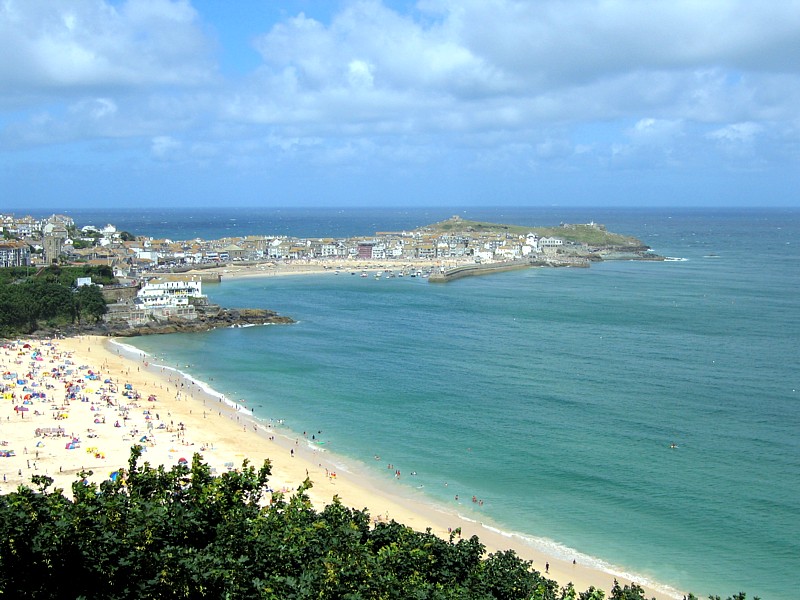
St Ives is the Cornish fishing-port-turned-art-colony with the famous light that drew Hepworth, Nicholson, and the Tate to set up shop here — plus four sandy beaches in walking distance, narrow cobbled lanes, and one of the best small-town food scenes in the UK.
St Ives sits on a small peninsula on the north Cornish coast, surrounded by the Atlantic on three sides. The town has been a fishing port for centuries, an artists' colony since the 1880s, and a major British tourist destination since the railway arrived in 1877. The combination of position (the peninsula creates exceptional light from multiple directions), beaches (four sandy beaches within a 10-minute walk of the harbour), and walkable medieval centre (narrow cobbled lanes, granite cottages, Cornish pasty shops) gives St Ives a quality that justifies its summer crowds.
The artist colony defines the town's modern identity. The first wave (Whistler in the 1880s, then John Park and Borlase Smart) gave way to the influential mid-20th-century group around Barbara Hepworth, Ben Nicholson, Naum Gabo, and Patrick Heron. The Hepworth Studio and Sculpture Garden is now a Tate-managed museum on the site where Hepworth worked and died — one of the most moving small artist museums in Britain. Tate St Ives, on Porthmeor Beach, opened in 1993 and presents 20th-century British art with rotating exhibitions of the St Ives school.
Beyond the art scene, St Ives is a serious beach town. Porthmeor (north-facing, surf beach), Porthminster (south-facing, sheltered, family beach), Porthgwidden (small cove beach), and Bamaluz (locals' beach) ring the peninsula. The Penwith peninsula stretching west to Land's End is a moorland landscape dotted with prehistoric standing stones, tin-mining engine houses (UNESCO Cornish Mining World Heritage), and small fishing villages (Mousehole, Sennen, St Just).
Trade-offs: St Ives is heavily over-touristed in summer school holidays — late July through August can feel like every parent in England has had the same idea. Parking is brutal (use the Park & Ride on the edge of town). Accommodation prices spike accordingly. Out of season (autumn through May) the town reverts to its more authentic working-fishing character. The food scene is genuinely excellent — Porthminster Beach Café, Hub, Porthgwidden Café, and the wider Cornish food revival all show up here.
The practical bits.
- Best time
-
May – SeptemberCornish weather is the constraint — May–September gives reliable daylight and the highest probability of dry days. May and September are sweet spots — pre/post peak crowds and lower prices. July–August is school holiday peak and uncomfortable in the town centre.
- How long
-
3 nights recommendedTwo nights covers the town, Tate, Hepworth, and a beach day. Three lets you add a Penwith day (Land's End, St Just, Cape Cornwall). Four or five works for a beach-and-art week.
- Budget
-
~$170 / day typicalExpensive in school holidays — accommodation prices easily double. Mid-range B&Bs £120–200 / $150–250 in summer, £80–140 shoulder season. Restaurants tourist-priced; dinners £30–50 per person.
- Getting around
-
Walk in town, train/car for PenwithSt Ives town is fully walkable — narrow lanes, no need for a car. The St Ives Bay branch line (from St Erth on the main London-Penzance line) runs scenic 12-minute trips to the town. For Penwith (Land's End, Mousehole, Penzance) a car helps; bus 1A from St Ives runs to Penzance via St Erth.
- Currency
-
Pound sterling (£). Cards accepted everywhere.Contactless and Apple Pay everywhere. Car parks take cards. Some small fishermen and market stalls cash-preferred.
- Language
- English universally. Cornish (Kernewek) is being revived but rarely heard.
- Visa
- UK visa regime. 6 months visa-free. ETA (£10) required from November 2025.
- Safety
- Beach safety the main consideration — Porthmeor has rip currents, lifeguards in summer only. Coastal path edges exposed.
- Plug
- Type G · 230V.
- Timezone
- GMT · UTC+0 (BST UTC+1)
A few specific picks.
Hand-picked, not algorithmic. Each of these has earned its space.
The Tate's St Ives outpost, overlooking Porthmeor Beach. Rotating exhibitions of British 20th-century art with strong St Ives school focus. £15 entry; joint ticket with Hepworth Museum £18.
The studio where Hepworth lived and worked from 1949 until her death in 1975 — left exactly as she had it. Sculptures in the garden, tools in the studio. One of the most affecting small artist museums in Britain. £8.
The family beach — south-facing, sheltered, golden sand. The Porthminster Beach Café (separate entity) is one of Cornwall's best restaurants. 10-minute walk from the harbour.
The surf beach — north-facing, exposed to Atlantic, popular with surfers. Below the Tate. Lifeguards in summer.
The working fishing harbour, still operating despite the tourist trade. Fish landed daily; gulls everywhere. Walk the harbour wall at sunset.
The most westerly point of mainland England. The official visitor centre is touristy; the cliff walks either side are wild and free. Combine with Sennen Cove beach.
Open-air theatre carved into cliff above the sea — the work of Rowena Cade between 1932 and 1983. Summer performances; book months ahead. Day visits £6.
A small fishing village 12 miles south — Dylan Thomas called it 'the loveliest village in England.' Particularly magical at Christmas with the famous harbour lights.
One of Cornwall's standout restaurants, on the sand at Porthminster. Local seafood, Mediterranean-tinged cooking. Book months ahead in summer.
The 'real' end of Cornwall — quieter and more authentic than Land's End. Cape Cornwall is the lesser-known western point. UNESCO Cornish Mining heritage all around.
Pick a neighborhood, not a hotel.
St Ives (Cornwall) is a city of neighborhoods. The one you stay in shapes the trip more than the property does.
Different trips for different travelers.
Same city, very different stays. Pick the lens that matches your trip.
St Ives (Cornwall) for art and culture
Tate St Ives, Hepworth Museum, the wider St Ives school galleries (Penwith Society of Artists, Belgrave, New Craftsman). A serious 3-day art trip on its own.
St Ives (Cornwall) for beach travelers
Four sandy beaches within walking distance, plus Carbis Bay and Hayle Towans nearby. Cornish beaches are some of the best in the UK.
St Ives (Cornwall) for foodies
Porthminster Beach Café, Hub, Porthgwidden, the Sloop Inn, Cornish pasties at Pengenna's. Plus Padstow's Rick Stein scene 1h away.
St Ives (Cornwall) for families
Porthminster Beach, train rides, ice cream, harbour gulls (don't feed them). St Ives is the standard Cornish family destination.
St Ives (Cornwall) for surfers
Porthmeor for in-town surfing, Sennen for bigger waves, Watergate Bay further north. St Ives Surf School operates.
St Ives (Cornwall) for coastal walkers
The South West Coast Path runs through town. St Ives to Zennor (8 miles) is one of the best stretches. Carbis Bay to Lelant is gentler.
When to go to St Ives (Cornwall).
A quick year at a glance. Great, good, or skip — see what each month is doing before you book.
Quiet. Mild but unreliable.
Early daffodils.
Spring approaching. Off-peak.
Easter brings first crowds.
Wildflowers, surf scene begins. Pre-peak.
Best month. Long evenings.
School holidays start. Crowded.
Peak crowds. Book months ahead. Avoid if possible.
Sweet spot. Sea still warm, crowds halve. Best month overall.
Strong autumn light. Half-term brings a small bump.
Off-season prices. Limited restaurants.
Christmas market. Mousehole harbour lights nearby.
Day trips from St Ives (Cornwall).
When you want a change of pace. Each one's a half-day or full-day out, easy from St Ives (Cornwall).
Land's End & Penwith
Full dayLand's End, Sennen Cove, Cape Cornwall, prehistoric standing stones. Best as a slow circular drive.
Minack Theatre & Porthcurno
Half dayMinack Theatre cliffside, Porthcurno's white-sand beach below. Telegraph Museum nearby.
Mousehole & Newlyn
Half dayMousehole is the postcard fishing village; Newlyn has the working harbour and Penlee House art gallery.
St Michael's Mount
Half dayTidal island connected to Marazion by causeway at low tide. National Trust castle and gardens. £15.
Falmouth
Full dayThe south Cornwall harbour town with the National Maritime Museum Cornwall. 1h 15m drive.
St Ives (Cornwall) vs elsewhere.
Quick honest reads on the cities people compare St Ives (Cornwall) to.
Padstow (north Cornwall, 1h east) is smaller, foodier (Rick Stein empire), better as a foodie weekend. St Ives is bigger, more art-focused, with more beaches.
Pick St Ives (Cornwall) if: You want art, beaches, and a bigger town over Padstow's smaller foodie destination.
Falmouth (south Cornwall) is a working maritime town with a great museum and a more local, less tourist-heavy feel. St Ives is more obviously beautiful.
Pick St Ives (Cornwall) if: You want classic Cornish coastal beauty and art over Falmouth's maritime working town.
Brighton is bigger, more urban, with the pier and Lanes. St Ives is smaller, more coastal-village in feel, with proper sandy beaches.
Pick St Ives (Cornwall) if: You want a proper Cornish coastal town with sandy beaches over Brighton's urban seaside.
Itineraries you can start from.
Rough shapes for a trip here — a feel for the pace and cost. Find the one that fits you.
Day one: town walk, Hepworth, Porthminster lunch. Day two: Tate St Ives, Porthmeor surf, harbour evening. Day three: Land's End or Mousehole.
Three nights as above plus a full day on the Penwith moors — St Just, Cape Cornwall, Levant tin mine, Botallack engine houses.
Four nights in St Ives plus a night in Padstow or Falmouth for north or south Cornwall comparison.
Things people ask about St Ives (Cornwall).
Is St Ives worth visiting?
Yes — one of the most distinctive coastal towns in Britain, with serious art (Tate, Hepworth), four beaches in walking distance, and a strong food scene. Three nights is right. Avoid late July–August school holidays if you can.
How do I get to St Ives?
By train: London Paddington to St Erth (5h), then the St Ives Bay branch line (12 min). By car: 5h from London, 2h 30m from Bristol. Newquay Airport (NQY) has regional flights; Bristol or Exeter for more options.
How many days do you need?
Three nights covers the town and a Penwith day. Two minimum. Four or five for a beach-and-art week. Beyond five and you should be exploring north or south Cornwall.
When is the best time to visit?
May, June, and September. May has wildflowers and pre-peak crowds. September has warm sea and post-school holiday calm. July–August is uncomfortably crowded in the town.
Is parking really a problem?
Yes — the town's narrow lanes were not designed for cars. Use the Park & Ride at Lelant Saltings or Trenwith and ride the bus/train in. Or stay somewhere within walking distance and leave the car. Town-centre parking is expensive and limited.
What is the St Ives art scene?
From the 1880s (Whistler, Sickert) through the mid-20th century (Hepworth, Nicholson, Gabo, Heron) to the present, St Ives has been a major British art colony. Tate St Ives and the Hepworth Museum & Sculpture Garden are essential.
Are the beaches good?
Yes — Porthminster is one of the best family beaches in England; Porthmeor is a serious surf beach; Porthgwidden is a quieter cove; Carbis Bay is broader and less crowded. All have soft golden sand.
How expensive is St Ives?
Expensive, particularly in school holidays. Mid-range B&Bs £120–200 in summer, £80–140 shoulder. Restaurants £30–50 per person for dinners. Self-catering cottages typical for week stays.
Can I day-trip to Land's End?
Yes — 30-45 minutes by car or local bus. The official Land's End attraction is touristy; the cliff walks either side are wild and free. Add Sennen Cove and Cape Cornwall.
What is the Minack Theatre?
An open-air theatre carved into a cliff above the sea at Porthcurno — built by Rowena Cade between 1932 and 1983. Summer performances, day visits possible. Book months ahead for performances.
Should I learn about Cornish identity?
Cornwall has a distinct Celtic identity — Cornish (Kernewek) language is being revived, the Cornish flag is everywhere, and there's a real sense of Cornwall not quite being England. The Mebyon Kernow party advocates for Cornish independence. Respect the identity; don't conflate with English.
Know someone headed to St Ives (Cornwall)?
Send them this guide — real neighborhoods, timing, and prices, with nothing to sign up for.
Copies the link — nothing to install