Cádiz
Send it to whoever you'd travel with
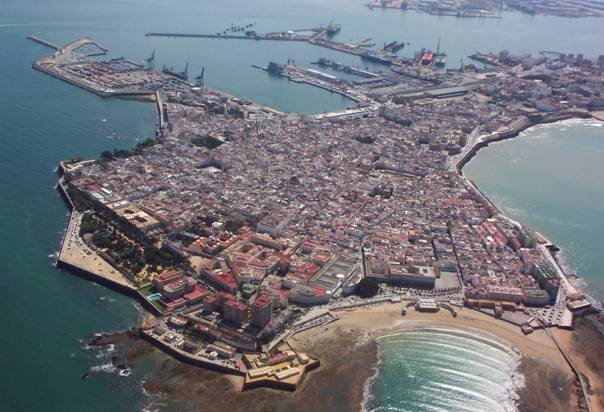
Cádiz claims to be Western Europe's oldest continuously inhabited city — a Phoenician trading post turned Atlantic seaport on a thin peninsula in southwest Spain, with the best Carnival on the peninsula and a relentlessly local Andalusian feel that almost no foreign tourists have discovered.
Cádiz sits at the end of a narrow tongue of land jutting into the Atlantic in Spain's southwestern corner — the city's historic centre is almost entirely surrounded by water, with the Atlantic on three sides and the bay separating it from the mainland on the fourth. Phoenicians founded the settlement around 1100 BC as Gadir, which makes it the oldest continuously inhabited city in Western Europe and one of the oldest in the world. The compactness is real: the old town is a 1.5 km long peninsula, easily walked end to end, with sea visible from almost every cross-street.
What makes Cádiz different from Seville, Granada, or even nearby Jerez is how local it remains. It's an Atlantic city, not a Mediterranean one — the food is cooked fish (fritura gaditana — the great Cádiz fry-up of small fish), the weather is breezier, the architecture is more Caribbean-feeling than Moorish (the wealth from the 18th-century Americas trade went into watchtowers and pastel facades), and the tourism is overwhelmingly Spanish. Foreign visitors are still notable enough that locals will sometimes start a conversation. The Casco Antiguo (old town) breaks into four traditional barrios — La Viña (fishermen, the best old-school taverns), El Pópulo (oldest, medieval lanes), Santa María (Roma flamenco heritage), and El Mentidero (markets and central squares).
The signature event is Carnival — Spain's most famous Carnival after Tenerife, held in February for ten days of street satire, chirigotas (the genre of satirical singing groups that Cádiz invented), and Tuesday-night chaos. It's loud, drunk, witty, and unrelentingly local — the chirigotas perform in Andalusian dialect with topical references and politics that no foreign visitor will fully follow, but the atmosphere translates. Outside Carnival, the city's rhythm is gentle: late breakfasts at Plaza de las Flores, lunch at La Tapería de Columela or Casa Manteca, an afternoon at La Caleta beach in the centre of the peninsula, sherry from across the bay, dinner at 10 PM at El Faro de Cádiz.
The trade-offs: the city is small (you've seen the main sights in two days), the beaches in the old town centre are modest (La Caleta is iconic but tiny), and the wider Costa de la Luz beaches (Zahara de los Atunes, Bolonia, Tarifa) require a car. Two nights covers Cádiz; three lets you add a Jerez day for sherry, a Vejer de la Frontera detour for the white village, or a tuna-cutting (ronqueo) demonstration in Barbate.
The practical bits.
- Best time
-
April – June · September – OctoberAndalucía's southwest has the most temperate weather in Spain — Atlantic-cooled, less brutal than Seville inland. April through June is ideal: warm but not hot, beaches usable, town squares full. September and October are arguably best: warm sea (often 22°C / 72°F in September), thin crowds, Spanish school back in session. Carnival in February is a different proposition entirely — book accommodation 6 months ahead.
- How long
-
2 nights recommendedTwo nights covers the old town, a beach afternoon, and one full day of eating. Three lets you add Jerez (40 min by train) for sherry or Vejer for white-village contrast. Four works as a Costa de la Luz base with car-based beach days.
- Budget
-
~$130 / day typicalOne of Spain's better-value destinations. Hotels €70–150/night mid-range. Tapas plates €3–8 each, a full tapas dinner with wine €15–25/person. Sherry from a single producer in Jerez €15–30 for a flight. Cheaper than Seville; significantly cheaper than San Sebastián.
- Getting around
-
Walking — old town is a peninsulaThe old town is 1.5 km long and you can cross it on foot in 20 minutes. The new town (where most chain hotels sit) is reachable on foot or by city bus. The train station is at the edge of the old town. Trains connect to Seville (90 min), Jerez (40 min), Madrid (4h direct AVE). For Costa de la Luz beaches (Zahara, Bolonia, Tarifa) you need a car or Bla Bla Car — buses exist but are slow. Jerez–Cádiz airport (XRY) is 35 minutes from the city by train or taxi.
- Currency
-
Euro (€). Cards near-universal; some traditional tabernas in La Viña are cash-preferred.Cards and contactless standard in restaurants and shops. Apple Pay widely accepted. Carry €30–50 cash for tapas crawl mornings.
- Language
- Spanish. The Cádiz accent is famously thick — sentence-ending consonants dropped, /s/ aspirated to /h/, fast cadence. Locals are aware they're hard to follow and will slow down for you. English in tourist-facing businesses; less so in old-school tabernas. Some Italian/French understood, especially in Carnival.
- Visa
- Schengen zone. 90-day visa-free for US, UK, Canadian, Australian passports. ETIAS authorization required from late 2026.
- Safety
- Very safe by any standard. Spanish Atlantic cities are notably gentle. Pickpocketing during Carnival is the one real concern — keep wallets close. La Viña is locally working-class but entirely comfortable for visitors.
- Plug
- Type C / F · 230V — standard European adapter.
- Timezone
- CET · UTC+1 (CEST UTC+2 late March – late October). Spain is on the same time as Paris despite its westerly longitude — sunset is unusually late.
A few specific picks.
Hand-picked, not algorithmic. Each of these has earned its space.
The small but iconic beach in the heart of the old peninsula, framed by two 17th-century forts (Santa Catalina and San Sebastián). Featured in the James Bond film 'Die Another Day' standing in for Havana. Sunset here is the city's most reliable photograph.
The yellow-tile-domed cathedral, built in stages from 1722 to 1838 with money from the American trade — a Baroque-meets-Neoclassical hybrid. Climb the Levante tower (€6) for the city panorama. Notable also for the crypt where Manuel de Falla is buried.
The 1838 market — the oldest covered market in Spain. Fish counters with Atlantic catch, ham vendors, modernised tapas stalls inside the central pavilion. Lunch grazing destination.
The defining La Viña tavern — bullfighter and flamenco photos on the walls, payaso (clown) of a host, chicharrones special, sherry from the barrel. Standing room only and cash-preferred. The most concentrated Cádiz experience.
The official Cádiz watchtower (one of 129 historic merchant towers in the city) with a working camera obscura that projects a live 360° view of the city. Half-hourly demonstrations. €7. The best orientation stop.
The two interlocking squares where Cádiz takes its morning coffee — flower stalls on the smaller plaza, market entrance on the larger. The first morning anchor.
Discovered in 1980 beneath the medieval old town — the second largest Roman theatre in Spain, from 70 BC. Free, takes 20 minutes, gives context for the city's 3,000-year layering.
Underrated provincial museum with the two famous Phoenician anthropoid sarcophagi (5th century BC), Roman finds, and a credible 17th-century Spanish painting collection including Zurbarán. €1.50. 90 minutes.
The wide Atlantic beach in the new town — 3 km of golden sand, popular with locals, blue-flag rated. 20-minute walk from the old town. Lunch at one of the chiringuitos (beach restaurants) is the standard summer pattern.
The most polished traditional restaurant in the city — Atlantic seafood done properly, sherry pairings, a long wine list. Where locals take family for Sunday lunch or a notable dinner. Reserve ahead. The grown-up Cádiz dinner.
Pick a neighborhood, not a hotel.
Cádiz is a city of neighborhoods. The one you stay in shapes the trip more than the property does.
Different trips for different travelers.
Same city, very different stays. Pick the lens that matches your trip.
Cádiz for foodies
Atlantic seafood at its best — fritura gaditana, almadraba tuna, sherry pairings, tortillitas de camarones. The Cádiz–Jerez–Sanlúcar triangle is one of Spain's most concentrated food regions and one of the least international-tourist-heavy.
Cádiz for carnival travelers
Cádiz Carnival (10 days in February) is mainland Spain's biggest. Chirigotas, parades, satire, drinking. Hyper-local, intensely Spanish, and the city's defining moment. Book 6 months ahead — the city sells out.
Cádiz for slow travellers and spain repeat-visitors
If you've done Seville, Granada, and Madrid, Cádiz is the next layer — quieter, more local, Atlantic-facing rather than the marquee tourist core. Two nights here recalibrates a Spain trip.
Cádiz for history travellers
3,000 years of urban history layered visibly — Phoenician sarcophagi in the museum, the Roman theatre under El Pópulo, 18th-century watchtowers everywhere, the 1812 Constitution (drafted here while Napoleon held the rest of Spain). The longest continuous urban story in Western Europe.
Cádiz for beach travellers
The Costa de la Luz beaches south of Cádiz (Bolonia, Zahara, Tarifa) are among the European Atlantic's best — wild, wide, kite-surfing-friendly. Cádiz itself has La Caleta in town and Playa de la Victoria for everyday beach days.
Cádiz for sherry and wine travellers
Jerez (40 min) and Sanlúcar (50 min) are right there. Fino, manzanilla, amontillado, oloroso, palo cortado, Pedro Ximénez — the full sherry vocabulary in its home territory. Spend a half-day at Bodegas Lustau or Tradición.
When to go to Cádiz.
A quick year at a glance. Great, good, or skip — see what each month is doing before you book.
Mildest Spanish winter. Locals' city — almost no tourists. Atlantic winds.
CARNIVAL — book accommodation 6 months ahead. Otherwise quiet and mild.
Spring properly. Easter brings local crowds (Holy Week processions are quieter than Seville's but still significant).
Excellent — comfortable for walking, beaches starting to be usable, manageable crowds.
Peak shoulder. Almadraba tuna season at full strength south at Zahara/Barbate. Beach season properly opens.
Excellent. Beach culture full, but Spanish holiday crowds not yet at peak. Solstice festivals.
Cádiz is cooler than inland Seville thanks to Atlantic winds. Busy with Spanish tourists. Beach culture peak.
Peak tourism, peak temperatures. Book everything ahead. Long evenings, late dinners, beach all day.
Quietly the best month — sea at warmest (22°C), Spanish school back so crowds thin, perfect beach weather.
Excellent shoulder — beaches still usable mid-month, restaurants quieter, prices dropping.
Locals' city — almost no tourists. Mild enough for walking, too cool for swimming.
Christmas markets and Andalusian holiday traditions. Mildest December in mainland Spain.
Day trips from Cádiz.
When you want a change of pace. Each one's a half-day or full-day out, easy from Cádiz.
Jerez de la Frontera
40 min by trainThe heart of the Sherry Triangle — visit a bodega (Tio Pepe, Lustau, Tradición), see the Royal Andalusian School of Equestrian Art (dancing-horses show), and eat at Bar Juanito. Half-day to full.
Vejer de la Frontera
1h by car / busOne of the most beautiful pueblos blancos — whitewashed lanes wrapped around a hilltop with views to the Atlantic. Stays overnight rewards even more. The new generation of food (Califa, El Jardín del Califa) is among Andalucía's best.
Bolonia and Baelo Claudia
1h 15m by carOne of Spain's best Roman sites — a complete tuna-fishing town from 1st century BC on a wild Atlantic beach. The dune at the western end is huge and walkable. Spend the day.
Tarifa
1h 15m by carContinental Europe's southernmost town and the kite-surfing capital of Europe. The Old Town is small and atmospheric; the long Bolonia/Valdevaqueros beaches stretch north. Gateway to Tangier (1h fast ferry).
Zahara de los Atunes
1h 15m by carLong white sand on the Costa de la Luz — quieter than Tarifa, more authentic than tourist resorts. May is the famous Almadraba tuna season (ronqueo cutting demonstrations). Eat tuna tartare or tataki at La Almadraba Conil.
Sanlúcar de Barrameda
50 min by carThe third sherry-triangle town and the home of manzanilla. The August horse races on Sanlúcar beach (Carreras de Caballos) are an extraordinary cultural event. Tortillitas de camarones invented here.
Cádiz vs elsewhere.
Quick honest reads on the cities people compare Cádiz to.
Seville is the bigger Andalusian capital — Alcázar, Cathedral, Flamenco, Holy Week, world-famous. Cádiz is smaller, Atlantic-facing, more local, with Carnival and fritura. Different propositions; 90 minutes apart by train, both deserve their nights.
Pick Cádiz if: You want a smaller, Atlantic, food-and-Carnival city with almost no foreign tourists over the famous tourist-heavy Andalusian capital.
Málaga is Mediterranean — Picasso, the new Pompidou, larger food scene, beach-resort hinterland (Costa del Sol). Cádiz is Atlantic — smaller, more local, with Carnival and a more weathered history. Málaga is more international, Cádiz more authentic.
Pick Cádiz if: You want an Atlantic working Spanish city with deep history over a Mediterranean coast capital with bigger museums and resort access.
Lisbon is the Atlantic Portuguese capital — bigger, more famous, with the seven hills, fado, and pastéis de Belém. Cádiz is the Atlantic Spanish small city — quieter, less famous, with chirigotas, Phoenician history, and Carnival. Both deserve their place on Iberia trips.
Pick Cádiz if: You want a smaller, sherry-and-fritura Spanish coastal small city over a bigger, more famous Portuguese Atlantic capital.
Itineraries you can start from.
Rough shapes for a trip here — a feel for the pace and cost. Find the one that fits you.
Day one: Mercado Central breakfast, walk to cathedral and climb the tower, lunch at Casa Manteca, afternoon at La Caleta, dinner at El Faro. Day two: Torre Tavira camera obscura, Museo de Cádiz Phoenician sarcophagi, evening tapas crawl in La Viña.
Add a Jerez day trip — train 40 min, visit Tio Pepe or Bodegas Lustau, dancing-horses school at the Royal Andalusian School of Equestrian Art, lunch at Bar Juanito, late afternoon back in Cádiz. Optional flamenco show that night.
Two nights Cádiz + two nights in Vejer de la Frontera or Tarifa. Day at Bolonia beach with the Roman ruins of Baelo Claudia. Optional Tangier day trip from Tarifa (fast ferry, 1h). End back in Cádiz for the flight.
Things people ask about Cádiz.
Is Cádiz really the oldest city in Western Europe?
Yes — by most archaeological measures. Founded by Phoenicians around 1100 BC, it's been continuously inhabited since. There are older inhabited sites elsewhere (Argos in Greece, Jericho in Palestine) but for continuous Western European urban habitation, Cádiz holds the title. The Phoenician sarcophagi in the city museum are the most visible proof.
Is Cádiz worth visiting?
Yes — but for the right reasons. It's not a museum city like Seville or Granada. It's a working Atlantic Spanish city with a 3,000-year history, the best Carnival in mainland Spain, exceptional Atlantic seafood, and a remarkable lack of foreign tourists. Two to three nights is right; it's not a week-long destination.
Cádiz vs Seville — which should I visit?
Different propositions entirely. Seville is the bigger Andalusian capital — Alcázar, Flamenco neighbourhoods, Holy Week, more famous and more touristed. Cádiz is smaller, Atlantic-facing, more local, with the Carnival and fritura traditions. They're 90 minutes apart by train — visit both.
How many days do you need in Cádiz?
Two nights is the sweet spot for the city itself. Three lets you add Jerez (40 min by train) for sherry. Four works as a Costa de la Luz base with car-based beach days at Bolonia and Zahara de los Atunes.
When is the best time to visit?
April–June and September–October. Spring (April–May) for mild weather and wildflowers; autumn (September–October) for warm sea (often 22°C) and thin crowds. July–August is hot and crowded with Spanish holidaymakers. February is Carnival (book 6 months ahead). Winter is mild but limited beach use.
Should I visit Cádiz during Carnival?
If you can — yes. Cádiz Carnival is Spain's most famous after Tenerife: 10 days in February of chirigotas (satirical singing groups), street parades, and city-wide drinking. It's intensely local but the atmosphere is unmissable. The downside: accommodation needs to be booked 6 months ahead and prices triple. Plan accordingly.
What is fritura gaditana?
The great Cádiz seafood fry-up — small Atlantic fish (boquerones, calamares, cazón en adobo, tortillitas de camarones) lightly battered and fried fast in olive oil. The benchmark is a paper cone full of fritura from Freiduría Las Flores, eaten standing on a plaza with a beer or fino sherry. The defining Cádiz food experience.
What is a chirigota?
A satirical singing group performing during Carnival — typically 7–10 men in costume singing topical songs (in Andalusian dialect, with thick Cádiz accents) about local politics, current events, and city personalities. Lyrics change every year. The genre was invented in Cádiz and is its biggest cultural export. Hard to follow if you don't speak Spanish but the atmosphere is the point.
How do I get to Cádiz?
Direct AVE high-speed train from Madrid (4h) is the most common. From Seville: 90 min by train. Jerez–Cádiz airport (XRY) is the closest, with European budget connections (Ryanair, Vueling); from there 35 min to the city. Seville Airport (SVQ) is 90 minutes by train. Málaga is 3 hours by car.
Where should I eat in Cádiz?
Casa Manteca for traditional La Viña standing-room atmosphere; Freiduría Las Flores for fritura gaditana to take away; La Tapería de Columela for tapas variety; El Faro de Cádiz for elevated Atlantic seafood; Balandro for a more contemporary take. Drink fino or manzanilla sherry rather than wine.
Is Cádiz good for beaches?
Yes, with one caveat. La Caleta beach in the old town is iconic but tiny. Playa de la Victoria in the new town is 3 km of wide Atlantic sand and very good. The bigger Costa de la Luz beaches (Zahara de los Atunes, Bolonia, Tarifa) are 1–1.5 hours south by car and are among the best on the European Atlantic coast — wild, kite-surfing-friendly, sometimes wind-heavy.
Can I do a day trip to Tangier from Cádiz?
Yes, via Tarifa — 1h drive to Tarifa, then 1h fast ferry across the Strait of Gibraltar to Tangier. Long but doable as a day trip; better as an overnight. Don't go on a Friday (mosque-prayer afternoon closures) and bring euros plus some dirhams. Cheaper to book the ferry separately than as part of a tour.
Is sherry worth tasting?
Definitely — and Jerez de la Frontera (the home of sherry production) is 40 minutes from Cádiz by train. Visit Tio Pepe (the biggest, tour-bus-heavy), Lustau (small, serious, the best for nerds), or Bodegas Tradición (boutique, expensive). Manzanilla from nearby Sanlúcar de Barrameda is the local fino-style sherry served all over Cádiz.
Is Cádiz safe?
Very. Spanish Atlantic cities are notably gentle. The only meaningful risk is pickpocketing during Carnival when streets are dense. La Viña is working-class but entirely comfortable for visitors. Beach areas, old town lanes, late-night streets — all safe by standard urban awareness.
Know someone headed to Cádiz?
Send them this guide — real neighborhoods, timing, and prices, with nothing to sign up for.
Copies the link — nothing to install