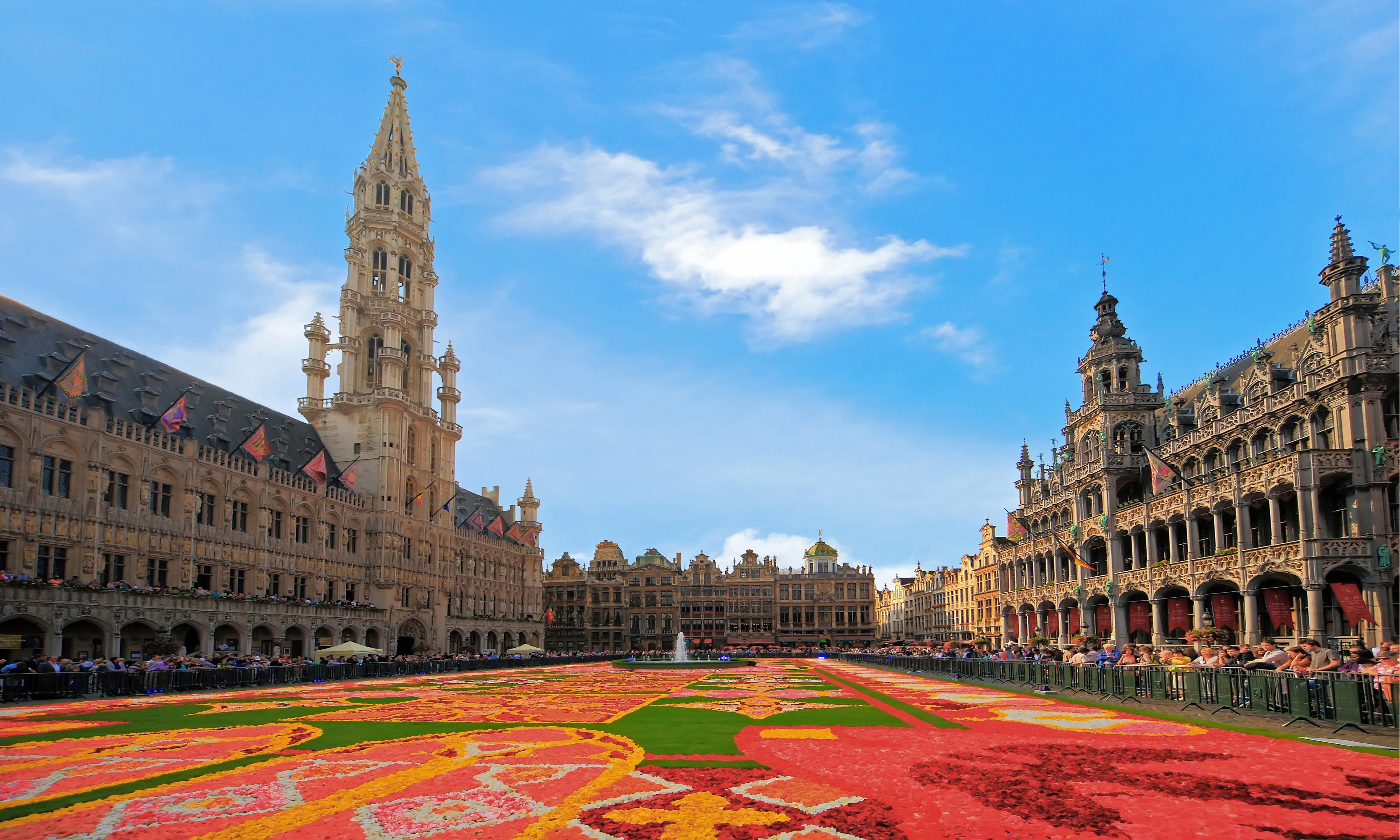
Brussels
Send it to whoever you'd travel with
Brussels is the capital Europe keeps underrating — part EU administrative hub, part genuinely strange Flemish-French city with the continent's best beer culture, improbable architecture, and a food scene that punches well above its profile.
Brussels gets a bad reputation from its own residents, who love to complain about it, and from casual visitors who confuse the EU quarter's glass-block bureaucracy with the actual city. The EU district is worth avoiding. The rest of Brussels is one of the genuinely interesting cities in northern Europe — a place where Flemish guild culture, French-speaking bourgeois life, African immigration, and a deeply weird national art tradition have been layered on top of each other for 500 years.
The Grand-Place is the starting argument for Brussels — a Baroque guildhall square of extraordinary cohesion, built largely in the decade after Louis XIV shelled it in 1695. The rest of the Lower Town radiates outward from it with a density of chocolate shops, friterie stands, and Art Nouveau storefronts that slowly convinces you the city isn't joking about any of this. The Upper Town, reached by glass elevator or very steep escalator from the comic-book murals of the Sablon, has the royal museums, the palace, and the Magritte Museum — which alone justifies the train to Brussels.
Beer is the serious business. Belgium has over 1,500 documented beer styles, and Brussels is where the most anarchic of them — the lambic family — originates. Cantillon Brewery in Molenbeek is a working lambic operation that has changed nothing since 1900: you can drink a glass of Gueuze or Kriek at the bar, surrounded by cobwebbed barrels, while the fermentation hazes the air. It is one of the most atmospheric drinking experiences in the world.
The city's trade-off is coherence — it resists single-narrative storytelling more than almost any other European capital, and large parts of it (particularly the ring roads and the area around the Gare du Midi) feel actively hostile to walking. Pick the right neighborhoods — Ixelles, Saint-Gilles, the Marché aux Puces quarter — and Brussels rewards you with a city of genuine texture. Arrive with curiosity and a good beer bar list.
The practical bits.
- Best time
-
April – June · September – OctoberBrussels in May and June is warm (15–21°C), the outdoor café terraces open, and the parks come alive. September is the best single month — the summer tourist surge fades, temperatures stay pleasant, and the city returns to its working self. Winter is grey and damp; Christmas markets at Grand-Place are the one good reason to come November–December.
- How long
-
3 nights recommendedTwo nights covers the Grand-Place area and one museum. Three nights adds Ixelles/Saint-Gilles, Cantillon, and a better feel for the city. Five nights makes sense combined with a Ghent or Bruges day trip.
- Budget
-
€170 / day typicalBrussels is reasonably affordable for a capital city. A Belgian craft beer costs €3–5, a restaurant meal €18–30, a midrange hotel room €100–170. Museum passes and EU district hotels push the top end significantly.
- Getting around
-
Metro + tram + walkingThe metro covers the main corridors but misses some of the best neighborhoods. Trams fill the gaps — the 81 and 92 cover Ixelles and Saint-Gilles. The center is walkable but the hills between Lower and Upper Town require effort. 24-hour STIB passes (€8) cover all public transport including metro, tram, and bus.
- Currency
-
Euro (€) · widely acceptedCards accepted almost everywhere. Contactless and mobile pay universal. Some traditional friteries and markets prefer cash — carry €20–30.
- Language
- French, Dutch, and German are all official; French dominates in Brussels. English is widely spoken in tourist areas, restaurants, and hotels. Staff at most venues are comfortable in multiple languages.
- Visa
- Schengen zone — 90-day visa-free for US, UK, Canadian, Australian, and most Western passports. ETIAS authorization required from late 2026.
- Safety
- Generally safe in tourist areas. Watch for pickpockets around Grand-Place and Gare du Midi. The area around Gare du Midi at night deserves caution. Molenbeek has had a fraught press reputation since 2015 but is in practice fine during daylight.
- Plug
- Type C / E · 230V — standard European adapter needed.
- Timezone
- CET · UTC+1 (CEST UTC+2 late March – late October)
A few specific picks.
Hand-picked, not algorithmic. Each of these has earned its space.
One of the finest squares in Europe — 34 guildhalls in Baroque gold and black, the Gothic Town Hall spire, and the neo-Gothic King's House. Victor Hugo called it the most beautiful square in the world. Go at night when the illuminations remove the selfie-stick crowd.
A working lambic brewery operating since 1900, making spontaneously fermented Gueuze and Kriek in wooden barrels. The self-guided tour is excellent; the bar at the end pours your choice from the barrel. One of the most atmospheric drinking experiences in Europe.
The largest René Magritte collection in the world — 200 works in the painter's home city. The museum inside a classic Brussels townhouse is excellently curated. Budget 2 hours. Combined tickets available with the adjacent BOZAR.
Victor Horta's own home and studio, now a museum and UNESCO site — the finest surviving example of Art Nouveau interior design, from the staircase ironwork to the mosaic floors. Tuesday–Sunday only; book ahead in summer.
Holds the Guinness World Record for largest beer menu — 2,000+ varieties. The warren of bars spreads across three floors and an alley. Touristy but genuinely comprehensive. Go on a weekday afternoon for breathing room.
Brussels's largest Sunday market — 450 stalls of North African spices, fresh pasta, olives, secondhand goods, and the most diverse street food in the city. Sunday mornings only; arrive by 9 AM and bring a bag.
The 102-meter steel atom model built for the 1958 World's Fair — absurd, iconic, and genuinely fun inside. The top sphere has panoramic views and a permanent mid-century modernism exhibition. The Mini-Europe park next door works well with kids.
Europe's oldest shopping arcade (1847) — glass-vaulted neoclassical galleries linking the Rue du Marché aux Herbes with the Rue des Bouchers. Neuhaus chocolatiers, independent bookshops, and a cinema still operating in period rooms.
Wednesday afternoon farmers' market in one of Brussels's most liveable squares. Artisan cheeses, wine, street food. Surrounded by the best café terrace culture in the city. The anti-Grand-Place Brussels.
Victor Horta's grand arts centre hosts world-class classical concerts, contemporary art exhibitions, and film screenings. Check the programme at bozar.be — the quality and the pricing are both surprisingly accessible.
Pick a neighborhood, not a hotel.
Brussels is a city of neighborhoods. The one you stay in shapes the trip more than the property does.
Different trips for different travelers.
Same city, very different stays. Pick the lens that matches your trip.
Brussels for beer enthusiasts
Brussels is the pilgrimage destination. Cantillon for lambics, Moeder Lambic Fontainas for the curated bar experience, Brasserie de la Senne for local craft. The beer map alone can fill a 3-night trip.
Brussels for art and architecture lovers
Magritte, Horta, the Flemish Primitives in MRBAB, the Grand-Place Baroque guildhalls, and 30+ Art Nouveau facades in walking distance of each other. Few cities of this size have this density of distinct architectural traditions.
Brussels for food travelers
Belgian frites (Maison Antoine), moules-frites in season, the Sunday Marché du Midi, Pierre Marcolini's chocolate, a serious Belgian restaurant dinner in Ixelles. The city eats much better than its reputation.
Brussels for weekend city-breakers
Brussels is purpose-built for a 2–3 night break. It's less than 2 hours from London, Paris, and Amsterdam by high-speed rail. Strong for a combined Eurostar weekend with maximum cultural density.
Brussels for families with children
Atomium and Mini-Europe handle the structured activities. Parc du Cinquantenaire for outdoor time. Comic-strip murals across the city hold attention on walks. The Natural Sciences Museum dinosaur hall is a reliable win.
Brussels for budget travelers
Brussels is one of the better-value Western European capitals. Museum entry is reasonable; many are free on the first Sunday of the month. Frites and Liège waffles from street stands cost €3–5. Hostel beds from €28.
When to go to Brussels.
A quick year at a glance. Great, good, or skip — see what each month is doing before you book.
Quietest month. Some indoor brewery visits and museum days work well. Lowest hotel prices.
Still quiet. Carnival parades in some outer communes. Limited appeal otherwise.
Parks begin to stir. Easter weekend brings brief crowds. Coffee-terrace season beginning.
Terraces open. Floralia (flower show at Grand Bigard nearby). An underrated month.
The city at its most agreeable. Museums, parks, outdoor markets all humming.
Belgian National Day prep. Fête de la Musique. Best evening terrace weather.
Belgian National Day (Jul 21) with free concerts and fireworks. Tourists at peak.
Flower carpet at Grand-Place (even years only, mid-August) is spectacular. Otherwise quiet as EU workers leave.
Heritage Days (European Heritage Days) open private buildings. City returns to rhythm. Best overall month.
Festivals continue. BOZAR season begins. Good museum weather. Jacket needed.
Pre-Christmas quiet. Late November market begins. Mostly indoor-focused.
Christmas market at Grand-Place is one of Europe's best-lit. Ice rink. Crowded but atmospheric.
Day trips from Brussels.
When you want a change of pace. Each one's a half-day or full-day out, easy from Brussels.
Bruges
55 minDirect train from Brussels-Midi, frequent departures. Arrive before 10 AM to beat the day-tripper surge. The Groeningemuseum and a canal boat are the main structured sights; the rest is wandering.
Ghent
30 minArguably a better day trip than Bruges — livelier, cheaper, and less stage-managed. The Ghent Altarpiece in St. Bavo's Cathedral is one of the great works of European art.
Antwerp
40 minBelgium's second city and design capital. The Central Station alone is worth the train ride. Great for a fashion-and-food day; the Zurenborg neighborhood has extraordinary Art Nouveau housing.
Tervuren & Africa Museum
35 minTram 44 from Montgomery goes directly to the museum through the Forêt de Soignes. The newly renovated Africa Museum is honest about its colonial origins in ways the original was not. Half-day trip.
Waterloo Battlefield
30 minRegular buses from Brussels-Midi. The Memorial 1815 museum is well-done; the Lion's Mound panoramic view over the field is genuinely atmospheric. Best visited June 18 for commemorations.
Dinant
1h 30mTrain to Namur then connection to Dinant, or drive. The citadel and collegiate church on the cliff face above the Meuse are dramatic. The town claims the saxophone inventor Adolphe Sax.
Brussels vs elsewhere.
Quick honest reads on the cities people compare Brussels to.
Amsterdam is prettier, better-known, and more immediately visitor-friendly. Brussels is weirder, more architecturally diverse, has better beer culture, and rewards curiosity over postcard-seeking. Amsterdam suits a tight 3-night first visit; Brussels rewards a longer, stranger look.
Pick Brussels if: Beer culture, Art Nouveau architecture, Magritte, and a city that surprises you matter more than canal boat photos.
Bruges is a medieval stage set — exquisitely preserved, small, and heavily touristed. Brussels is a real capital with grit, diversity, and a range of experiences Bruges can't match. Use Brussels as base and Bruges as the day trip.
Pick Brussels if: You want a full city experience rather than two days in an open-air museum.
Paris is deeper, grander, and more universally magnetic — it needs 5+ days. Brussels is more contained, more eccentric, and more accessible for a shorter trip. The Eurostar makes them natural partners at just 1h 22m apart.
Pick Brussels if: You want to combine European capitals and need a second city to pair with Paris.
Ghent is smaller, student-driven, and better for casual street life and canal-side eating. Brussels has the full capital experience — better museums, more complex culture, more international profile. Ghent is a day trip from Brussels.
Pick Brussels if: You want the Belgian capital experience rather than a focused canal-city break.
Itineraries you can start from.
Rough shapes for a trip here — a feel for the pace and cost. Find the one that fits you.
Grand-Place evening arrival. Next day: Cantillon, Magritte Museum, Galeries Saint-Hubert, dinner in Ixelles. Day 2: Atomium, BOZAR concert or film.
Add the Marché du Midi Sunday morning, a full day in Saint-Gilles (Horta Museum + café circuit), an evening at Delirium, and one day trip to Ghent.
Brussels base for 3 nights, day trips to Bruges and Ghent, then one overnight in Antwerp before flying home. Trains run hourly between all four cities.
Things people ask about Brussels.
When is the best time to visit Brussels?
April through June and September through October are the best months — temperatures between 14–21°C, outdoor terrace culture fully open, and the city at its most liveable. July and August are warm but heavy with tourism. Winter is grey and damp; the Grand-Place Christmas market (late November–January 1) is the main winter draw, but general travel in December–February is cold and limited in outdoor appeal.
How many days do you need in Brussels?
Two full days covers the Grand-Place area, one or two museums, and a beer-hall evening. Three nights is the practical sweet spot — you can add the Horta Museum in Saint-Gilles, the Cantillon Brewery, and get a sense of the Ixelles café culture that makes Belgians actually like their city. Four or five nights makes sense if you're day-tripping to Bruges or Ghent.
Is Brussels a safe city to visit?
Yes, though with the usual urban caveats. The main tourist areas are safe. Pickpockets operate around the Grand-Place and on the metro. The area around Gare du Midi, particularly late at night, is where most visitors have unpleasant experiences. Molenbeek has an outsized media reputation for danger that doesn't match the reality of walking through it during the day.
What is Belgian beer and what should I try?
Belgian beer culture has over 1,500 documented styles — far beyond the global lager standard. Key categories: Trappist ales (Orval, Westmalle, Chimay brewed by monks), lambics (spontaneously fermented with wild yeast — Cantillon's Gueuze is the classic), saisons, strong golden ales (Duvel), and witbiers (Hoegaarden at its source). At Cantillon, try the Gueuze and a Kriek (cherry lambic). At a bar like Moeder Lambic, work through a flight.
What is the best thing to eat in Brussels?
Belgian fries (frites) are the answer — twice-fried in beef fat, served in a paper cone with your choice of sauce (andalouse and samurai are the local favorites). Get them at Maison Antoine in Ixelles. Beyond frites: Liège waffles from street stalls (not Brussels waffles — those are the tourist version), moules-frites in season, vol-au-vent, and chocolate from Pierre Marcolini or Neuhaus.
How do I get from Brussels Airport to the city center?
The Brussels Airport Express train runs every 15–30 minutes to Gare du Midi, Gare Centrale, and Gare du Nord — about 20 minutes to Centrale, €13.70 per journey. Taxis cost €40–50 and take 25–45 minutes depending on traffic. The Airoport bus (line 12) connects to the EU quarter. For most visitors, the train is the obvious choice.
Is Brussels good for a weekend trip?
Very much so — it's one of Europe's most accessible weekend destinations. Paris is 1h 22m by Eurostar; London is 2h; Amsterdam is 1h 50m; Cologne is under 2 hours. Budget Friday arrival to Monday morning and you get two full days plus evenings. Hit Cantillon on Saturday, the Marché du Midi on Sunday morning, and the Grand-Place both evenings when the light is good.
Is Brussels expensive?
Less than most Western European capitals. Midrange travelers spend €150–200 per day. A good restaurant dinner runs €25–40 per person; a beer in a bar €3–5; a museum €10–15. Hotels near the Grand-Place carry a premium; Ixelles and Saint-Gilles neighborhoods offer better value and a more local experience. Eurostar weekend fares from London can be the biggest line item.
What is the best museum in Brussels?
The Magritte Museum is the strongest single draw — 200 works by René Magritte in a genuinely well-designed space, telling the story of Belgian Surrealism with wit. The Horta Museum is the Art Nouveau answer. MRBAB (Royal Museums of Fine Arts) is vast and worth 3 hours for the Flemish Primitives and Rubens collection. Africa Museum in Tervuren (20 min by tram) is newly renovated and unexpectedly excellent.
Can I visit Brussels without speaking French?
Entirely, yes. English is widely spoken in restaurants, shops, hotels, and museums. Brussels is officially trilingual (French, Dutch, German) and in practice quite cosmopolitan — it's one of the most multilingual cities in the world by virtue of the EU institutions. A basic 'bonjour/merci' goes a long way with older Francophone locals outside the tourist belt.
What day trips can I do from Brussels?
Bruges is 55 minutes by direct train — medieval canal city, UNESCO historic center, the best chocolate scene in Belgium. Ghent is 30 minutes — a proper university city with a castle, a canal-side eating culture, and far fewer tourists than Bruges. Antwerp is 40 minutes — fashion, diamond district, Rubens House, and a great contemporary restaurant scene. All are feasible as day trips from Brussels.
What is Art Nouveau architecture in Brussels?
Brussels is one of the great Art Nouveau cities — architect Victor Horta's sinuous iron-and-glass style transformed the city's residential neighborhoods in the 1890s–1900s. The Horta Museum (his own house) is the best single building; the walking circuit of Saint-Gilles and Ixelles covers 30+ Art Nouveau facades. The tourist office publishes a free walking map. Best at street level — ring doorbells only at the museums.
Is Brussels good for families with children?
Better than its reputation suggests. The Atomium is genuinely engaging for kids (the space-age structure, the views). Mini-Europe next door handles 2–3 hours for children. The Natural Sciences Museum has a spectacular dinosaur gallery. The Parc du Cinquantenaire is well-suited for running-around time. The Royal African Museum in Tervuren has interactive galleries. Belgian frites and waffles tend to win the food battle.
What is the Manneken Pis and is it worth seeing?
Manneken Pis is a 50-cm bronze statuette of a urinating boy near the Grand-Place — Brussels's unofficial mascot since 1619. It's worth a 3-minute detour; worth dedicating a morning to, it is not. The statue's absurdity is the point: Brussels takes genuine pride in the joke, dresses it in seasonal costumes (it has a wardrobe of 1,000+), and sells it on every souvenir shelf.
What is Brussels like compared to Amsterdam?
Both are canal-rich, art-dense, beer-tolerant northern European cities with strong cycling cultures. Amsterdam is more immediately photogenic, better known, and more visitor-polished. Brussels is weirder, more architecturally diverse, linguistically complex, and in many ways more interesting at second glance. Amsterdam is cleaner; Brussels is stranger. Do both if you're in the region.
What should I know before visiting the Cantillon Brewery?
Cantillon (Rue Gheude 56, Molenbeek) is a working brewery producing spontaneously-fermented lambic ales since 1900. It runs a self-guided museum tour (€9) with tasting included. Open Tuesday–Saturday and the first Sunday of each month, closed in summer fermentation months (August). It's one of Brussels's genuine unmissable experiences — nothing about it is staged for visitors, and the resulting atmosphere is authentic to the point of being slightly eerie.
How do I get around Brussels?
The metro connects major hubs (Gare Centrale, Gare du Midi, Schuman for the EU quarter, Rogier for the north). Trams fill the gap for Ixelles, Saint-Gilles, and the Cinquantenaire. Walking works well in the Lower Town but the grade between Lower and Upper Town is steep. The STIB app covers all routes and sells 24h passes (€8) and 48h passes (€13.50) — worth it for any stay over two days.
When is the worst time to visit Brussels?
January and February are grey, cold, and damp — the city offers little to compensate unless you enjoy beer culture indoors (which Brussels does deliver in winter). August can feel slightly abandoned in the same way as Paris, though the EU institutions empty rather than the restaurants. The Grand-Place flower carpet event (every other year in mid-August) is the exception — genuinely spectacular and worth planning around.
What chocolate shop in Brussels should I visit?
Pierre Marcolini in the Sablon for single-origin bars and bonbons at the premium end. Neuhaus in the Galeries Royales for the historic setting (they invented the Belgian praline in 1912). Mary Chocolatier near the Grand-Place for royal warrants and beautiful packaging. For a working atelier feel, Laurent Gerbaud near the Sablon uses less sugar and more Asian-inspired flavors than his Belgian peers.
Know someone headed to Brussels?
Send them this guide — real neighborhoods, timing, and prices, with nothing to sign up for.
Copies the link — nothing to install