Belfast
Send it to whoever you'd travel with
Belfast is the Northern Irish capital that built the Titanic, lived through the Troubles, and emerged as one of Europe's most interestingly layered cities — with a serious food scene, world-class peace-line murals, and the Giant's Causeway an hour up the coast.
Belfast is the capital of Northern Ireland, sitting at the head of Belfast Lough on the east coast. With about 350,000 people in the city and 670,000 in the metropolitan area, it's a manageable mid-sized capital with a compact, walkable centre. The city's history is layered: a Victorian industrial powerhouse (linen, shipbuilding, rope-making), the launch site of the Titanic in 1912, the epicentre of the Northern Irish Troubles from 1969 through the 1998 Good Friday Agreement, and now a 25-year story of post-conflict regeneration that has produced one of Europe's most distinctive urban transformations.
Belfast's reputation precedes it. The black-cab tours of the peace lines and political murals (Falls Road and Shankill Road, the Catholic-republican and Protestant-loyalist communities respectively) are sobering and essential — both communities welcome the income and the witnessing. The 11-metre peace wall, still standing decades after the ceasefire, runs between the two sides; the gates close at night. This is not a museum piece — it's living, complicated, and ongoing.
The other Belfast is the Titanic Quarter on the regenerated shipyard site. The Titanic Belfast museum (opened 2012, on the slipway where the ship was actually built) is an exceptional purpose-built attraction that walks visitors through the design, construction, launch, and sinking with full Belfast civic pride. The SS Nomadic (Titanic's tender boat, the only White Star Line ship remaining afloat) is moored alongside. The Cathedral Quarter, the Victorian arcade-heavy city centre, the riverside redevelopment, and the rising independent food scene (St George's Market, Made in Belfast, Holohan's) make up a city that genuinely rewards 2–3 nights.
Trade-offs: Belfast's history can't be skipped past — the city's identity is deeply engaged with the Troubles and the political situation remains delicately balanced. Visitors should take this seriously. The weather is Atlantic and unpredictable. And though the food scene has improved meaningfully, it's still smaller than Edinburgh or Dublin in scale.
The practical bits.
- Best time
-
May – SeptemberMildest Northern Irish weather, longest daylight, and the Causeway Coast in best walking conditions. May and September are sweet spots — pre/post peak crowds. Winter is grey but functional; the indoor culture (Titanic, museums) handles it well.
- How long
-
2 nights recommendedTwo nights covers the city centre, Titanic Belfast, and a black-cab tour. Three lets you add the Giant's Causeway day. Four works as a base for the wider Antrim coast.
- Budget
-
~$140 / day typicalCheaper than Dublin or Edinburgh. Mid-range hotels £75–140 / $95–180 per night. Pub meals £15–25. Contemporary restaurants £35–55 per person. Belfast is one of the better-value UK and Irish capitals.
- Getting around
-
Walk or TranslinkBelfast city centre, Titanic Quarter, and Cathedral Quarter are walkable. Translink Metro buses cover the wider city. Glider rapid transit runs east-west on a single line. Black-cab tours cost £35–45 for 1.5h. The airport (BFS) is 13 miles north — £30 by taxi or £8 by Airport Express bus.
- Currency
-
Pound sterling (£). Northern Ireland uses GBP, not Euros (despite sharing an island with the Republic of Ireland, which uses Euros).Contactless and Apple Pay everywhere. Cash optional. Many places will accept Euros at goodwill rates if you're coming from the Republic, but it's not standard.
- Language
- English universally. Irish (Gaeilge) is spoken by a small minority; Ulster-Scots is recognised but rarely heard in everyday use.
- Visa
- UK visa regime. 6 months visa-free. ETA (£10) required from November 2025.
- Safety
- Belfast is generally safe — significantly safer than its 1970s–1990s reputation suggests. Standard urban awareness. The peace walls and certain neighbourhoods on July 11–12 (Orange marching season) can be tense; check current advice.
- Plug
- Type G · 230V — British three-pin plug.
- Timezone
- GMT · UTC+0 (BST UTC+1 late March – late October)
A few specific picks.
Hand-picked, not algorithmic. Each of these has earned its space.
The world's largest Titanic visitor attraction, built on the slipway where the ship was launched. £24.95 adult; book online. Allow 3 hours. The exhibit takes you from Belfast's industrial rise through the ship's construction, fitout, launch, and sinking.
1.5h tour by black cab driven by either a Catholic or Protestant local — both perspectives offered. £35–45 per cab (1-6 people). Cover political murals, peace walls, history. Essential and sobering.
Friday, Saturday, Sunday — Belfast's beloved Victorian covered market with food stalls, produce, antiques, live music. Saturday is the best day for full activity.
The arts and nightlife district — independent bars (Duke of York, the Dirty Onion), the Mac contemporary arts centre, Belfast Cathedral, cobbled streets and exposed-brick warehouses.
Victorian prison-museum, closed 1996 — guided tours of the punishment block, hanging cell, and tunnel to the courthouse. £15. 1.5h.
Free national museum — strong on Northern Irish art, history, natural history. The Spanish Armada gold from the Girona wreck is the headline. Allow 2-3 hours.
Edwardian Baroque civic building (1906), free guided tours daily. The Titanic memorial garden in the grounds is moving.
Titanic's tender boat — the last surviving White Star Line vessel. Moored next to Titanic Belfast; included in the museum ticket.
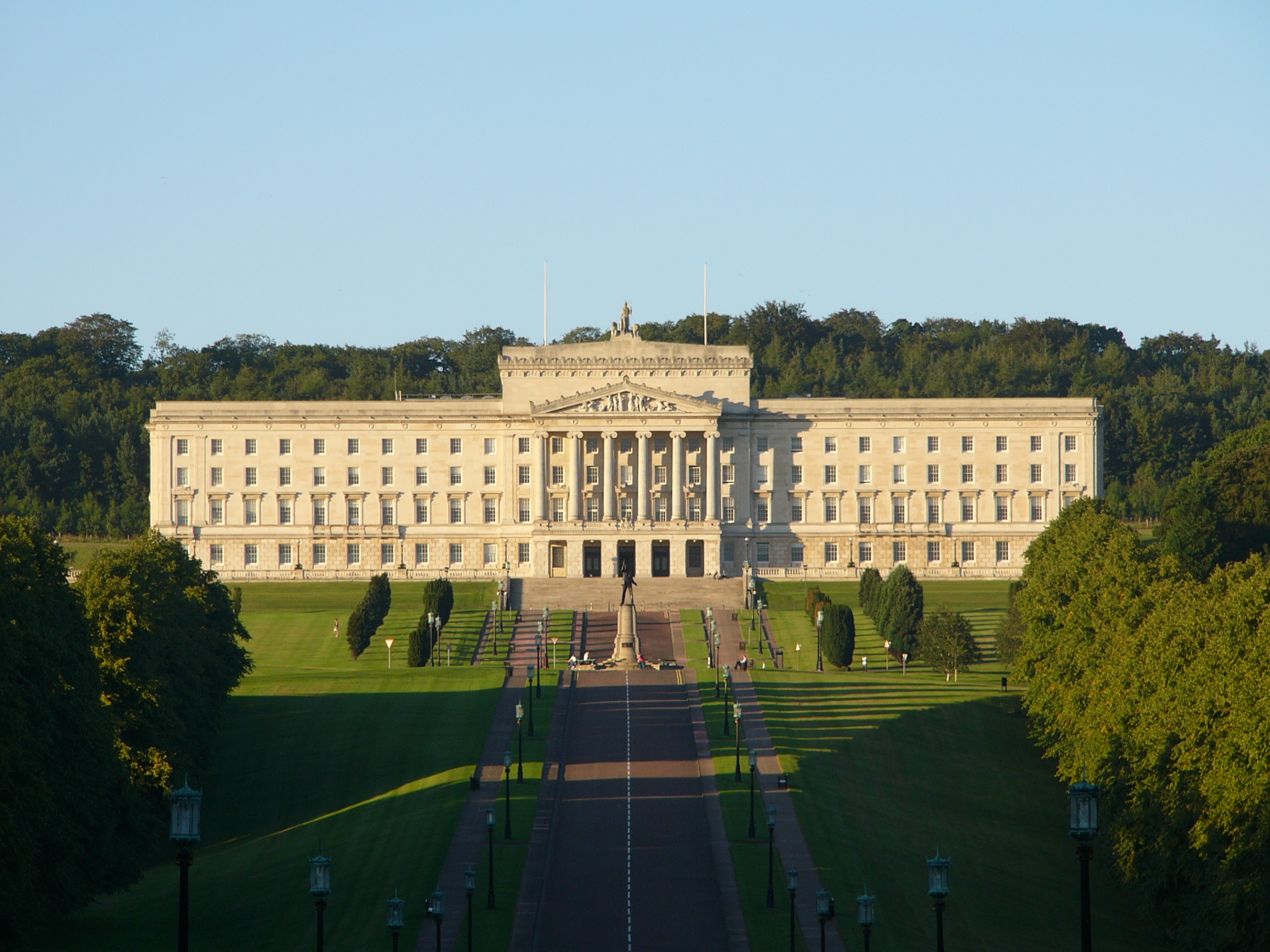
The neoclassical building housing the Northern Ireland Assembly. Free entry; tours available when the Assembly isn't sitting. Surrounding parkland and Stormont Castle are walkable.
Two of the standard-bearer independent restaurants — Hadskis for elevated, Made in Belfast for relaxed. Belfast's contemporary food scene has matured meaningfully in the past decade.
Pick a neighborhood, not a hotel.
Belfast is a city of neighborhoods. The one you stay in shapes the trip more than the property does.
Different trips for different travelers.
Same city, very different stays. Pick the lens that matches your trip.
Belfast for history travelers
The Troubles murals and peace walls, Crumlin Road Gaol, Titanic Belfast, Ulster Museum. Belfast layers 200 years of dense, complicated history in a compact city.
Belfast for titanic enthusiasts
Belfast is where the ship was designed, built, launched, and where many crew came from. Titanic Belfast, SS Nomadic, Titanic's Dock and Pump-House, the Titanic Memorial Garden.
Belfast for film and tv tourists
Northern Ireland was the primary filming location for Game of Thrones — Castle Ward, Dark Hedges, Ballintoy harbour, Cushendun caves are all within 1h of Belfast. Specialist tours run daily.
Belfast for architecture and victorian heritage
City Hall, Crown Liquor Saloon (Britain's most ornate Victorian pub), Cathedral Quarter, Stormont. Belfast's Victorian wealth left a substantial architectural legacy.
Belfast for food travelers
St George's Market, the Cathedral Quarter restaurants, the Belfast bap, Ulster fry. The scene has matured meaningfully in the past decade.
Belfast for music and arts
Cathedral Quarter live music, the Mac contemporary arts centre, the Ulster Hall, Limelight venue. Strong gig and live-music tradition.
When to go to Belfast.
A quick year at a glance. Great, good, or skip — see what each month is doing before you book.
Quiet. Indoor culture handles weather.
Still low season.
St Patrick's Day brings city activity.
Easter brings activity. Shoulder prices.
Cathedral Quarter Arts Festival.
Long evenings. Festivals.
School holidays. Note Twelfth (July 11-12) marching season tension.
Belfast Pride. Continued festivals.
Excellent. Crowds halve.
Belfast International Arts Festival.
Christmas market opens late month.
Christmas market and festive atmosphere.
Day trips from Belfast.
When you want a change of pace. Each one's a half-day or full-day out, easy from Belfast.
Giant's Causeway
Full day1h by car. Combine with Carrick-a-Rede rope bridge, Dunluce Castle, and Bushmills Distillery for a full Causeway Coast day.
Game of Thrones filming locations
Full dayMultiple Northern Ireland filming locations — the Dark Hedges, Cushendun caves, Ballintoy harbour. Specialist tours available.
Dublin
2h by bus or trainCross-border day trip — the southern Irish capital. Long day; better as overnight.
Glenveagh & Donegal
Full dayCross-border to Donegal — Glenveagh National Park and Castle. 2h drive. Cross-border car hire considerations apply.
Strangford Lough & Mournes
Full daySouth of Belfast — Castle Ward (Game of Thrones Winterfell), the Mourne Mountains, Newcastle seafront.
Belfast vs elsewhere.
Quick honest reads on the cities people compare Belfast to.
Dublin is bigger, more touristy, more polished, in the Republic of Ireland (uses Euros). Belfast is smaller, rawer, more historically charged, in the UK (uses GBP). 2h apart by bus.
Pick Belfast if: You want the rawer, more historically engaged city with Titanic and Troubles heritage over Dublin's more polished tourism.
Edinburgh is more dramatic in setting (castle, Royal Mile), more touristy, more expensive. Belfast is more affordable, more historically complex, with Titanic and the Troubles.
Pick Belfast if: You want a complex post-conflict capital with Titanic heritage over Edinburgh's tourist-heavy heritage spectacle.
Both are similar-sized non-English UK capitals. Cardiff has castle and rugby; Belfast has Titanic and Troubles. Both reward 2 nights.
Pick Belfast if: You want a politically engaged post-conflict capital over Cardiff's friendlier Welsh capital.
Itineraries you can start from.
Rough shapes for a trip here — a feel for the pace and cost. Find the one that fits you.
Day one: Titanic Belfast, SS Nomadic, Cathedral Quarter evening. Day two: black-cab tour, City Hall, St George's Market (Sat-Sun), Ulster Museum.
Two nights as above plus a day on the Causeway Coast — Giant's Causeway, Carrick-a-Rede rope bridge, Dunluce Castle.
Two Belfast nights then two on the Wild Atlantic Way in Donegal — Glenveagh, Slieve League cliffs.
Things people ask about Belfast.
Is Belfast worth visiting?
Yes — it's one of Europe's most interestingly layered cities, with Titanic heritage, the lived legacy of the Troubles, a regenerating food and arts scene, and easy access to the Giant's Causeway. Two nights minimum; three with the Causeway day.
How many days do you need?
Two nights covers the essentials. Three with a Causeway Coast day. Beyond three you should be moving on or using Belfast as a base for the wider Antrim coast or Donegal.
How do I get to Belfast?
Belfast International (BFS) and George Best Belfast City (BHD) airports have direct flights from most major European cities. From Dublin by bus: 2h. By car: 2h. Stena Line and P&O Ferries from Scotland and England.
When is the best time to visit?
May–September. May and September are sweet spots. The Causeway Coast is best in May–September too. Avoid the July 11–12 Twelfth marching season if you're sensitive to political tension.
Is Belfast safe?
Yes, by UK city standards. The Troubles era ended over 25 years ago. Standard urban awareness. Peace wall areas are tourist-friendly. Some peripheral neighbourhoods retain tension; the city centre and main attractions are completely safe.
What is a black-cab tour?
A guided tour by black taxi through the Falls Road and Shankill Road — the Catholic-republican and Protestant-loyalist communities. The drivers are usually from one community and offer their perspective; both perspectives are available. £35–45 per cab (1-6 passengers), 1.5h.
Should I see the peace walls?
Yes — they're a profound and ongoing testament to the Troubles. The biggest is along Cupar Way between the Falls and Shankill. Walk respectfully; both communities accept visitors.
Is Titanic Belfast worth the price?
Yes — at £24.95 it's not cheap, but the exhibit is comprehensive, well-paced, and sits on the actual slipway where the ship was built. Includes SS Nomadic and Titanic's Dock and Pump-House.
Belfast vs Dublin — which should I choose?
Different. Dublin is bigger, more touristy, more polished, with Trinity College and the Guinness Storehouse. Belfast is smaller, rawer, more historically charged, with Titanic and the Troubles. Pair them — 2h apart by bus.
Is Belfast in the UK or Ireland?
Northern Ireland is part of the United Kingdom. The Republic of Ireland (Dublin, the southern 26 counties) is a separate country. Both share the island of Ireland. Belfast uses pound sterling; Dublin uses euros.
Can I day-trip to the Giant's Causeway?
Yes — 1h by car or 2h by tour bus from Belfast. Tours run daily and include Carrick-a-Rede rope bridge, Bushmills Distillery, and Dunluce Castle. The Causeway itself is free, the visitor centre £15.
What is the food scene like?
Improving meaningfully. St George's Market is the institutional anchor (Friday-Sunday). Cathedral Quarter has independent restaurants — Made in Belfast, Hadskis, Coppi. Belfast bap and Ulster fry are local specialties.
Know someone headed to Belfast?
Send them this guide — real neighborhoods, timing, and prices, with nothing to sign up for.
Copies the link — nothing to install