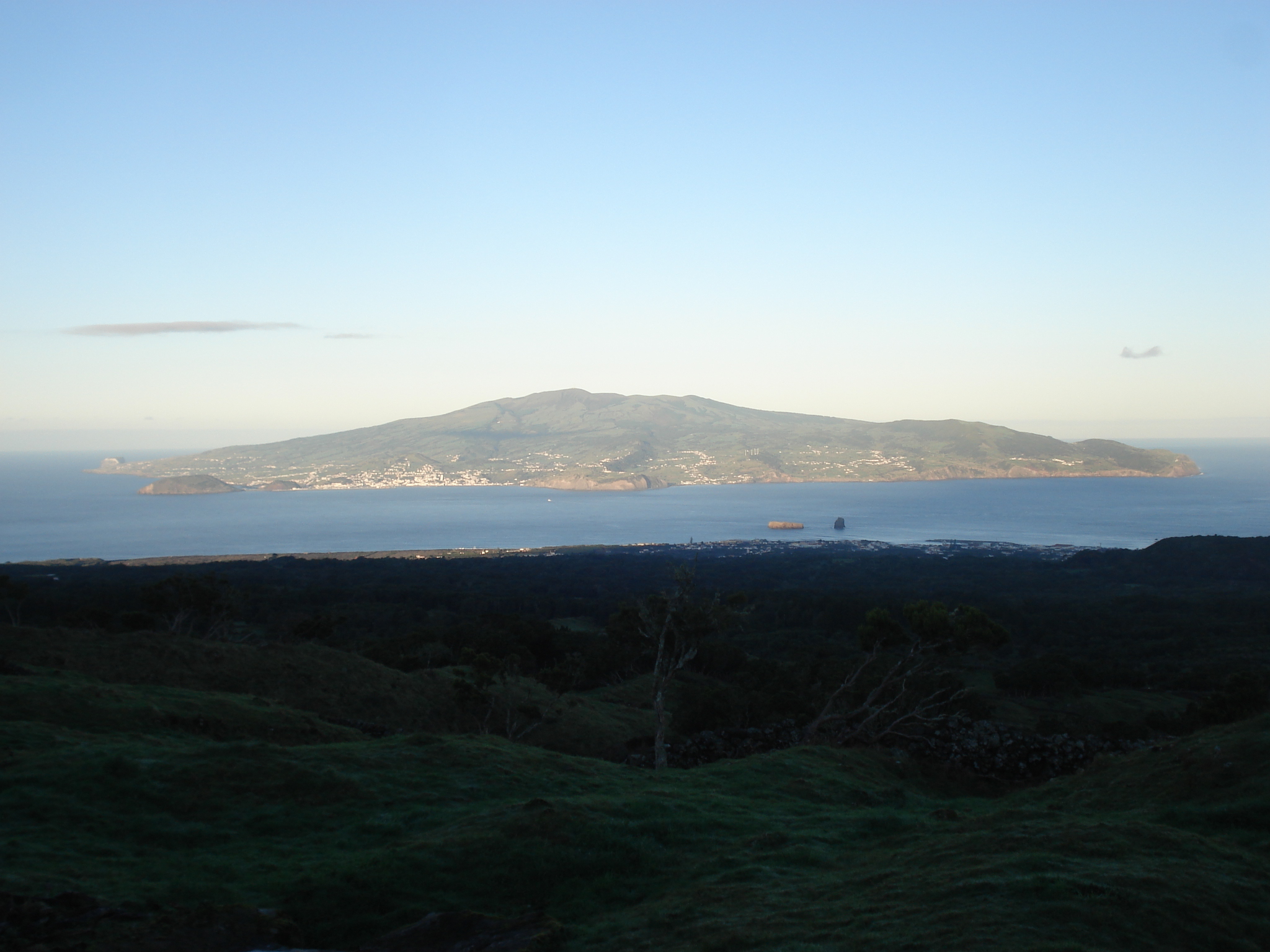
Faial (Azores)
Send it to whoever you'd travel with
Faial is the small central Azorean island known to Atlantic sailors as 'the blue island' — for its hydrangea hedges — where the 1957 Capelinhos eruption added new land to Europe, and where Horta marina's Peter Café Sport is the ritual stop for every yacht crossing the Atlantic.
Faial is one of the central Azorean islands, smaller than São Miguel (174 km² vs 759 km²) and quieter. The island is called 'the blue island' for the hydrangea hedges that bloom across the interior in June and July — every road, every field boundary turns blue. Faial's central caldera is one of the great volcanic features of the Azores: a 7 km circumference cone you can walk around in 3 hours, with views down 400m into the crater.
The 1957 Capelinhos eruption is the island's defining recent event. Volcanic activity off the western tip created a new headland — 2.4 km² of fresh black-and-gray landscape that's still settling and changing. The lighthouse that once stood at the coast now sits inland, partly buried; the Capelinhos Interpretation Centre is built into the lava field and is one of the best volcanic-event museums in Europe. The walk across the field to the lighthouse is otherworldly and unmissable.
Horta, Faial's main town and the Azores's second-largest city, is the Atlantic sailor's port. Every yacht crossing from Europe to the Caribbean stops here — and tradition says each crew must paint their boat's name and route on the harbor wall before leaving. The wall is now an open-air gallery thousands of paintings deep. The associated ritual stop is Peter Café Sport, a 1918 sailors' bar that maintains a poste-restante service for transatlantic mail, sells scrimshaw and gin, and serves as the unofficial Atlantic-crossings social center. Even non-sailors recognize it as an institution.
The trade-offs: Faial is small enough that 3-4 nights is the right dose. The neighboring island of Pico is 30 minutes by ferry and adds the highest mountain in Portugal (Ponta do Pico, 2,351m) plus the Pico Vineyards UNESCO landscape — most Faial visitors do at least a day trip there. The right Faial trip is 3-4 nights based in Horta, with Capelinhos, the central caldera, and at least one Pico ferry day.
The practical bits.
- Best time
-
May – OctoberSame as the rest of the Azores — mild but variable climate, four-seasons-in-one-day common. June and July are peak hydrangea bloom (Faial's signature). May-October has the most reliable weather; winter is mild but wet.
- How long
-
3 nights recommendedTwo nights covers Capelinhos, the caldera, and Horta. Three adds a Pico day trip. Four-plus suits slow travelers or two-island Faial-Pico stays.
- Budget
-
~$150 / day typicalSlightly cheaper than São Miguel. Mid-range hotels €80-150. Restaurant meal with wine €25-35. Car rental €30-50/day.
- Getting around
-
Rental car essentialHorta is walkable but the island's main attractions (Capelinhos, the caldera) require a car. Buses are infrequent. Pick up at Horta airport (HOR) on arrival.
- Currency
-
Euro (€). Cards widely accepted.Cards accepted. Cash for small bars and ferry tickets.
- Language
- Portuguese. English widely spoken in Horta (sailors' town).
- Visa
- Schengen zone. 90-day visa-free for US, UK, Canadian, Australian. ETIAS required from late 2026.
- Safety
- Very safe.
- Plug
- Type C / F · 230V
- Timezone
- Azores Time · UTC-1 (UTC+0 late March – late October)
A few specific picks.
Hand-picked, not algorithmic. Each of these has earned its space.
The 1957 eruption site — 2.4 km² of new land with the half-buried lighthouse. Interpretation Centre is excellent. Walk across the lava field. €10. Half-day.
7 km circumference walk around the rim of the central caldera. 3 hours. View down 400m into the crater. Hydrangea-lined access road in summer.
The Atlantic sailors' port — the harbor wall painted by every yacht crew that's stopped. Walk along the wall examining the boat names and routes. Free.
1918 sailors' bar that's now an institution — poste-restante service, scrimshaw museum, gin and tonic ritual, and the social center of every Atlantic crossing. The Horta visit.
Faial's nickname 'the blue island' comes from the dense hydrangea hedges marking every field boundary. Peak bloom June-July. Drive the interior roads.
Black-sand beach with views to Pico volcano across the channel. Family-friendly.
Twin volcanic cones above Horta with viewpoints over the harbor and across to Pico. Walk or drive up.
30-minute ferry to Madalena on Pico island. Several daily departures. €4 each way. Essential side trip.
Pick a neighborhood, not a hotel.
Faial (Azores) is a city of neighborhoods. The one you stay in shapes the trip more than the property does.
Different trips for different travelers.
Same city, very different stays. Pick the lens that matches your trip.
Faial (Azores) for sailing travelers
Horta is the Atlantic sailor's spiritual home. Even non-sailors recognize the harbor wall tradition and Peter Café Sport's status. The most concentrated maritime atmosphere in Europe.
Faial (Azores) for volcanology and geology travelers
Capelinhos is one of Europe's most accessible recent-eruption sites. The Interpretation Centre is genuinely educational. Combined with the central caldera walk, a full geology day.
Faial (Azores) for hydrangea photographers
Faial's nickname 'the blue island' is accurate — June and July, the entire interior is fenced in hydrangea blooms. Photographically unique.
Faial (Azores) for slow travelers
3-4 nights in Horta with daily morning walks on the marina is the right pace. The island rewards unhurriedness.
Faial (Azores) for multi-island azores travelers
Faial is the natural Azorean second island — combines with Pico and São Jorge in the central 'triangle' loop, all reachable by short ferry.
Faial (Azores) for atlantic-crossing curious
For travelers fascinated by the Atlantic-crossing tradition, Horta's harbor wall and Peter Café Sport are the closest thing to a maritime hall of fame.
When to go to Faial (Azores).
A quick year at a glance. Great, good, or skip — see what each month is doing before you book.
Quiet, wet. Some restaurants closed.
Off-season.
Drier. Pre-season.
Hydrangeas not yet bloomed. Whale season offshore.
Excellent. Pre-hydrangea peak.
Hydrangeas blooming. Excellent.
Hydrangea peak. Atlantic-crossing sailors arrive. Excellent.
Sea Week festival in Horta. Peak. Excellent.
Excellent. Crowds receding.
Pleasant. Wetter.
Off-season begins.
Quiet, wet.
Day trips from Faial (Azores).
When you want a change of pace. Each one's a half-day or full-day out, easy from Faial (Azores).
Capelinhos Volcano
30 min by carBuried lighthouse, lava-field walk, Interpretation Centre. Half-day.
Pico island
30 min ferryDay trip from Faial. Madalena old town, wine tasting, lava pools. Full day.
Caldeira do Faial
20 min by carWalk around the central caldera. 3 hours. Hydrangea-lined road.
São Jorge island
1h 30m by ferryThe third central-triangle island. Day-tripable but better as overnight.
Monte da Guia
10 min by carWalk up for views over Horta and across to Pico.
Faial (Azores) vs elsewhere.
Quick honest reads on the cities people compare Faial (Azores) to.
São Miguel is bigger, with crater lakes, geothermal valley, and a week of variety. Faial is smaller, more focused, with the Capelinhos volcano and Horta's sailor culture.
Pick Faial (Azores) if: You want a smaller, more focused Azorean experience with sailing culture and the most accessible recent-eruption site.
Pico has Portugal's highest mountain (2,351m) and the volcanic vineyards UNESCO landscape. Faial has the sailor's town and Capelinhos. Combine them — 30 min ferry apart.
Pick Faial (Azores) if: You want the sailor and volcano focus over Pico's mountain-and-wine register.
Madeira is much larger and more developed, with the levada network and a real capital. Faial is small, quiet, Azorean. Different scales of Atlantic-island experience.
Pick Faial (Azores) if: You want the small, quiet, focused Atlantic-island experience over Madeira's developed scale.
Both have major volcanic landscapes. Lanzarote is bigger, drier, design-driven. Faial is smaller, greener, focused on the 1957 eruption and sailing culture.
Pick Faial (Azores) if: You want the Azorean wet-green volcanic experience with sailing tradition over Lanzarote's design-and-arid alternative.
Itineraries you can start from.
Rough shapes for a trip here — a feel for the pace and cost. Find the one that fits you.
Day one: Horta, marina wall, Peter Café Sport. Day two: Capelinhos volcano + caldera walk. Day three: Pico day trip (ferry to Madalena, wine tasting, lava-pool swimming).
Three nights Faial + two nights Pico. The classic central-Azores pair — sailor's town and volcanic vineyards.
Faial 3 nights + Pico 2 nights + São Jorge 2 nights. The three central Azorean 'triangle' islands all reachable by short ferry. The Azores deep dive.
Things people ask about Faial (Azores).
Is Faial worth visiting?
Yes — for travelers already in the Azores, Faial is the most distinctive of the central islands. The Capelinhos volcano, the sailor's harbor at Horta, and the hydrangea blue interior are all specific to Faial. 3-4 nights is the right dose.
Faial vs São Miguel — which Azorean island?
São Miguel is the standard first-Azores visit — larger, with crater lakes, geothermal valley, and a full week of variety. Faial is smaller, more focused, with the Capelinhos volcano and Horta's sailor culture. Visit both if your trip allows 8+ nights; if just one Azorean island, choose São Miguel first.
How do I get to Faial?
Fly to Horta (HOR) — direct flights from Lisbon (2h 30m) and inter-island connections from São Miguel and Terceira. Ferries from Pico (30 min) and São Jorge (1h 30m).
What is Peter Café Sport?
A 1918 sailors' bar at Horta marina that's evolved into an Azorean institution — poste-restante mail service for transatlantic sailors, scrimshaw museum upstairs, signature gin and tonic, and the social center for boats crossing the Atlantic. Whether you sail or not, it's the Horta ritual stop.
Should I visit Capelinhos?
Yes, strongly. The 1957 eruption created 2.4 km² of new land at the island's western tip — the half-buried lighthouse and the lava-field walk are unmissable. The Interpretation Centre is one of the best volcanic museums in Europe. Allow half a day.
Can I day-trip to Pico from Faial?
Yes, easily — 30-minute ferry from Horta to Madalena on Pico, several daily departures, €4 each way. A day trip covers the volcanic vineyards (UNESCO) and a winery tasting. For climbing Pico mountain (2,351m), an overnight is required.
When is the best time to visit Faial?
May through October. June-July for the peak hydrangea bloom (Faial's nickname 'the blue island'). The Sea Week festival in early August. Winter is mild but wet.
How long do you need on Faial?
Three nights is the standard answer — Capelinhos, the caldera, Horta, and a Pico day trip. Two nights is the minimum; four with slower exploration.
What should I eat on Faial?
Linguiça sausage (Azorean style), bolo lêvedo, fresh fish from the harbor, cheese from Pico (the neighbor island), and the local gin and tonic at Peter Café Sport. Genuíno seafood restaurant on the marina is the destination meal.
What is the harbor wall about?
Tradition holds that every yacht crew crossing the Atlantic must paint their boat's name, year, and route on the harbor wall at Horta — leaving without doing so is bad luck. The wall is now thousands of paintings deep, a remarkable open-air maritime gallery.
Where should I stay on Faial?
Horta is the obvious choice — base of all the social and restaurant action, walking access to the marina, easy car departures. Praia do Almoxarife (10 min east) is quieter with Pico views.
Is Faial good for families?
Reasonably so. Capelinhos engages older kids with the volcanic dramatic story. The harbor wall is a curiosity for any age. Black-sand beach at Praia do Almoxarife is family-safe. Less geothermal-pool variety than São Miguel.
Know someone headed to Faial (Azores)?
Send them this guide — real neighborhoods, timing, and prices, with nothing to sign up for.
Copies the link — nothing to install