Alleppey
Send it to whoever you'd travel with
Alleppey is where Kerala's backwater geography becomes legible — a grid of canals, rice paddies, and Vembanad Lake that you experience properly only from the deck of a houseboat moving slowly through it.
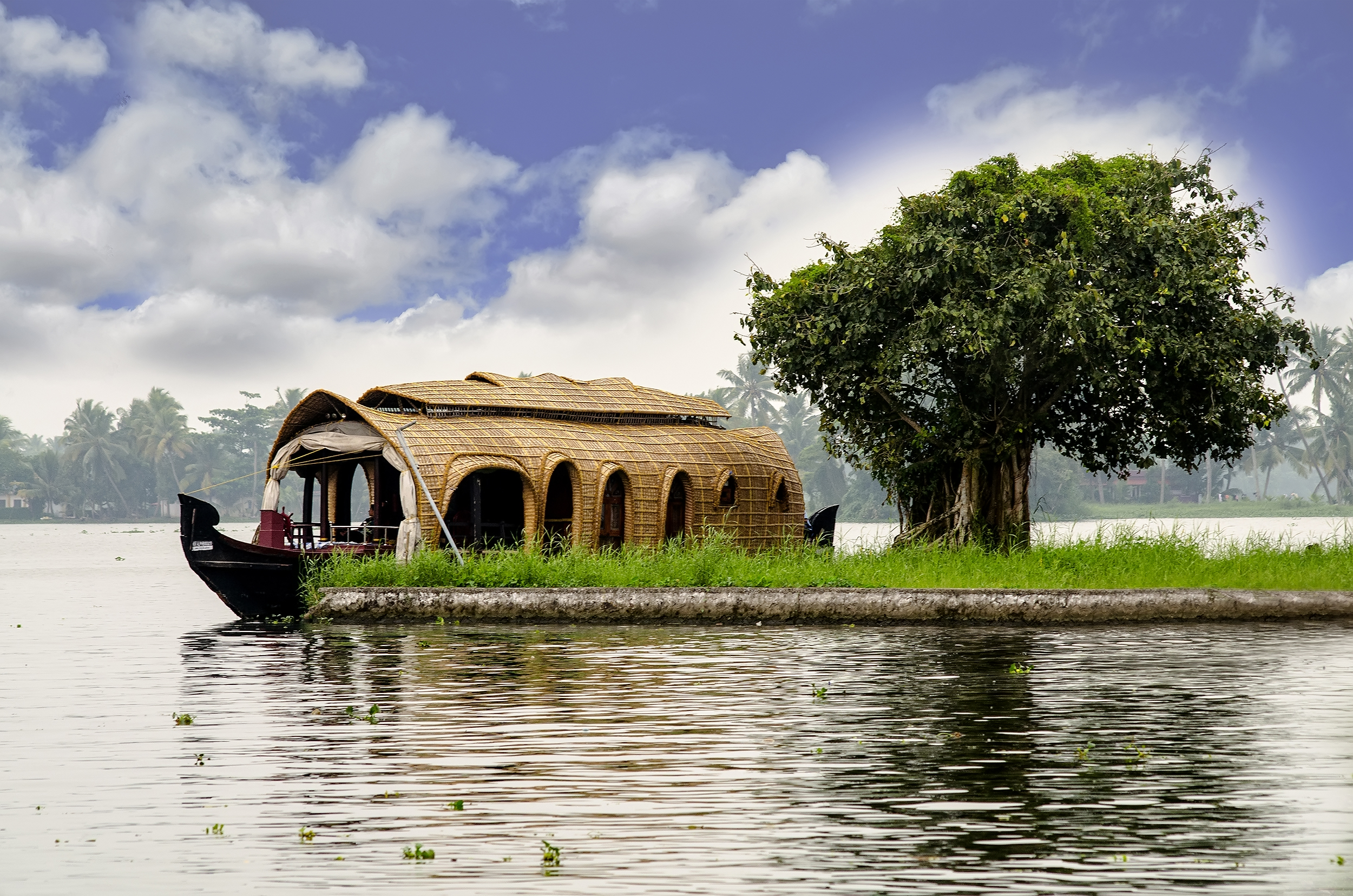
The Kerala backwaters are a 900-km network of lagoons, canals, rivers, and lakes running parallel to the Arabian Sea coast between Kollam and Kozhikode — a hydrological system that separates the coastal strip from the interior in a way that shaped every aspect of life here for centuries. Transport was by canoe. Paddy fields were irrigated by controlled canal openings. The fishing communities built their homes on narrow strips of land between the water and the sea. The Kettuvallam — the flat-bottomed wooden rice boat that is now Alleppey's defining product — was the cargo barge that moved the harvest.
An overnight on a Kettuvallam houseboat is the reason most travelers come to Alleppey. The boats have been converted from working rice barges into floating hotel rooms — typically one or two bedrooms, a cook who prepares meals on board from fresh produce bought at canal-side markets, and a deck for sitting and watching the paddy fields pass. The experience is fundamentally about slowness. You move at 5 km/h through the canal network, you eat when the cook cooks, you watch kingfishers and egrets work the canal edges, and the absence of road noise is the luxury.
The houseboat market has expanded dramatically since the 2000s — there are now over 1,000 registered houseboats on Vembanad Lake and the connected canals. Quality varies significantly. The difference between a well-maintained boat with a skilled cook and a poorly maintained one with pre-packaged food is the difference between a memorable experience and a regrettable one. Premium operators charge ₹12,000–20,000 for a one-bedroom overnight and earn it. The ₹5,000 boats cut corners on every dimension visible and invisible.
Beyond the houseboat, Alleppey town itself has a working waterfront and the character of a functioning Kerala port city — the Alleppey beach at the north end, the old lighthouse, and the Kuttanad paddy fields south of town (the lowest land in India, farmed below sea level using a Dutch-style bund and pump system) add context. The Nehru Trophy Boat Race in August — Kerala's most famous sporting event, in which decorated snake boats (chundan vallam) race on Punnamada Lake — draws thousands of spectators.
The practical bits.
- Best time
-
November – FebruaryCool, low-humidity conditions make houseboat days comfortable; November and December offer the best balance of clear skies and lower rates. The January–February peak sees the highest prices and maximum booking. March–May heats up but the backwaters remain operable. June–September monsoon is the most controversial season — rain makes open-deck time limited but some travelers specifically want the monsoon green and the dramatic skies.
- How long
-
1 overnight (houseboat) recommendedOne overnight houseboat is the standard and is sufficient for the core experience. Two nights allows a slower route, a day exploring the smaller canals toward Kuttanad, and more time at anchor in the evening. Alleppey town base without a houseboat doesn't have enough on its own to fill more than a day.
- Budget
-
$120 / day typicalBudget land accommodation in Alleppey town from ₹1,000/night. Budget houseboats ₹4,500–7,000 per night (be cautious of quality at this range). Good houseboats ₹10,000–18,000 for a one-bedroom with experienced cook. Premium barges (two bedrooms, air conditioning, quality chef) from ₹22,000. Kerala Tourism's approved houseboat list at keralatourism.org is a useful quality filter.
- Getting around
-
Houseboat · canoe · walkingThe entire backwaters experience is water-based — the houseboat handles transport within the network. In Alleppey town, autos and taxis handle land movement. For the smaller village canals not accessible to houseboats, a canoe or kayak (₹400–800/half day) gets you into narrower channels.
- Currency
-
Indian Rupee (₹) · cash importantMost houseboat operators prefer cash, particularly for final settlement of additional items. Major tour operators accept cards. ATMs in Alleppey town center are reliable. Carry cash for market purchases at canal-side stops.
- Language
- Malayalam. English widely spoken at houseboat operators and hotels. Cooks on board typically have basic English sufficient for meal communication.
- Visa
- Indian e-Visa required for most nationalities. Apply at indianvisaonline.gov.in.
- Safety
- The backwaters are generally safe. Don't swim in the canals — despite looking placid, currents from tidal flows are unpredictable. Houseboat safety standards are regulated; check that your operator has the Kerala Tourism classification certificate. Verify life jacket provision before departure.
- Plug
- Type C / D / M · 230V. Houseboats run on generator power — typically 7 PM to 10 PM and 5 AM to 7 AM; plan phone charging accordingly.
- Timezone
- IST · UTC+5:30
A few specific picks.
Hand-picked, not algorithmic. Each of these has earned its space.
The core Alleppey experience — a night on a converted Kettuvallam rice barge with a cook, a quiet canal route, kingfishers, and no road noise. Book a Kerala Tourism classified boat (Green Leaf rating is the highest). Meals are included; fresh fish purchased at morning markets is the cook's standard procurement.
The smaller canals not accessible to houseboats — between paddy fields, through fishing villages, past coconut groves — are best experienced in a narrow canoe or kayak at dawn. Operators in Alleppey town offer guided paddles from ₹800/person.
Held on the second Saturday of August — massive decorated snake boats (120+ oarsmen each) race on Punnamada Lake. The event draws 100,000+ spectators. Watching from the water on a houseboat is the premium experience; mainland grandstands are cheaper but limited view.
One of the best-preserved backwater villages, with a significant Syrian Christian community and beautiful churches. The 800-year-old Champakulam Church hosts the Champakulam Moolam Boat Race (June–July, pre-monsoon). Accessible by houseboat or by a combination of bus and canoe.
A working beach town's main beachfront — less about sunbathing and more about watching the fishing boats go out at dawn and return with the catch. The old lighthouse at the north end and the pier are the landmarks. Early morning market activity before the fishing boats return is the real show.
Kerala's rice bowl, farmed 1–2 meters below sea level using a bund and pump system not unlike the Dutch polders. The geometry of paddy fields, bunds, and canal channels visible from a houseboat or elevated road section is one of India's more unusual agricultural landscapes.
A forest and wetland reserve on Vembanad Lake's northern shore. Migratory birds from Siberia (October–February) include rare darters, herons, and white ibis. The sanctuary adjoins the Kumarakom luxury resort cluster — best visited early morning by canoe from the resort jetties.
A preserved 18th-century Kerala palace now a state museum — the Gajendra Moksham mural painting (12m x 14m) is one of the largest Kerala paintings in existence. Less visited than the mainstream backwater circuit; worth the 50-minute drive for those with genuine art history interest.
Alleppey is India's coir capital — the fiber extracted from coconut husks is processed in village workshops along the canals. Watching the spinning and weaving process in a working family unit is available through a few social enterprise tour operators. The mechanics of the craft are thousands of years old.
The freshest fish in Kerala is available in Alleppey — the market at the boat landing. Karimeen (pearl spot fish) is the backwater specialty; cooked pollichathu style (wrapped in banana leaf, grilled with spices) it's exceptional. The restaurant kitchens around the main market produce better karimeen than Kochi.
Pick a neighborhood, not a hotel.
Alleppey is a city of neighborhoods. The one you stay in shapes the trip more than the property does.
Different trips for different travelers.
Same city, very different stays. Pick the lens that matches your trip.
Alleppey for couples and honeymoon travelers
The overnight houseboat experience is specifically suited to couples — the enforced slowness, the cook who feeds you at the water's edge, the anchor stop on the open lake at sunset. CGH Earth properties (Coconut Lagoon Kumarakom and TipTop Tree House Alleppey) are the benchmark luxury choices.
Alleppey for nature and birding travelers
Kumarakom Bird Sanctuary at dawn (October–February for migratory species) and the dawn canoe through Kuttanad paddy country are serious birding opportunities. The backwaters' wetland ecology supports an exceptionally dense bird population year-round.
Alleppey for food travelers
A good houseboat cook buys fish from canal-side markets during the cruise and prepares it on board within hours. Karimeen pollichathu (pearl spot fish in banana leaf) is the backwater specialty. The canteen at the Alleppey fish market serves the most direct-from-water Kerala fish meals in the state.
Alleppey for first-time india visitors
Alleppey is a gentle India experience — the water provides both literal and psychological distance from traffic and crowds. The houseboat crew typically speaks enough English for comfortable communication. Arriving via Kochi (1.5 hours by train) keeps logistics manageable.
Alleppey for budget backpackers
The public ferry to Kottayam (₹20) is one of India's best budget travel experiences. Budget houseboats from ₹5,000/night are available — be realistic about what this buys (older boat, basic cook). The canal canoe tours from town center (₹800/person) are the best-value backwater experience outside of the actual houseboat.
Alleppey for families with children
Older children respond very well to the houseboat experience — the novelty of sleeping on the water and watching the cook work is engaging. Young children require constant supervision on the open deck. Life jackets for children must be confirmed before boarding. Dawn bird spotting works well as a family activity.
When to go to Alleppey.
A quick year at a glance. Great, good, or skip — see what each month is doing before you book.
Perfect houseboat conditions. Cool breezes on the open lake. Highest prices and maximum advance booking required.
Continuing peak season with excellent conditions. Good bird visibility on Vembanad.
Warmth increases but open-water breezes keep the houseboat deck comfortable. Prices begin to drop from peak.
Comfortable on the water with breezes but land activities are warm. Fewer crowds.
Humid and hot on land. The water experience remains viable. Last comfortable month before monsoon.
Kerala monsoon arrives around June 1. Heavy rain restricts open-deck houseboat time. Canal water begins to freshen. Champakulam Boat Race.
Continuous rain. Houseboats operate but open-deck experience is wet. For monsoon experience seekers only.
Nehru Trophy Boat Race (second Saturday of August) is the major event — worth visiting specifically for it. Otherwise monsoon restrictions apply.
Rain reduces. Canal levels high and water clear from the rains. Green and atmospheric.
Post-monsoon conditions are ideal — full canals, vivid vegetation, migratory birds beginning to arrive.
One of the best months — peak bird season beginning, comfortable temperatures, less crowded than December.
Best weather. Christmas and New Year bring maximum tourist volume. Book houseboats well in advance.
Day trips from Alleppey.
When you want a change of pace. Each one's a half-day or full-day out, easy from Alleppey.
Kumarakom and Bird Sanctuary
14 km14 km north by road or by backwater boat. The bird sanctuary is best at dawn with a canoe. The luxury resort strip on the lake is worth seeing even if not staying. October–February for migratory birds.
Mararikulam Beach
13 km northOne of the uncrowded beaches on the Kerala coast — a narrow strip between the canals and the sea, with a fishing village character. The CGH Earth Marari Beach resort is the destination property; the public beach area adjacent is free and uncrowded.
Champakulam Village
14 km east800-year-old St. Mary's Forane Church is the anchor. The village is best reached by canoe from the houseboat route; a combination of canal and road is possible. The annual Champakulam Boat Race in June–July is one of the state's oldest.
Kottayam (public ferry)
Public ferry, 2.5 hoursThe KSWTD public ferry from Alleppey to Kottayam is one of India's best public-transit experiences — ₹20, 2.5 hours through working canals. Kottayam is Kerala's rubber capital and has several Syrian Christian churches; a one-way journey continuing by train is the right call.
Ambalapuzha Sri Krishna Temple
14 km southA significant Vaishnava temple on the Vembanad shore; the palpayasam (rice cooked in milk and sugar) given as temple prasad is a Kerala institution. Active temple with dress code; non-Hindus may be restricted to the outer courtyard.
Krishnapuram Palace
47 km southState museum with the largest Kerala mural painting in existence. 47 km south, requiring a full day. Recommended for those with genuine interest in Kerala art history.
Alleppey vs elsewhere.
Quick honest reads on the cities people compare Alleppey to.
Kochi is a full heritage city with art, history, and restaurants; Alleppey is a smaller backwater town used primarily as a houseboat base. They pair naturally — Kochi for city culture, Alleppey for the water experience.
Pick Alleppey if: You want the Kerala backwater experience rather than a city heritage visit — the two are complementary, not substitutes.
Kumarakom is quieter and more upmarket, with luxury resort infrastructure and the bird sanctuary; Alleppey is larger and better connected with a more active town to explore. Houseboats depart from both.
Pick Alleppey if: You want a proper town base with train connections and more budget range, rather than an exclusively resort-focused stay.
The Kollam (Quilon) backwaters are less commercialized than Alleppey's. The public ferry day-cruise between Kollam and Alleppey (8 hours) is one of Kerala's classic journeys. Alleppey has more houseboat infrastructure; Kollam has a rawer experience.
Pick Alleppey if: You want the well-developed houseboat ecosystem and easier train connections rather than a more remote backwater experience.
The closest comparable international experience is a slow-boat river journey in Laos or Vietnam. Kerala backwaters are more intimate (canals rather than a river), shorter, and significantly cheaper. The cuisine and wildlife are distinct.
Pick Alleppey if: You're visiting India and want the slow-water experience without the time and cost of Southeast Asia.
Itineraries you can start from.
Rough shapes for a trip here — a feel for the pace and cost. Find the one that fits you.
Afternoon departure from Alleppey jetty, canal cruise through village channels, overnight anchor on Vembanad Lake, sunrise on the water, morning return.
First night houseboat on Vembanad. Second day: dawn canoe through village canals toward Champakulam, afternoon at Kumarakom bird sanctuary, second night land-based.
One night houseboat, two nights at Marari Beach (13 km north) combining the backwaters experience with a quiet Kerala fishing beach stay.
Things people ask about Alleppey.
What is a houseboat in Alleppey and how does it work?
A Kettuvallam is a converted traditional rice barge — typically 20–25 meters long with one or two bedrooms, a living room, sundeck, and a small kitchen at the stern. Booked for 24 hours starting afternoon, the operator provides a driver and a cook who prepares all meals from fresh produce. You cruise the canal and lake network, anchor overnight in a designated area, and return to the jetty the following morning.
What is Vembanad Lake?
Vembanad Lake is the largest lake in Kerala and the longest lake in India at 96 km. It forms the central water body of the backwater system that Alleppey and Kumarakom sit on. The lake averages 3–4 meters deep, with a shallow northern section (Kuttanad) where paddy is farmed below sea level. The Nehru Trophy Boat Race takes place on the Punnamada Lake section of Vembanad's southern end.
How much does a houseboat cost?
A one-bedroom houseboat for two people runs from around ₹5,000–7,000 at the budget end (older boats, less experienced cook, basic facilities) to ₹15,000–20,000 at a good mid-range level (well-maintained, skilled cook, clean linen). Premium two-bedroom boats with air conditioning, a proper chef, and higher-grade facilities cost ₹25,000–40,000. Prices rise 20–40% in December–January peak season. Check keralatourism.org's Green Leaf classification for quality assurance.
Can I book a houseboat on the day of departure?
Sometimes — in the shoulder season (March–November outside monsoon) walk-in bookings are available at the Alleppey boat jetty. December–January is fully booked weeks in advance. The Nehru Trophy Boat Race weekend in August fills months ahead. Online advance booking is the safe approach. Be cautious of booking through random agents who approach you at the ferry terminal — price and quality claims are often unreliable.
Is the backwaters experience worth it?
Yes, if you calibrate expectations correctly. The experience is fundamentally about pace, not variety — you watch the same landscape type for hours and the pleasure is in close attention to what changes: the light, the birds, the village activity on the canal banks, the shifting relationship between water and paddy. Those who want constant stimulation or activities find it less compelling. Those who want complete sensory deceleration rate it among their best India experiences.
What food do houseboats serve?
Kerala meals: appam (lace rice pancakes), rice, fish curry (with the catch bought from canal-side fishermen in the morning), prawn preparation, sambar, and vegetable dishes. A skilled houseboat cook produces excellent food from fresh ingredients; the best operators stop at village markets during the cruise to buy the day's fish. Declare dietary restrictions (vegetarian, no shellfish) when booking. The karimeen pollichathu (banana-leaf grilled pearl spot fish) at a good houseboat is the best version of that dish in Kerala.
What is the Nehru Trophy Boat Race?
Held on the second Saturday of August on Punnamada Lake, the Nehru Trophy is Kerala's most famous sporting event — 100+ oarsmen propelling 100-foot snake boats (chundan vallam) in a 1.3-km race watched by over 100,000 spectators. The boats are decorated and sponsored by villages; the races are preceded by elaborately choreographed warm-up rowing. Tickets for seating stands go on sale months ahead. Watching from a houseboat on the lake is the premium experience.
When should I visit Alleppey?
November–February for the most comfortable conditions. December and January are peak season — maximum booking pressure but best weather. March–May is warmer but fully operational. June–August is monsoon — some travelers seek this specifically for the atmospheric green canals and dramatic skies, but open-deck houseboat time is limited by rain. The boat race in August is the one exception that makes high-season monsoon worth considering.
How do I get to Alleppey from Kochi?
Train: 1.5 hours on the Ernakulam–Alleppey line, roughly 8 trains daily — the fastest and most reliable option. Bus: KSRTC and private buses from Kochi Vytilla hub, about 2 hours. Boat: public ferries run between Alleppey and Kottayam (2.5 hours along backwater canals) — a scenic route worth doing one-way. From Alleppey, direct trains to Trivandrum (3 hours), Kochi (1.5 hours), and the rest of the Kerala main line.
What is Kumarakom and how does it compare to Alleppey?
Kumarakom is a village 14 km north of Alleppey on the northwestern shore of Vembanad Lake — the site of Kerala's most celebrated luxury resort cluster (CGH Earth, Zuri, Taj Kumarakom) and the Kumarakom Bird Sanctuary. It's more upmarket than Alleppey town, quieter, and focused on lake views rather than canal networks. Alleppey is better for the canal houseboat experience; Kumarakom is better for luxury resort stays and serious birding.
Are the backwaters polluted?
The main canals near Alleppey town show visible water quality degradation — agricultural runoff, domestic waste, and houseboat effluent have affected popular sections. Outer lake areas and quieter canals are cleaner. Swimming in the backwaters is not advisable anywhere. The environmental pressure of 1,000+ daily houseboats is documented; Kerala's tourism authorities have been slow to enforce stricter standards.
What is the difference between a day cruise and an overnight houseboat?
Day cruises run 3–8 hours and return to the jetty; overnight houseboats anchor after sunset and return next morning. The overnight experience is categorically different: the early morning calm before other boats move, the cook's dawn market procurement, and the open-lake anchor point at night make it worth the premium. Day cruises are a reasonable preview if budget is tight.
What is coir and why is it associated with Alleppey?
Coir is the natural fiber extracted from the outer husk of coconuts. Alleppey has been India's coir capital since the 1850s — the saltwater lagoons are ideal for retting (soaking) husks to extract fiber. The district produces over 60% of India's coir exports. Village workshops along the canals still spin and weave coir using traditional looms. The distinctive smell of retting husks is omnipresent in canal-side villages.
Is it better to book a houseboat through a hotel or directly?
Directly through the operator is preferred — it cuts out middlemen, lets you inspect the actual boat before committing, and gives the cook direct accountability. Ask to see the boat before handing over money; a legitimate operator won't refuse this. Hotels and travel agents typically add a 20–40% margin for the same boat. The Kerala Tourism Green Leaf / White Leaf classification on the boat's certificate is your quality baseline — ask to see it.
What wildlife can I see on the backwaters?
Birdlife is the main wildlife draw — Indian cormorant, little cormorant, pond heron, great white egret, kingfisher (common and white-throated), painted stork, and on the Vembanad Lake sections, migratory birds from October–February. Otters are present in the northern lake sections around Kumarakom, occasionally visible at dawn. Freshwater turtles are common in the quieter canals. The birdlife density increases significantly by canoe versus houseboat — the smaller craft disturbs less.
What is the public boat service in the backwaters?
KSWTD (Kerala State Water Transport Department) operates public ferries on the main backwater routes — Alleppey to Kottayam (2.5 hours, ₹20), and various inter-village services. The Alleppey–Kottayam route is a legitimate tourist experience in itself — the boat passes through working canals, village jetties, and sections of Vembanad Lake. It is neither a houseboat substitute nor a tourist cruise; it is a functional public ferry that happens to be scenic.
Should I tip the houseboat crew?
Yes. The standard is ₹300–500 per crew member (typically driver and cook) for a 24-hour overnight, more on a longer trip or if the cook was exceptional. The houseboat operator's quoted price rarely reaches the staff. Tipping directly at the end of the stay is the practice; giving it on departure ensures it goes to the crew rather than the operator.
Know someone headed to Alleppey?
Send them this guide — real neighborhoods, timing, and prices, with nothing to sign up for.
Copies the link — nothing to install