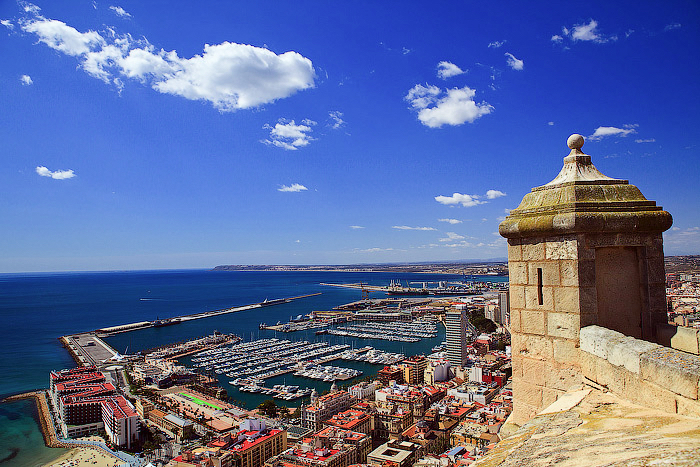
Alicante
Send it to whoever you'd travel with
Alicante is a sun-drenched Costa Blanca port city built around a hilltop castle, a palm-lined promenade, and a serious rice-cooking tradition.
Alicante is the Spanish coastal city that gets unfairly skipped. It is the one most travelers fly into and then immediately leave — straight up the highway to Benidorm, Altea or Javea. Stay a few days and the place earns its keep: a working port city with a 9th-century Moorish castle on a 166-meter limestone bluff, a palm-shaded marble promenade called the Explanada, and a compact old town (El Barrio) where the bars don't fill up until 11pm. It is not Barcelona's design-magazine cool or Seville's UNESCO grandeur. It is Spain at workday tempo, with the Mediterranean two blocks from wherever you're standing.
The signature thing to eat here is rice — and which rice you order matters. Locals will steer you away from straight paella toward arroz a banda (rice cooked in concentrated fish broth, served separate from the seafood), arroz del senyoret (everything peeled so you don't get fishy fingers), arroz con costra (a paella with a golden eggy crust baked on top) or caldero, the fisherman's version from boats off Tabarca. Lunch is the main event, served 2pm to 4pm. Order the rice as a segundo, drink the local Fondillón wine if you can find it, and accept that dinner will be late and small.
What makes Alicante work as a base is the tram. Line 1 runs up the coast through Albufereta, Cabo de las Huertas, El Campello, Villajoyosa, Benidorm and Altea — meaning you can knock out the Costa Blanca's prettiest white-and-blue villages as casual half-day trips for the cost of a metro ticket. Boats from the marina reach Tabarca, a tiny walled island with one of Spain's first marine reserves around it. Renfe trains run inland to Elche, with the largest palm grove in Europe, and Murcia. None of this requires renting a car.
The honest caveat: Alicante is a beach city, and in July and August it shows. Postiguet fills, the old town turns into a stag-do circuit on Friday nights, and apartment prices double. Come in May, June or October instead. The sea is swimmable from late May through mid-October, the castle isn't an oven, and you'll actually hear Valencian and Castilian spoken on the streets rather than English-only menus shoved at you.
The practical bits.
- Best time
-
May – Jun, Sep – OctWarm sea, fewer crowds, restaurants still open mid-afternoon for the full lunch ritual.
- How long
-
5 nights recommendedThree nights covers the city; the extra days are for Tabarca, Altea, Guadalest and a long rice lunch in Elche.
- Budget
-
$145 / day typicalAugust and Easter week (Semana Santa) spike accommodation; off-season hotels can be half-price.
- Getting around
-
Walk the city; tram up the coast; boat to Tabarca.The old town, port, Explanada and castle are all walkable. TRAM Line 1 (€1.45 per ride) runs from Luceros into the coastal towns. Renfe handles inland trains. Skip the rental car unless you're going to Guadalest or the Marina Alta interior.
- Currency
-
€ Euro (EUR)Cards accepted nearly everywhere, including small tapas bars. Carry €20–30 in cash for older market stalls, beach chiringuitos and tram top-ups.
- Language
- Spanish and Valencian (a variant of Catalan) are both official. English fluency is high in tourism but limited in inland day-trip towns.
- Visa
- Schengen rules apply: most US, UK, Canadian, Australian and EU visitors get 90 days visa-free; ETIAS pre-authorization is rolling out across 2026 for visa-exempt non-EU nationals.
- Safety
- One of the safer mid-sized Spanish cities. The real risk is pickpocketing around the Mercado Central, the Explanada and tram Line 1 in summer — keep phones off café tables. Solo travel, including for women, is broadly comfortable.
- Plug
- Type C/F, 230V
- Timezone
- GMT+1 (CET), GMT+2 in summer
A few specific picks.
Hand-picked, not algorithmic. Each of these has earned its space.
9th-century Moorish fortress on a 166m limestone outcrop. Free to enter; take the elevator from Postiguet up, walk down through the old town for the view.
Six and a half million marble tiles in a red-cream-black wave pattern, palm trees, and the city's evening *paseo* — the slow walk every local does after work.
Whitewashed alleys climbing toward the castle; dead during siesta, packed and loud after 11pm Thursday through Saturday.
Theatrically lit galleries of Iberian, Roman and medieval finds from across the province — the best wet-weather plan in the city.
1921 Modernista market hall with two floors of jamón, anchovies, *gambas rojas* from Denia and a knot of tapas stalls outside the south door.
Tiny standing-only bar trading in *montaditos* — small bread bites of pork, foie or octopus. Two locations, both queue out the door by 1:30pm.
The serious sit-down for *arroz a banda* and *arroz con bogavante*. The downstairs counter is the move if you want the same kitchen at a lower price.
Tiny walled island 11 nautical miles south, ringed by one of Spain's earliest marine reserves. Catamarans leave the marina mid-morning; bring snorkel gear and book *caldero* at Bar Encarna.
Five-minute walk from the old town, golden sand, calm water. Hot, busy and Instagrammed in summer — go before 10am or after 6pm.
Three kilometers of wider, less hectic sand 20 minutes north by tram. Better for actual swimming and the long beach walk.
The flower-pot-and-blue-shutter quarter climbing under the castle walls. Best photographed first thing in the morning before the cruise groups arrive.
Free contemporary collection holding Miró, Picasso and Dalí pieces from the Eusebio Sempere bequest. An hour, well-spent, in the middle of a hot afternoon.
Pick a neighborhood, not a hotel.
Alicante is a city of neighborhoods. The one you stay in shapes the trip more than the property does.
Different trips for different travelers.
Same city, very different stays. Pick the lens that matches your trip.
Alicante for foodies
Alicante's rice canon (arroz a banda, del senyoret, con costra, caldero) is reason enough on its own. Long Spanish lunches, an excellent central market and Fondillón wine round it out.
Alicante for beach travelers
Two distinct urban beaches in walking or tram distance — Postiguet for sights-plus-sand, San Juan for proper swimming days — and rocky coves in between for snorkeling.
Alicante for families
Compact, walkable, safe at night, with a castle to climb, a beach across the road and a tram that doubles as toddler entertainment. Restaurant kitchens are flexible and slow Spanish lunch fits a nap.
Alicante for solo travelers
Low crime, late dinners, social tapas counters and a manageable scale make it easy to drop in alone. Hostels concentrate around the old town for built-in social plans.
Alicante for couples
Castle-at-sunset, Explanada walks, marina dinners, day-boat to Tabarca — Alicante is built for unhurried two-person itineraries without needing a car.
Alicante for budget travelers
One of the cheaper Spanish coastal bases. Hostel dorms from around €25, menús-del-día for €13, €1.45 tram rides up the entire Costa Blanca.
When to go to Alicante.
A quick year at a glance. Great, good, or skip — see what each month is doing before you book.
Lowest hotel prices; sea is too cold to swim
Almond blossom inland; good for castle and museum days
Las Fallas energy spills down from Valencia mid-month
Semana Santa processions; book ahead
Best balance of weather and crowds
Hogueras de San Juan bonfire festival around 24 June
Peak crowds and prices; book everything
Most expensive month; local businesses close mid-month
Arguably the best swimming month of the year
Excellent for sightseeing and rice lunches
Quiet streets, low prices; sea too cool to swim
Christmas markets and lighting; Postiguet for walks only
Day trips from Alicante.
When you want a change of pace. Each one's a half-day or full-day out, easy from Alicante.
Tabarca Island
45 min by boatTiny walled island ringed by one of Spain's first marine reserves.
Altea
50 min by tramWhite hilltop village with a blue-domed church — Costa Blanca's prettiest.
Villajoyosa
30 min by tramPastel fishing town and home of Valor chocolate, with a free factory museum.
Guadalest
1 hr 30 min by carCliff-perched village reached through a tunnel cut into the rock.
Elche
25 min by Renfe trainEurope's largest palm grove plus the famous Dama de Elche replica.
Valencia
1 hr 30 min by trainAVE high-speed services make a full day workable and back by 9pm.
Alicante vs elsewhere.
Quick honest reads on the cities people compare Alicante to.
Valencia is bigger, more architecturally ambitious and has the standout museum scene; Alicante is smaller, sunnier and easier to combine with coastal day trips.
Pick Alicante if: Pick Alicante for beaches and rice; pick Valencia for cityscape and culture.
Malaga has the stronger art collections and Andalusian old-town atmosphere; Alicante has better-value food and more swimmable urban beaches in walking distance.
Pick Alicante if: Pick Alicante if a tram-accessible beach base matters more than museums.
Benidorm is high-rise resort towers and 24-hour package-holiday energy; Alicante is a working port city with a real old town.
Pick Alicante if: Pick Alicante if you want Spain; pick Benidorm if you want a nightlife-and-pool holiday.
Palma has the cathedral, the island setting and a more polished food scene; Alicante is cheaper, mainland-connected and far easier as a multi-stop trip.
Pick Alicante if: Pick Alicante if you want to tram-hop a coastline rather than commit to one island.
Seville is inland, dramatic, Moorish-Baroque and theatrical; Alicante is coastal, low-key and built around the sea.
Pick Alicante if: Pick Alicante for sun and swimming; pick Seville for grand monuments and flamenco.
Itineraries you can start from.
Rough shapes for a trip here — a feel for the pace and cost. Find the one that fits you.
Old town, castle, two big rice lunches, an evening on the Explanada and a half-day on Tabarca.
Base in Alicante, day-trip up Line 1 to Villajoyosa, Altea and Benidorm; finish with a boat to Tabarca.
A week split between city beaches, the Elche palm groves, Guadalest castle and a Jumilla wine afternoon.
Things people ask about Alicante.
Is Alicante worth visiting?
Yes — and especially as more than a flight stopover. Alicante earns 3 to 5 nights for its hilltop castle, palm-lined Explanada, deeply local rice scene and tram access to the prettiest Costa Blanca villages. It is cheaper, smaller and less tourist-saturated than Barcelona or Malaga, which is exactly its appeal for travelers who want a working Spanish city with a beach attached.
Is Alicante safe for solo travelers?
Alicante is one of the safer mid-sized cities in Spain and consistently rates well for solo and solo-female travel. The most common issue is pickpocketing in the Mercado Central, on the Explanada and on packed summer tram rides — keep phones off café tables and bags zipped. Walking home from the old town at 1am on a Saturday is normal; the streets stay populated until very late.
How many days do you need in Alicante?
Three nights is the minimum for the city itself — castle, old town, one rice lunch, an evening Explanada walk and a beach afternoon. Five nights is the sweet spot, leaving room for Tabarca Island and one inland day trip. A full week makes sense if you want to add Altea, Guadalest or Elche without rushing. Beach holidays can comfortably stretch to ten nights.
What is the best time to visit Alicante?
Late April through early June and again from mid-September through October. Daytime temperatures sit comfortably in the low-to-mid 20s Celsius, the sea is swimmable by late May, and crowds are far thinner than July and August. Avoid the peak summer weeks if you can — apartments double in price, restaurants take no walk-ins, and the castle is brutally hot by 11am.
Is Alicante cheap or expensive?
Alicante is one of the cheaper coastal Spanish cities. Budget travelers manage on around €70 per day with hostels and menú-del-día lunches; mid-range trips run €130–150 per day with a hotel and a proper rice dinner; comfortable trips with seafront stays land near €250–280. The biggest swing is accommodation in August and Semana Santa, when prices roughly double.
What is Alicante known for?
Alicante is best known for the Castillo de Santa Bárbara crowning Mount Benacantil, the marble-tiled Explanada de España promenade, urban beaches like Postiguet, and a rice-cooking tradition that locals argue is more refined than Valencia's paella. It is also the gateway to the Costa Blanca — most travelers fly into ALC to reach Benidorm, Altea, Javea, Calpe and Denia further up the coast.
Cash or card in Alicante?
Cards work nearly everywhere — tapas bars, supermarkets, the tram, even small market stalls. Contactless is standard. Carry €20 to €30 in cash for older Mercado Central vendors, beachside chiringuitos in summer, tipping (small change), and the occasional cash-only neighborhood bar. ATMs are easy to find; use bank-branded machines and decline dynamic currency conversion at the prompt.
How do I get from Alicante airport to the city center?
The C-6 city bus is the cheapest direct option — €3.85 one-way, runs 24/7, roughly every 20 minutes, and reaches the train station and port in about 30 to 40 minutes. Taxis from the rank outside arrivals run €25 to €30 to the center and take 20 minutes. Booked private transfers cost a few euros more. There is no direct tram or train from the airport itself.
What are the best day trips from Alicante?
By tram: Villajoyosa (colorful fishing port, 30 minutes), Altea (whitewashed hilltop with blue-domed church, 50 minutes) and Benidorm. By boat from the marina: Tabarca Island, 45 minutes each way. By car or bus: Guadalest castle in the mountains, Elche's palm groves (UNESCO-listed), and Javea's coves. Valencia is 90 minutes by high-speed train if you want a bigger city for a day.
Best neighborhood to stay in Alicante?
First-timers should base in El Centro (Old Town) — the castle, the Explanada, Postiguet beach and most of the rice restaurants are within a 15-minute walk. Families and longer beach stays do better in Playa de San Juan, 20 minutes north on the tram, where the sand is wider and the pace calmer. Skip the inland residential districts; the difference in price isn't worth the walk.
Alicante vs Valencia — which should I visit?
Valencia is the bigger, more architecturally ambitious city: City of Arts and Sciences, Oceanogràfic, a proper biennial-grade art scene and a longer urban beach. Alicante is smaller, cheaper, sunnier on average and easier to combine with Costa Blanca day trips. Choose Valencia for a culture-led 4–5 day city break; choose Alicante if beaches, rice, hilltop castles and easy tram excursions sound better.
Alicante vs Malaga — which is better?
Malaga has the stronger museum lineup (Picasso, Pompidou, Carmen Thyssen) and a richer Andalusian old town feel. Alicante has a smaller, more contained center, better-value food, and more swimmable urban beaches within walking distance. If you prioritize art and grand historic streetscapes, Malaga wins. If you want a low-key beach base with serious rice cooking and tram day-trips, Alicante does it better.
What food is Alicante famous for?
Rice, in many specific dialects: *arroz a banda* (rice cooked in fish broth, served separate from the seafood), *arroz del senyoret* (pre-peeled prawns and squid), *arroz con costra* (with a baked egg crust) and *caldero* (the fisherman's pot from Tabarca). Outside the rice canon, look for *coca amb tonyina* (tuna flatbread), *pericana* (dried-pepper and salt-cod spread), *salazones* (cured fish) and the dessert wine *Fondillón*.
Can you swim in the sea in Alicante?
Yes — and the urban beaches make it unusually easy. Postiguet sits a five-minute walk from the old town with calm shallow water and lifeguards in season. Playa de San Juan, 20 minutes north by tram, is wider and quieter. The sea is comfortably warm from late May through mid-October, peaking at around 26°C in August. Cabo de las Huertas has rocky coves for snorkeling.
Do they speak English in Alicante?
Yes in tourist contexts — hotels, the major restaurants, taxis around the port, tram staff and the airport. Less so in the Mercado Central, in small neighborhood bars and on inland day trips. Basic Spanish phrases (especially *una caña, por favor* and *la cuenta*) are appreciated. Valencian is also official and visible on signage, but Spanish is what locals actually use when they hear you struggling.
Where can I see the best view in Alicante?
From the ramparts of Castillo de Santa Bárbara at the top of Mount Benacantil. Take the lift up from the tunnel entrance near Postiguet beach (cheap, marked) and walk down through the Barrio Santa Cruz for the prettiest descent. Go just before sunset — the light hits the marina, the bay curves out toward Cabo de las Huertas, and Tabarca is visible on a clear day.
Know someone headed to Alicante?
Send them this guide — real neighborhoods, timing, and prices, with nothing to sign up for.
Copies the link — nothing to install