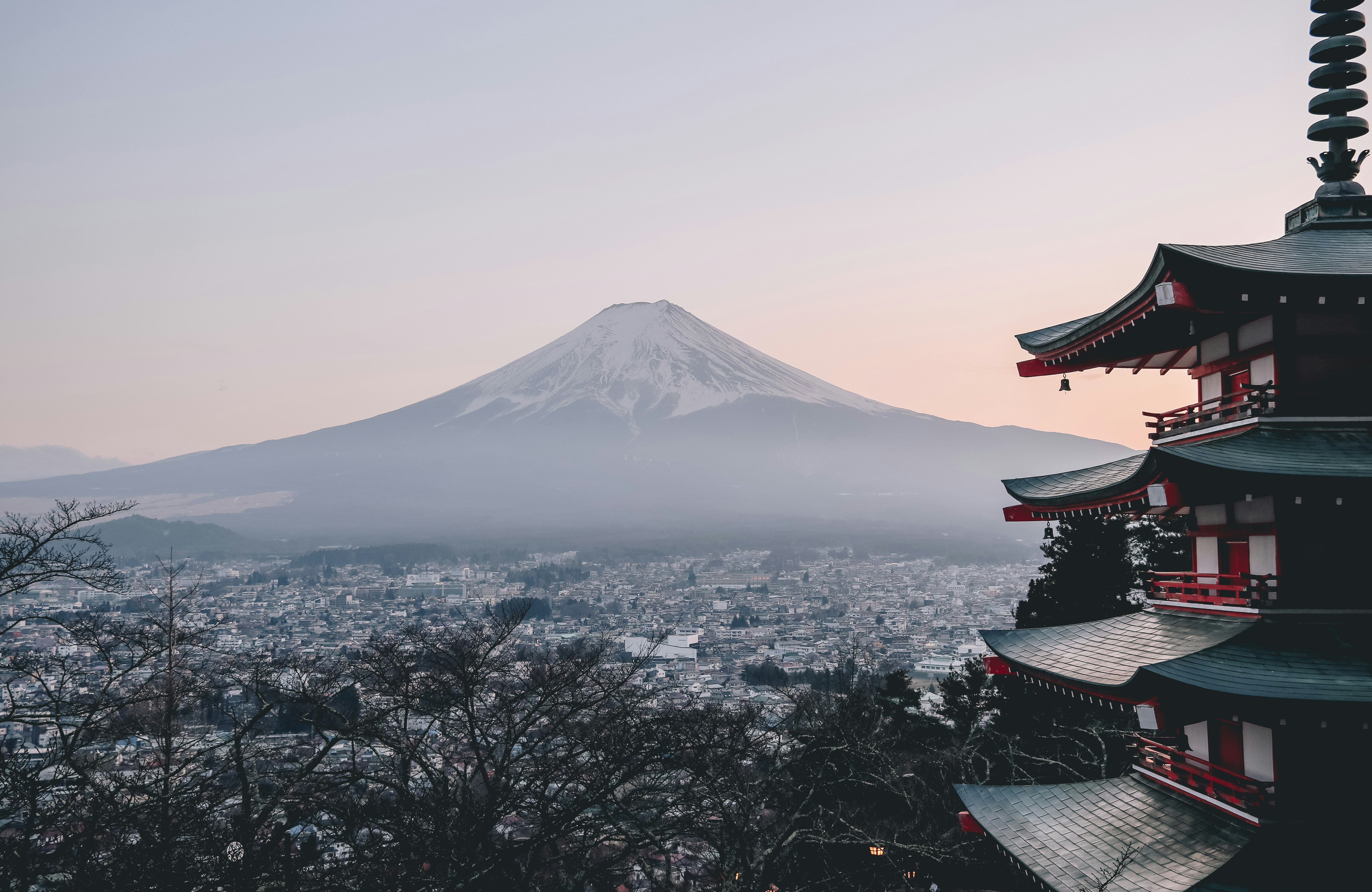
You've Saved 200 Tokyo TikToks. You're Still Going to Shibuya Crossing.
Your camera roll knows what you actually want.
A misty cedar staircase. A snowy ryokan with one yellow window. An old man sweeping a stone path at 6am. You've saved 200 of them — most of them underrated Japanese villages you couldn't name if asked. Maybe 300.
And your itinerary still says Shibuya, Asakusa, teamLab, Kyoto, Osaka.
That is the quiet pattern almost every second-trip traveler hits. The saves point one direction. The itinerary points another. The gap between them is where the trip you actually wanted goes to die.
Doing Japan again the same way isn't a trip. It's a re-run with a 14-hour flight.
Why Does Every Japan Itinerary End Up Looking Identical?
Because every recommendation engine — Google, ChatGPT, Booking.com — was trained on the same five-city loop: Tokyo, Hakone, Kyoto, Osaka, sometimes Nara. That loop has been the default since 2014, and the infrastructure now actively keeps you on it.
Roughly 40 million inbound travelers a year run some version of it. JR Pass marketing reinforces it. Every Instagram reel from a creator who has clearly never left Gion reinforces it.
So what do you do on the second trip? Or the third?
The honest version of the question most travelers are typing into search right now: how do you avoid Shibuya and Kyoto crowds on a Japan itinerary without spending three weekends in a spreadsheet.
The villages exist. They're reachable. Most are 2-4 hours from Tokyo by train.
The discovery layer is what's broken.
Why Do AI Trip Planners and ChatGPT Miss These Destinations?
This isn't a content problem. It's a category error in how planners are trained.
ChatGPT trains on indexed, English-language web content. The best information about underrated Japanese villages does not live there. It lives in Japanese-language tourism board pages, JR East regional PDFs, Instagram geotags, and Japanese travel YouTubers with 8,000 subscribers. None of that gets cleanly aggregated into a Western trip-planner output.
The second failure is optimization. Generic planners optimize for popular. A second-trip traveler is asking for the literal opposite. The model is graded on consensus answers. Consensus is what you're trying to escape.
Third, Google rewards SEO-heavy travel publishers. Same ten lists. Recycled since 2019. The model trained on the same recycled lists outputs a slightly reworded version of them. That's not planning. That's laundering.
Fourth, the boring layer. Even when a planner names Tsumago, it usually can't tell you which Shinkansen connects to which local bus, when the last bus leaves Nakatsugawa, or that the ryokan you want closes its booking window 90 days out. Transit nuance is where every generic itinerary breaks.
The behavioral mismatch is the real story. Travelers want discovery. Tools deliver consensus. That gap is the whole opportunity.
The TikTok-to-Itinerary Gap: Why Saved Videos Don't Translate to Trips
Discovery doesn't happen on Google anymore. It happens on TikTok, Reels, and Xiaohongshu.
The average serious traveler now saves 100-300 short videos per trip. Snowy villages. Onsen towns. A bowl of soba in a 200-year-old kitchen. The folder grows. The itinerary doesn't.
That's because there is no system to convert saves into a plan. You can't paste a TikTok into Google Maps. You can't ask ChatGPT to ingest your camera roll. So the saves sit there as aesthetic ambient noise while the itinerary defaults back to the loop everyone else is running.
This is the new behavioral expectation. Travelers want the planner to come to the saves, not the other way around.
Social proof has also decentralized. A 12,000-view TikTok from a Japanese creator who lives near Iya Valley now beats a Lonely Planet entry. Not because it's more authoritative — because it's more honest. The lighting is wrong. The audio is unedited. It's the village.
Which means 'hidden Japan' in 2026 doesn't really mean hidden. It means un-aggregated. The information is everywhere. The synthesis is nowhere.
That is why the same person with a 287-video saved folder ends up at Shibuya Crossing at 9pm wondering why the trip feels like everyone else's.
How Do AI Planners Surface Underrated Japanese Villages?
By cross-referencing your saved videos against real-world transit and seasonality data instead of ranking destinations by popularity. The job isn't recommendation. It's translation — between what you've already chosen on TikTok and what's logistically buildable on a Tuesday in February.
A well-built AI planner does four things a generic chatbot cannot.
Step 1: Cross-reference your saves with the real world. Multimodal AI can parse a TikTok of a snowy village and identify it as Ginzan Onsen by architecture, signage, and snowfall patterns. That's not magic. That's vision models doing what they're already good at, applied to a problem nobody bothered to point them at.
Step 2: Rank by reachability, not popularity. A traveler without a car needs to know which villages connect cleanly to Tokyo via Shinkansen plus one local leg. That's a constraint a popularity-ranked LLM ignores entirely.
Step 3: Handle the boring layer. Train times. Last-bus windows. Ryokan booking calendars. Onsen tattoo policies. English-friendliness scores. None of this is glamorous. All of it is what makes the trip actually happen.
Step 4: Season-match. Ginzan in July is a different product than Ginzan in February. A planner that doesn't weight seasonality is just generating a list.
Here are ten villages that the right AI workflow would surface for a second-trip traveler. Each gets one beat.
- Ginzan Onsen (Yamagata). Taisho-era ryokan, snowy gas-lamp streets. From Tokyo: Shinkansen to Oishida + bus, ~4 hrs. The TikTok-bait shot is real here.
- Tsumago (Nagano). Edo-period post town on the Nakasendo. Shinkansen to Nagiso + short bus, ~3.5 hrs. Walk to Magome.
- Magome (Gifu). Stone-paved hillside village paired with Tsumago. The 8km walk between them is the experience.
- Ouchi-juku (Fukushima). Thatched-roof Edo post town. Tohoku Shinkansen + local rail, ~3 hrs. Eat negi soba with a green onion as the chopstick.
- Ainokura (Toyama). UNESCO gassho-zukuri village, smaller and quieter than Shirakawa-go. Hokuriku Shinkansen + bus, ~4 hrs.
- Shirakawa-go off-season. Yes, it's famous. No, nobody is there in mid-November between foliage and snow lighting. Time it right and it's empty.
- Bessho Onsen (Nagano). Quiet onsen town with kaiseki ryokan. Shinkansen to Ueda + private rail, ~2 hrs. The closest of the ten.
- Kakunodate (Akita). Samurai district and cherry blossoms without the Kyoto crush. Akita Shinkansen direct, ~3.5 hrs.
- Yunomine Onsen (Wakayama). UNESCO Kumano Kodo route. 1,800-year-old hot spring. Longer haul, worth it.
- Iya Valley (Tokushima). Thatched farmhouses, vine bridges, deep mountains. The hardest to reach. The most rewarding on a third trip.
That list is not the point. The point is that a planner that can produce it for you, against your saves, in 15 minutes — that's the actual product.
Where Roamee Fits
We've been thinking about this gap for a while. Roamee, the AI itinerary generation product around AI travel planning, is the layer that takes your saved TikToks and Reels and returns a transit-aware, season-correct itinerary you can actually book. Not another top-10 list. The thing that finally closes the saves-to-itinerary gap so a folder of 287 hidden-Japan videos turns into a route you can walk on a Tuesday morning.
From 200 Saved TikToks to a 10-Day Hidden-Japan Itinerary
Here's what this looks like in practice.
A traveler shares their Japan saved folder. 214 videos. Mostly snowy villages, onsen interiors, traditional wooden architecture, one recurring shot of a thatched roof.
AI does the pattern read in seconds. Three themes dominate: snow, onsen, Edo-period architecture. That points cleanly at Ginzan Onsen, Ouchi-juku, and the Tsumago-Magome walk. The thatched roof is gassho-zukuri — Ainokura is the quieter alternative to Shirakawa-go.
From there, the route builds itself against constraints. 10 days. Late January. No car. Tokyo arrival and departure.
- Days 1-2: Tokyo. Recovery, food, one neighborhood you missed last time. Not Shibuya.
- Days 3-4: Ginzan Onsen. Shinkansen to Oishida, then bus. Two nights, because one-night-per-stop is the burnout trap.
- Days 5-6: Tsumago + Magome. Walk the Nakasendo. Stay in a minshuku in Tsumago.
- Day 7: Kanazawa as gateway. Use it as a real city break before the next rural leg.
- Days 8-9: Ainokura. Off-peak gassho village stay.
- Day 10: Tokyo. Buffer.
The AI handles the layer that kills most DIY itineraries. Last train out of Nagiso. Ryokan booking windows. Which leg the JR Pass actually covers and which one needs a regional add-on. Tattoo-friendly onsen flags.
20 hours of spreadsheet research collapses into about 15 minutes of refinement. The output is not a Word doc. It's bookable links, train times, and a map.
That is what the planner is for.
What Comes After the Tourist Trail?
The future of travel planning isn't more recommendations. It's better filtering of what you already love.
The next behavioral shift is itineraries built from your personal media library — your saves, your photo roll, the creators you actually follow — not from someone else's top-10 list scraped by a model that has never been to Japan.
For Japan tourism, the implication is healthier. Travelers distribute across more regions. Kyoto stops being a stampede. Akita and Tokushima get the spend they've been quietly building infrastructure for. The traveler gets the trip they were always going to take anyway, two days faster and without the spreadsheet.
AI will collapse discovery, research, and booking into one conversation. The companies that win will be the ones who understood early that the planner's job is not to know the destination. It's to know you.
Final Insights: The Trip Worth Taking Is the One That Isn't on the Algorithm Yet
The algorithm shows you what's popular. Not what's right for you.
That's a fine distinction until you've spent $4,000 on a flight to redo a trip you already took.
Don't redo Japan. Rediscover it. The saves in your camera roll are already the itinerary. You just need a tool that can read them.
AI-native planning isn't a feature. It's the only way to keep pace with how travelers actually discover destinations now.
FAQ: Planning a Hidden-Japan Trip in 2026
What counts as an underrated village in Japan in 2026?
An underrated Japanese village in 2026 is one with fewer than 500,000 annual visitors, limited English-language coverage, and no presence on a default ChatGPT itinerary. Underrated doesn't mean remote — Bessho Onsen is two hours from Tokyo, and Ainokura and Ouchi-juku also qualify. The bar is discoverability, not distance.
Which Japanese villages are easiest to reach from Tokyo without a car?
Bessho Onsen via Hokuriku Shinkansen to Ueda plus private rail, around 2 hours. Tsumago and Magome via Shinkansen to Nagiso plus local bus, around 3.5 hours. Ouchi-juku via the Tohoku line plus a final local rail and taxi leg, around 3 hours. All three are doable as 2-night stays without renting a car.
How do you get to remote Japanese villages using JR Pass and local trains?
The JR Pass covers Shinkansen and most JR limited expresses, but the final-mile is usually a local bus or private rail line that isn't JR — budget for that separately. For specific clusters, regional passes like JR East or the Hokuriku Arch Pass are often cheaper than the national JR Pass. Plan around last-train times, since rural last trains run early, sometimes by 8pm.
What are the best underrated villages for a second or third trip to Japan?
For a second trip: Tsumago, Magome, Ginzan Onsen, and Bessho Onsen. These are reachable, comfortable, and forgiving for travelers new to rural Japan. For a third trip: Iya Valley, Yunomine Onsen, Ainokura, and Ouchi-juku. The pattern is progressive remoteness as your comfort with rural logistics grows.
Which hidden villages offer the best traditional ryokan and onsen experiences?
Ginzan Onsen for Taisho-era ryokan and the snowy gas-lamp street that's all over TikTok. Yunomine Onsen for an 1,800-year-old hot spring on the UNESCO Kumano Kodo route. Bessho Onsen for quiet kaiseki ryokan in Nagano. All three deliver the ryokan-onsen pairing without the Hakone day-tripper traffic.
How many days should you spend in rural Japan versus Tokyo on a 10-day trip?
The split that works is roughly 3 days Tokyo, 5-6 days rural villages, and 1-2 days buffer and transit. Rural Japan rewards slow pacing, with 2 nights per village as a minimum. The most common mistake on second trips is one-night-per-stop burnout, where you spend the trip on trains and remember nothing.
What's the best season to visit small Japanese villages?
Winter (December-February) is best for Ginzan Onsen, Shirakawa-go, and Ainokura for snow. Spring (early April) is best for Kakunodate for cherry blossoms without the Kyoto crowds. Autumn (October-November) is best for Tsumago, Magome, and Iya Valley for foliage. Avoid Golden Week in early May and Obon in mid-August, when domestic travel surges.
Are these villages tourist-friendly for non-Japanese speakers?
Yes, increasingly so over the last five years. Most ryokan have English booking pages or list on Booking.com, and Google Translate's camera mode handles menus and signs reliably. Train staff in rural areas are usually at phrasebook level. Pre-download offline maps and a translation pack before you leave a major station.
Should I skip Kyoto on my second Japan trip?
Honestly, yes — or cap it at one day for a specific temple you missed. The 'traditional Japan' feeling you went to Kyoto for is more intact in Kanazawa, Takayama, and Tsumago. It's not deprivation; it's cultural depth without 40,000 other people in the same alley.
How do I find authentic rural Japan villages that aren't on TikTok yet?
Use tools that index beyond the English-language web — Japanese tourism board content, Instagram geotags, regional rail blogs. Cross-reference your own saved content for visual patterns, since AI is good at finding the village in the picture. Follow Japanese travel creators directly rather than English-language aggregators, which run six months behind.