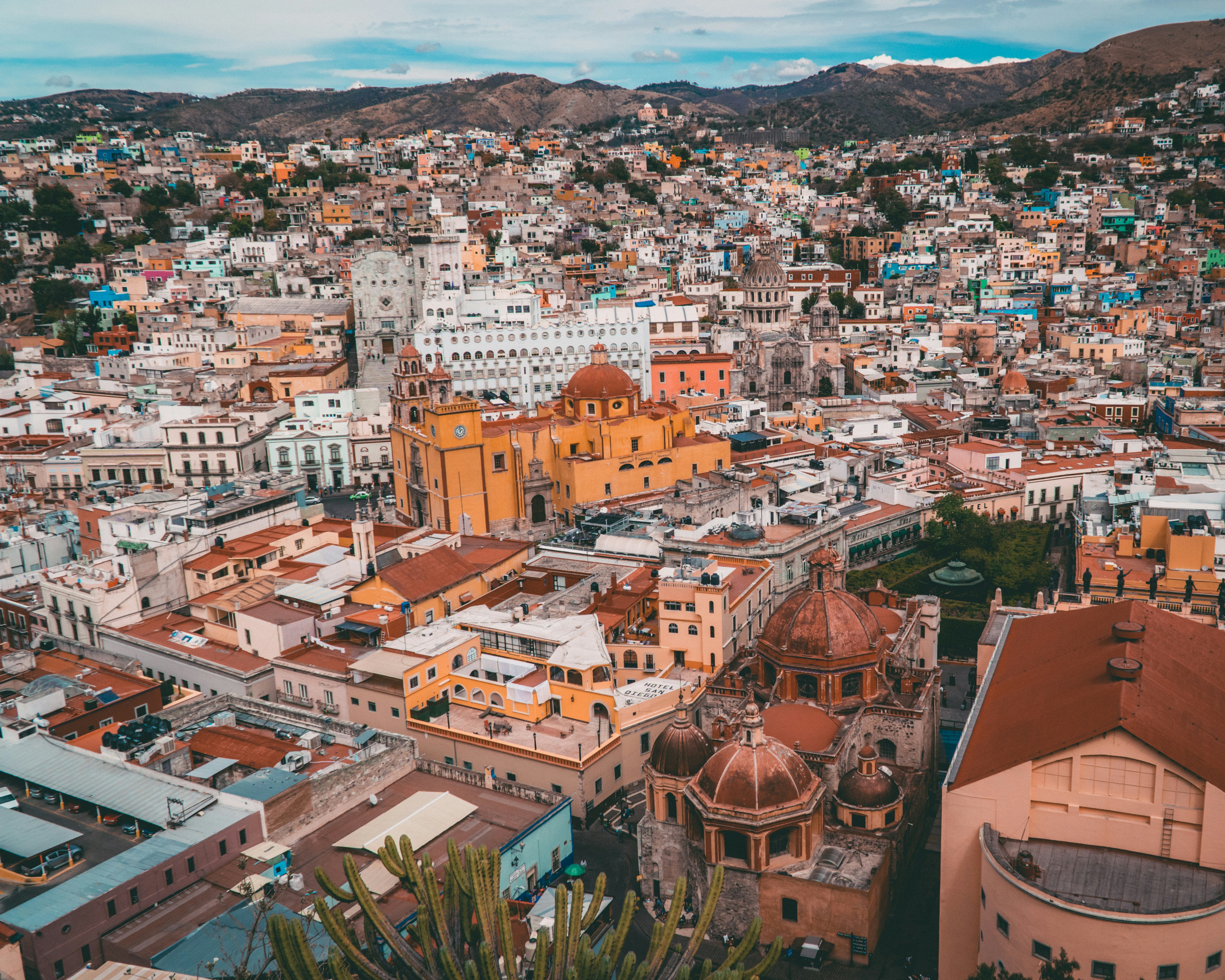
You saved the video in March. It's June.
It's still sitting in a folder called "travel" with forty other saves you've never opened again. Quiet cobblestone streets. A church nobody you know has photographed. A caption that said "the secret historic towns in Mexico tourists never find."
You wanted the flex. I found somewhere nobody knows.
What you have is a bookmark.
The inspiration was free. It cost you a double-tap. The itinerary — the part where five obscure town names become a route you could actually board a plane for — is the expensive part. And that's exactly where the trip dies.
Why Does the 'Secret Towns' Trip Never Actually Happen?
It's not because you're lazy and it's not because you can't afford it. The trip never happens because the gap between wanting and going is a synthesis problem — and nobody handed you the synthesis.
The video did its job perfectly. It made you want secret historic towns in Mexico. It did not tell you which airport, which bus, which order, or how many days off to request. That second list is the trip. The first list is just a feeling.
Most people never cross from feeling to logistics. So the save stays a save.
What's Actually Stopping You — Inspiration vs. Itinerary
What's actually stopping you isn't busyness — it's that a saved list of town names is not a plan. It's a word cloud.
Real de Catorce. Bernal. Cuetzalan. Xilitla. Pátzcuaro. Beautiful names. Now sequence them. Now connect them. Now figure out which ones are four hours apart and which ones are a full travel day with a colectivo at the end.
You can't, quickly. And that's the point of off-the-beaten-path — there's barely any information, the geography is scattered, and there's no obvious "do this, then this."
You're a time-poor urban professional. You have the desire and the budget. You do not have six free evenings to reverse-engineer bus timetables across three Mexican states.
So here's the question this whole post answers: how do you turn a saved 'secret towns' video into a real itinerary?
Why Do Normal Travel Tools Fail for Mexico's Secret Historic Towns?
Because every tool you'd reach for was built for the famous places.
Google Maps shows you the dots. It will not tell you the dots are a terrible order, or that two of them don't have a sane road between them, or that the "2-hour drive" assumes a road that floods in August.
Mainstream guides optimize for Tulum and Oaxaca City. Search for a town of 1,400 people and the coverage goes thin or vanishes.
Blog posts are one town at a time. Somebody wrote a lovely 800 words on Bernal. Somebody else wrote about Xilitla. Nobody stitched five obscure towns into one coherent line, because that's hours of unpaid work and it doesn't rank.
And the booking engines? Booking.com shows four listings in a town that runs on twenty family guesthouses — the kind that only exist on WhatsApp and a hand-painted sign. The inventory isn't missing. It's just not where the tools look.
So, can you visit crowd-free historic towns in Mexico on your own, without a tour? Yes. But not with a stack of tools that were never pointed at these places.
How Did TikTok Change Where We Want to Go — but Not How We Get There?
TikTok changed where we want to go by moving discovery to short-form video — you find places in a 19-second clip with a trending sound now, not a Lonely Planet index. What it didn't change is how you actually get there.
And the anti-tourist flex went mainstream. Wanting the place "nobody knows" used to be a backpacker thing. Now it's the default aspiration for everyone with a feed.
Discovery got instant.
Logistics didn't move an inch. Booking a route through five obscure towns is the same manual, tab-juggling, 2010-era slog it always was.
That's the mismatch. Discovery runs at the speed of a swipe. Planning runs at the speed of a spreadsheet. The gap between them is where your trip is currently stranded — and it's exactly the gap AI is built to close.
How Can AI Turn a Saved Video Into a Bookable Route?
Start with what was actually broken. It was never the inspiration. It was never the money. It was the synthesis — and synthesis is the one thing AI is genuinely good at.
Here's what that looks like.
Step 1 — Read the mess. AI takes a junk list of town names and outputs geography-aware sequencing. It clusters by region. It kills backtracking before it costs you a day.
Step 2 — Connect the dots no single site holds. It cross-references ADO buses, colectivos, drive times, and the one obscure leg that requires a shared van from a gas station. No website holds all of that. The synthesis does.
Step 3 — Find the beds the engines miss. It surfaces the posada and the family guesthouse that Booking.com never indexed, and it matches the days each town needs to the actual vacation window you have.
You keep the discovery joy. The machine does the stitching.
That's the trade that makes the trip real.
Where Roamee Fits
We've been thinking about this exact gap. You save the video — the same one sitting in your folder right now — and Roamee pulls the towns out of it and builds the connected itinerary for you: route order, transport between each leg, places to stay, and the day count that fits your time off. It's the bet made on AI travel planning — that the bottleneck was never discovery but synthesis, and that Roamee's AI itinerary generation is what turns a save into a booked route. Not a tour. Not a sales pitch. Just the bridge between the bookmark and the booked trip, which is the part that was missing.
What Does This Look Like in Practice — The 5-Town Route
Let's make it concrete with the five towns. You save → it sequences → you get a route you could book today.
The honest read: these five don't sit in one neat circle. Two clusters do most of the work, and the AI's job is to order them so you fly in once and never double back.
Fly into San Luis Potosí (SLP). It's your cheapest door to the north-central cluster.
Day 1–3 — Real de Catorce. A silver-mining ghost town you reach through a 2.3km tunnel carved into the mountain. That tunnel is why it stays empty. Walk the cobbled ruins, take the willys jeep to the old mines. Stay in a stone posada in town — book the one or two with a website now; the rest are walk-up.
Day 4–6 — Xilitla & Aquismón (Huasteca Potosina). Drive east into the jungle. Las Pozas, the surrealist concrete sculpture garden Edward James left in the rainforest. Tamul waterfall by boat. Stay in eco-cabañas; a rental car earns its cost here because transit is thin and the sights are spread out.
Day 7–8 — Bernal (Querétaro). Drop south. A town under a giant monolith, walkable in an afternoon, famous for nothing tourists fight over. Good food, good wine nearby, easy ADO access. Boutique inns actually exist online here — grab one.
Day 9–12 — Pátzcuaro (Michoacán). The long western leg. Lakeside, deeply colonial, the heart of Purépecha country. Markets, the basilica, island day trips. Plenty of small hotels; book ahead near festivals.
Cuetzalan, in the Puebla highlands, is the odd one out — far to the southeast. The AI's call: save it for a separate Puebla-anchored trip rather than torching two days backtracking. That's the kind of cut a folder of saves never makes for you.
Getting between them without a tour: ADO and first-class buses for the long legs, colectivos and local vans for the last mile, and a rental car for the Huasteca stretch where transit gives up.
End state: a day-by-day line you could book this week. Not a folder.
Where Is Travel Planning Headed?
One direction: discovery and logistics collapse into a single step. You save, and it's planned. The swipe and the itinerary stop being two different jobs.
Which means the secret town won't stay secret. It never does. The edge stops being finding the place and becomes acting on it fastest — the people who turn a save into a booking in an afternoon get the empty streets; the people still curating folders get there a year late, when the cafés have English menus.
And the routes get personal. Shaped to your pace, your exact dates, your tolerance for a four-hour colectivo. The plan bends to you instead of you bending to a generic guide.
Final Insights
The trip you keep meaning to take is one synthesis step away. That's the whole distance. One step.
The flex was never finding the place. Anyone can find the place — the algorithm hands it to a million people the same week it handed it to you.
The flex is going.
So open the folder. Stop saving. Start sequencing.
FAQ: Planning Mexico's Lesser-Known Historic Towns
Which 5 lesser-known historic towns in Mexico are worth visiting?
Real de Catorce (a tunnel-access silver ghost town), Bernal (a walkable village under a giant monolith), Cuetzalan (a misty coffee-country town in the Puebla highlands), Xilitla/Aquismón (surrealist gardens and waterfalls in the Huasteca jungle), and Pátzcuaro (a deeply colonial lakeside town in Michoacán). Each stays crowd-free because it's awkward to reach — which is exactly the point.
How many days do you need to do this route justice?
Budget 10–14 days for all five, including travel days between them. If your time off is tighter, do a 3-town cluster in about 7 days — for example Real de Catorce, Xilitla, and Bernal in the north-central group. Give each town a minimum of two nights, and treat each long leg as half a travel day.
How do you get between Mexico's off-the-beaten-path towns without a tour?
Use ADO or other first-class buses for the long inter-city legs — they're comfortable, cheap, and reliable. For the last mile into smaller towns, switch to colectivos or local vans. Book the long bus legs a day or two ahead in high season; the local vans you just show up for.
Should you rent a car to visit Mexico's secret historic towns?
Rent if your route has remote clusters like the Huasteca, you want flexible stops, or you're traveling as a group and value comfort. Skip it if you're solo, on a budget, or sticking to towns on good bus lines like Bernal and Pátzcuaro. The rule: rent for the stretches where transit gives up, not for the whole trip.
How do you reach these towns from the nearest major airport?
Real de Catorce and Xilitla connect through San Luis Potosí (SLP). Bernal is closest to Querétaro (QRO). Pátzcuaro runs through Morelia (MLM). Cuetzalan is reached via Puebla (PBC) or Mexico City (MEX). Fly into the airport nearest your first town, then take a bus or rental car out.
What's the best time of year to visit these historic towns?
The dry season, roughly October through April, gives you the most reliable transport and the safest mountain roads. Time Pátzcuaro for late October if you want Día de Muertos, but book months ahead. Rainy season (June–September) is greener and emptier but the rougher roads and the Huasteca rivers can complicate travel.
How much does a trip to Mexico's lesser-known towns cost?
Plan on roughly $50–$90 USD per day per person outside the big tourist hubs, which puts a 12-day route somewhere in the $900–$1,400 range before flights. Lodging in posadas and guesthouses is the biggest saving versus resort towns; buses are cheap, food is cheaper. These towns cost noticeably less than Tulum or San Miguel.
Where should you stay in towns with few hotels?
Posadas, family-run guesthouses, and small boutique stays are the norm. The reality is that most beds only exist on WhatsApp or a sign on the door — so book the one or two places that do appear online early, and plan to arrange the rest on arrival or by message. In tiny towns, calling ahead the day before usually beats expecting an app to have inventory.