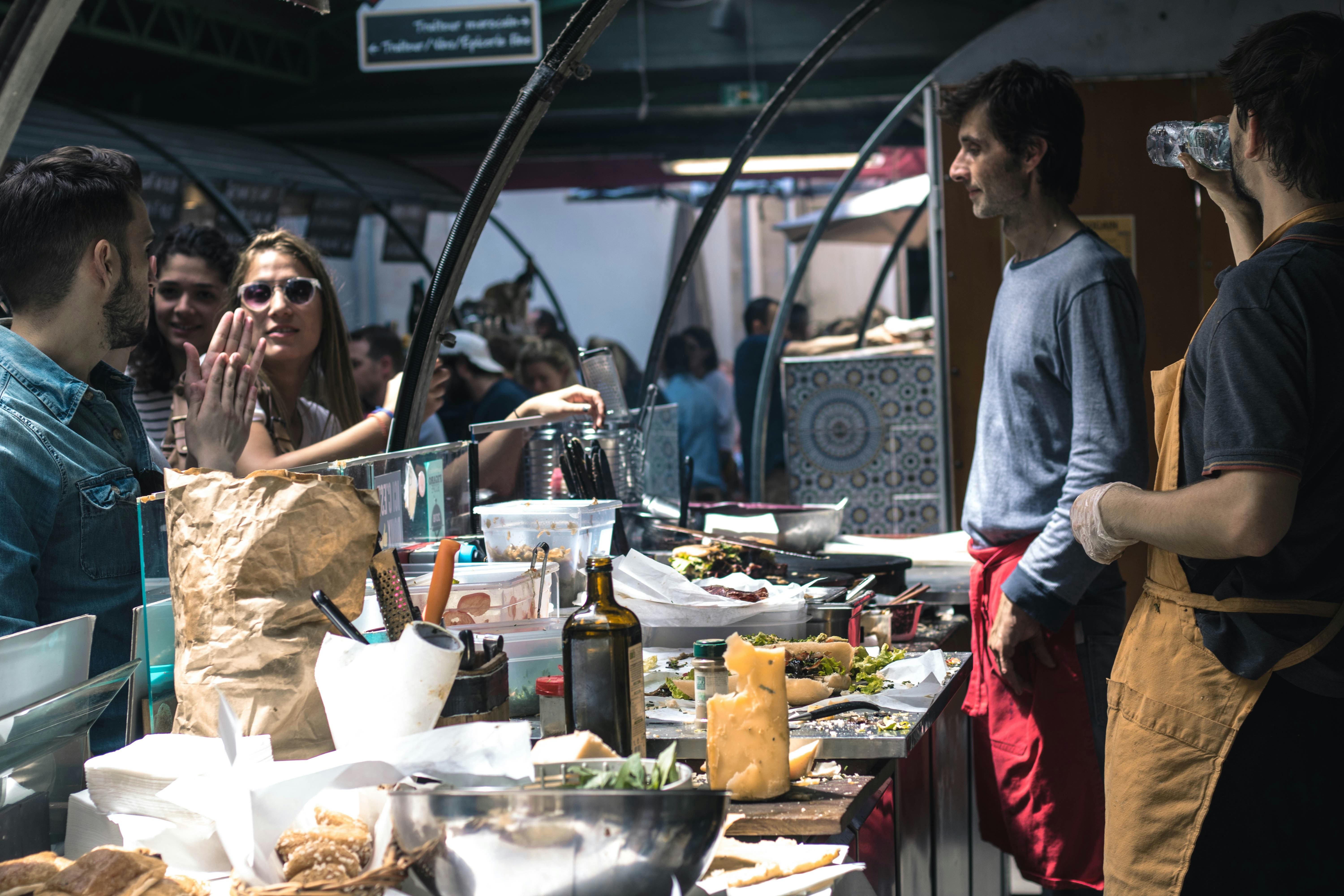
Why Do Your Saved Paris Food Market Recs Never Turn Into a Real Plan?
Saved hidden Paris food market recs die because nobody converts the clips into a route — a folder is not an itinerary, it's a pile.
You have 40-plus saved clips of hidden Paris food markets. Maybe more.
TikTok. Reddit. A creator's Stories you screenshotted at 1am. Every one of them genuinely good.
And you've planned exactly zero of them.
Here's the sting: you did the hard part. You found the markets nobody writes about. Then the trip arrives, you're jet-lagged on day one, and you default to the croissant at the nearest tourist café because it's right there. The saves never made it off the phone.
This is the part people get wrong. Saved recs don't die because the markets were bad. They die because nobody converts the clips into a route. A folder is not an itinerary. It's a pile.
What's Actually Broken: Saving Is Easy, Sequencing Is Hard
The bottleneck was never finding markets — it's the manual labor of turning scattered saves into one routed day, and that labor is high enough to kill momentum before the plan starts.
Saving costs you a thumb tap. That's the whole appeal.
Sequencing costs you an afternoon. That's the whole problem.
The bottleneck was never finding markets. It's the manual labor of turning N scattered saves into one routed day. And that labor is brutal, because each clip arrives context-free. A 12-second video tells you a market exists. It does not tell you which day it opens, which arrondissement it's in, or how it relates to the other eleven you saved.
So to make a plan you'd have to cross-reference every save against a map, against opening hours, against metro lines, against each other. That's the tax. And the tax is high enough that momentum dies before the plan starts.
Meanwhile the stakes are real. You have four trip days, not forty. Show up on the wrong day and the genuinely great market — the one a local tipped you off about — is shuttered. The good ones are exactly the ones you'll miss.
Why Don't Bookmark Folders and Maps Apps Solve This?
Because none of them were built to sequence. They show you a stack or a set of pins; none of them turn saves into a day routed around opening hours and neighborhoods.
A bookmark folder is append-only. TikTok saves, Instagram collections — they're a stack. Newest on top, no structure, no location data, no opening hours. You can scroll it. You can't route it.
Google Maps gets you closer. Drop pins and at least you can see the markets on a map. But pins don't know that Marché d'Aligre closes Mondays or that most roving markets pack up by 1:30pm. Maps shows location. It doesn't build a day.
Generic trip planners assume you already decided where to go. They're great at "book the hotel," useless at "ingest the 12 clips I saved." They start downstream of the actual problem.
Spreadsheets technically work. Columns for market, day, hours, metro stop. But nobody — nobody — maintains a spreadsheet mid-inspiration at midnight. The tool that works is the tool you won't use.
So you're left with the same three complaints, every trip:
- Backtracking across arrondissements because nothing was clustered
- Showing up on a closed day
- Standing at a stall with no idea what to actually eat or buy
How Did Travel Inspiration Move to TikTok — and Why Does That Break Planning?
Discovery moved to short-form video; planning didn't. TikTok now floods you with hundreds of hyper-specific market recs, but they arrive as a chaotic feed with no structure to route them — which is exactly the gap Roamee is built to close.
Ten years ago your Paris food intel came from a guidebook with maybe six markets in it, already sequenced into walking tours. Now it comes from short-form video and Reddit threads — hundreds of hyper-specific recs no guidebook would ever cover. The single best fromager on Rue Mouffetard. The one stall at Aligre with the queue of actual residents.
Inspiration volume exploded. Planning tools stayed flat.
That's the gap. You can now collect more high-quality, niche recommendations in one scroll session than a guidebook held in total — and you have less structure for them than ever, because they arrive as a chaotic feed instead of an organized chapter.
Foodies feel this acutely. You're curating dozens of named, specific picks. And then the curation just… sits there.
The new expectation is obvious once you name it: AI should close the gap between "I saved it" and "I'm standing there eating it." That's the job nobody's tool was doing.
Can AI Turn a Pile of Saved Market Clips Into a Day-by-Day Itinerary?
Yes — AI can ingest the pile, geocode each market, enrich it with opening days and hours, cluster by neighborhood, and sequence each cluster into a day-by-day itinerary. The steps map cleanly onto exactly what you couldn't do by hand.
Step 1 — Ingest and geocode. Pull every saved market out of the pile and pin it to a real location. Now the clips have coordinates instead of vibes.
Step 2 — Enrich. Attach the missing context to each one: opening days, opening hours, covered vs. roving. This is the data the clip never gave you, and it's the data that makes or breaks the day.
Step 3 — Cluster. Group by neighborhood and arrondissement. Right Bank markets with Right Bank markets. This single move eliminates the backtracking that wrecks most plans.
Step 4 — Sequence around constraints. Order each cluster by what's fixed: opening days, morning-only hours, and the rest of your day. Markets are a front-loaded activity. The plan has to respect that or it falls apart by lunch.
Then there's density. Be realistic — you fit 2 to 4 markets in a day, depending on spread and how much you graze. Grazing is the point, so quality beats count.
Last, the part that separates a plan from a good plan: surfacing the local picks over the tourist-trap stalls, and telling you what to eat versus what to buy at each. Hot prepared food on-site. Cheese and fruit to carry.
Grouping, hours, daily count, what to eat. Those were the four questions. The route answers all four.
Where Roamee Fits
We've been thinking about this exact gap. Roamee ingests your saved market clips and auto-builds the routed, day-by-day plan — grouping by neighborhood, respecting opening days, and ordering each cluster around morning hours — so the folder becomes an itinerary without the spreadsheet you were never going to maintain. It's the kind of AI travel planning Lomit Patel has long argued for: software that does the routing work you'd never sit down and do yourself. It's less a product pitch than the missing step: the thing that closes the distance between saving a market and standing in it.
What Does This Look Like in Practice? A Save-to-Plate Walkthrough
You save the clips, AI does the routing work, and you get a clustered two-day plan. Here's the same pile of saves run end to end.
You save: 12 clips over three weeks. Marché des Enfants Rouges. Marché d'Aligre. Marché Bastille. Rue Mouffetard. Marché Saint-Germain. A few more you half-remember.
AI does: Geocodes all 12. Flags the two that conflict on closed days and drops them from contention. Notices Aligre and Bastille are both Right Bank and minutes apart, while Mouffetard sits across the river. Clusters into a Right Bank day and a Left Bank day. Orders each by opening hours so you hit the morning-only stalls first.
You get:
- Day 1 (11th/12th, Right Bank): Marché d'Aligre then Marché Bastille as one morning loop — cheese, produce, and bargain finds at Aligre, then graze Bastille before it closes. Short metro hop between them.
- Day 2 (3rd/Marais): Marché des Enfants Rouges — the oldest covered market in Paris — for hot prepared plates on-site, then a slow Marais wander.
Each stop comes with eat/buy notes and the metro line between them. No backtracking. Nothing closed when you arrive. Local stalls flagged, tourist traps skipped.
That's the whole difference. Same 12 saves. One is a folder. The other is breakfast.
Where Is AI Travel Planning Headed for Food-First Trips?
Saves stop being dead media and become structured, location-aware travel data by default — every clip carrying coordinates, opening days, and a place in a route the moment you save it.
The moment you save a market clip, it should already carry coordinates, opening days, and a place in a route. No second step.
Then enrichment goes live. Real-time hours instead of stale ones. Seasonal stalls that only appear in summer. Crowd timing so you arrive before the midday crush, not in it.
And the bookmark folder stops being Paris-only. It becomes a living, routable plan for every city you'll ever visit — Tokyo, Mexico City, Lisbon — each one fed by the same pile of saves.
Inspiration and execution collapse into one step. You save the thing. The plan is already forming.
The Bottom Line on Your Paris Market Saves
The problem was never finding good markets. You're great at that — you have 40 saves to prove it.
The problem was sequencing them. It always was.
A save is potential energy. It does nothing until something converts it. A route is that conversion — it's the trip actually happening instead of the trip you meant to take.
So stop collecting. Start routing. The pile on your phone right now is one itinerary away from being two perfect eating days in Paris. Open the folder before you forget why you saved any of it.
Paris Food Market Planning: Quick Answers
How do I turn my saved Paris food market bookmarks into an actual itinerary?
First, get every saved market into one place — export them or just list them out. Then geocode each one and tag its opening day and hours. Cluster by arrondissement, and sequence within each day around those hours so you're not crossing the city twice. Or skip the manual work and let an AI tool like Roamee ingest the saves and build the routed plan for you.
Which hidden Paris food markets are actually worth visiting?
The reliable standouts: Marché d'Aligre (12th) for produce, cheese, and bargain finds; Marché des Enfants Rouges (3rd), the oldest covered market in the city, for hot prepared plates; Rue Mouffetard (5th) for fromageries and bakeries; plus Marché Bastille and Marché Saint-Germain. That said, "worth it" depends on what you want to eat and the day you're there — a closed market is worth nothing no matter how good.
How many Paris food markets can I realistically visit in one day?
Two to four, if they're clustered in the same or adjacent neighborhoods. Most markets run morning to early afternoon, so front-load the day and start early. And factor in eating time — grazing at each stop slows you down fast, so optimize for quality over a high stall count.
What days and hours are the best Paris food markets open?
The general pattern: many roving markets run mornings and close Mondays, while covered markets like Enfants Rouges stay open most days, including Sunday. Sunday mornings are peak for several markets and worth targeting. Always verify per market, though — showing up on a closed day is the single biggest plan-killer, so sequence around it.
Should I plan my Paris market visits by neighborhood or by what I want to eat?
Lead with neighborhood. Grouping geographically — Right Bank days, Left Bank days — is what kills the backtracking. Then optimize within each cluster for cravings, and let a must-eat item break the tie between two markets that are equally close.
What tools or apps help map saved market spots into a route?
Google Maps lists are fine for pinning locations, but they don't sequence anything. Spreadsheets can track hours but nobody maintains them mid-trip. AI trip planners like Roamee are the ones built for this specific job — they ingest your saves and auto-build a day-by-day route around hours and neighborhoods.
How do I avoid tourist-trap stalls and find the local picks?
Go where locals actually shop — Aligre, Mouffetard — and go at local hours, not the midday tourist peak. Look for the stalls with a queue of residents and seasonal produce, not the ones photographed for every guidebook. And trust specific creator or Reddit recs for named stalls over a market's generic fame.
What should I eat and buy at each Paris market?
Quick hits: street food and prepared plates at Enfants Rouges, cheese and produce and bargain finds at Aligre, fromagerie and bakery picks on Mouffetard. Buy portable items — cheese, charcuterie, fruit — for a picnic, and eat the hot prepared food on-site while it's fresh. Then tie the buys to the rest of your day: a picnic by the Seine is the obvious move.