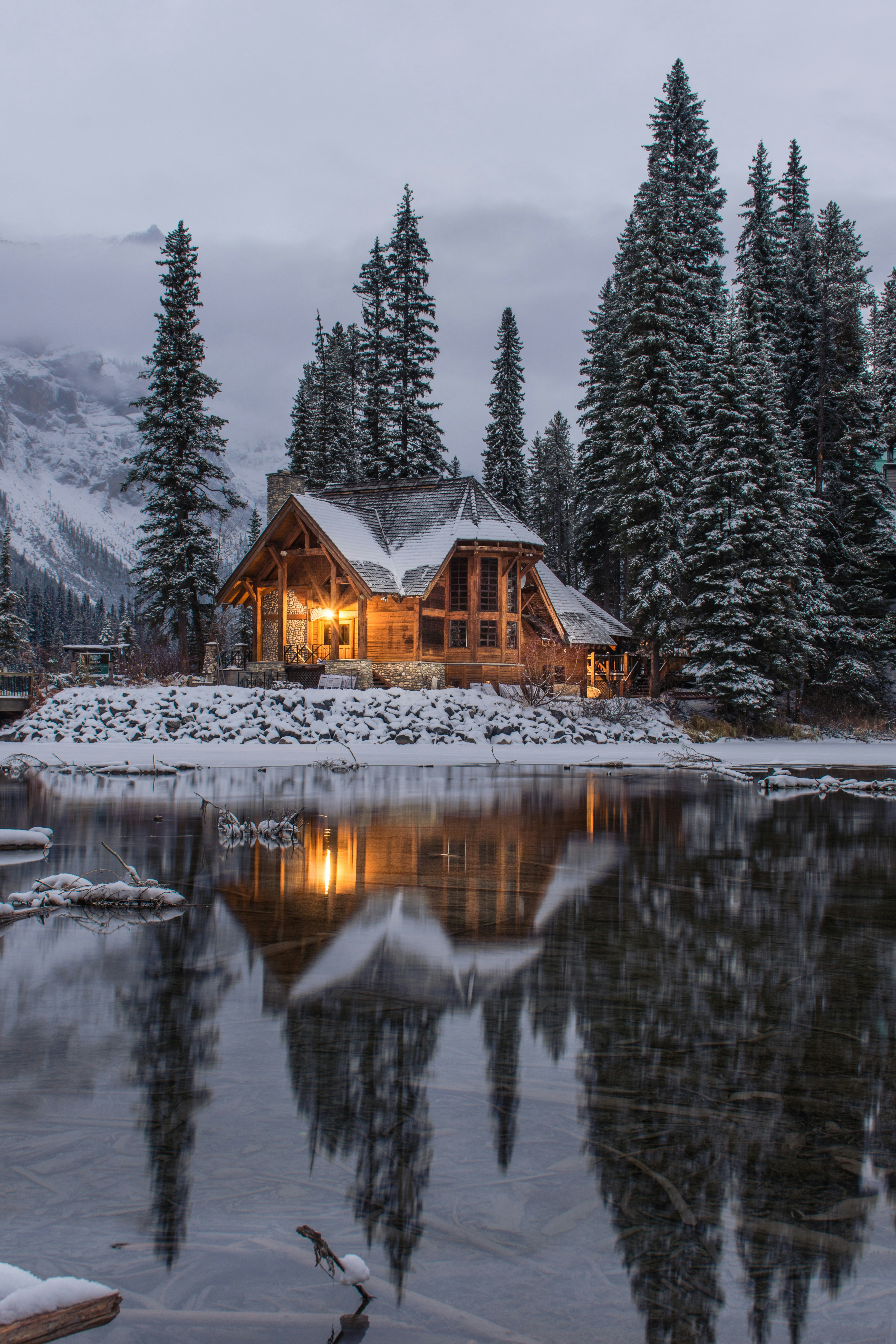
It's Sunday night. The group chat has 84 unread messages. Someone shared a Notion doc nobody opened. Two people ghosted the date poll. The moss-covered A-frame from that one TikTok is still a screenshot in your camera roll.
That trip is not happening.
It was never going to.
Not because the cabin was wrong, or the friends were flaky, or the schedules were impossible. Because there is no working translation layer between a saved post and a bookable plan. And every group trip built around hidden Pacific Northwest cabin rentals dies in that gap.
You Saved 30 Cabins. You Booked Zero.
Last month you saved twelve hidden Pacific Northwest cabin rentals. Mossy A-frames in the Methow. A black-stained cube off Highway 2. A yurt outside Hood River with a wood-fired hot tub. The algorithm knows you and it is delivering.
None of them are on your calendar.
The scene is always the same. Sunday night, four-person thread, someone drops a TikTok, three fire emojis, then silence. Monday a date poll. Wednesday it's dead. By the next weekend somebody else posts a new cabin and the cycle starts over.
It feels like indecision. It is actually a tooling problem. The saves are infinite and the path from save to booking is non-existent.
That is the real story.
Why Do TikTok Hidden Pacific Northwest Cabin Lists Fall Apart When You Try to Book Them?
TikTok hidden Pacific Northwest cabin lists fall apart because the content is optimized for one thing — the save — not the booking. A 14-second clip of fog rolling through Douglas firs does not need to include nightly rate, minimum-stay requirement, drive time from Seattle, or whether the property is actually a listed rental versus the creator's friend's private place. None of that survives the edit.
So you screenshot. And then nothing.
Group cabin trips multiply this friction by four. Four calendars. Four budgets. Four driving tolerances. Four opinions on whether the hot tub matters more than the wood stove. Four different For You pages feeding four slightly incompatible mood boards into the same thread.
The inspiration is dense. The translation layer is missing. So the trip rots.
This is not a friends-are-flaky problem. It is a category error. We are using a discovery surface as if it were a booking surface. TikTok was never trying to be Airbnb. The gap between them is the work — and right now the work is being dumped on the group chat, which is the worst possible place for it.
The saves aren't the problem. The translation is.
What Makes Group Cabin Trips So Hard to Coordinate?
Group cabin trips are hard to coordinate because the load — calendars, budgets, drive times, and taste — multiplies with every person added, while the default planning tools (group chat, spreadsheet, Airbnb search) were never built to resolve those variables together. Each tool only handles one slice, so the friction lands on whoever's most online.
Look at the tools you actually have. TikTok saves have no metadata. No price, no link, sometimes no real listing. Airbnb search does not know which cabin you screenshotted. Google Sheets becomes a graveyard of half-filled date columns and one passive-aggressive comment about budget.
And then there is the group chat, which is the planning tool by default and the worst possible one. Decisions scroll out of view. There is no source of truth. The same question gets re-asked three times. The person who is most online wins, and they are not always the person with the best judgment about a 4-hour drive in shoulder-season weather.
The math underneath is rough.
Four people, three-month window, average professional calendar: the number of fully-available weekends collapses fast. Two in five, if you are lucky. One in five if anyone has a wedding or a half-marathon on the books. Nobody in the thread has run that math, so the date poll keeps living a little longer than it should.
Then drive time. 'Hidden' is a synonym for 'four hours from a major airport.' Methow is gorgeous and it is also four hours from Seattle on a good day. Sunshine Coast adds a ferry. Nobody on the thread wants to admit they don't want to drive that far, so they don't, and the trip quietly stalls when the realization hits in the parking lot of the rental car place.
Budget asymmetry kills the rest. The person who picked the $850-a-night A-frame did not ask what the other three could spend. Nobody wants to be the one who says it. So they don't. So the trip dies.
Three forces. One missing tool. Predictable outcome.
How Did TikTok Break Travel Planning Even As It Supercharged Inspiration?
TikTok broke travel planning by moving discovery onto an algorithmic feed while the planning stack — search bars, spreadsheets, group chats — stayed stuck in the pre-algorithm era. Discovery moved. Planning didn't.
The 2010s discovery stack was a guidebook, a blog post, maybe a friend's recommendation, and Google. The 2020s stack is the algorithm — short-form video, four For You pages, a private save folder per person per app. Inspiration is more abundant than it has ever been. Conversion is worse than it has ever been.
Saving is the new bookmarking. Except saves are siloed per app, per person, per platform. There is no shared inbox for a group trip's inspiration. Your saves live in your TikTok. Mine live in my Instagram. The third friend uses Pinterest. The fourth still texts links.
Group trips used to start with one shared destination. Now they start with four mood boards that don't know about each other.
Urban professionals between 28 and 36 are inspiration-rich and time-poor. They do not lack ideas. They lack a way to convert ideas into a plan four people will agree to before the algorithm hands them a new one.
The hidden cabin trend is the cleanest case study. The content is dense. The aesthetic is consistent. The aspiration is real. And almost none of it is bookable as shown.
This is not a content problem. It is a planning-stack problem. The planning stack was built for the era of search-and-compare and it is being asked to handle the era of swipe-and-save. It cannot.
How Can AI Planning Tools Turn Saved Cabin Posts Into a Real Itinerary?
AI planning tools turn saved cabin posts into a real itinerary by reading each save as structured intent — region, vibe, capacity, must-haves — then cross-referencing that intent against actually-bookable inventory and resolving every group member's calendar, budget, and drive-time constraints in a single solve. The saves stop being a graveyard and start being a brief.
Here is what AI is actually good at, in this specific moment.
It can read a saved post as structured intent. Region. Vibe. Capacity. Must-haves. Wood stove, hot tub, dog-friendly, sleeps six, gravel road okay. Things that were buried in the visual language of a 14-second clip become inputs a system can act on.
Then it can cross-reference those signals against real, bookable inventory. Not the one cabin in the video — which is almost certainly booked nine months out or not a rental at all — but the twenty cabins that match its DNA on Airbnb, Vrbo, Hipcamp, and the regional collectives that don't show up on the first page of Google.
Then it resolves the group constraints in one solve, not four sequential negotiations. Pull everyone's availability. Pull each person's budget ceiling. Pull each person's max drive time from their actual starting point. Find the intersection. Rank it.
Most importantly, it surfaces the trade-offs explicitly instead of burying them in chat. 'This weekend works for all four of you but adds 90 minutes of drive time for the Portland person.' 'This cabin is under everyone's budget but is gravel-road-only in shoulder season.' That sentence, sent once, ends a debate that would have eaten a week of group-chat oxygen.
The shift is from search-and-screenshot to describe-and-decide. You stop hunting. The system hunts. You make the call.
Where Roamee Fits
We've been thinking about exactly this moment. Roamee — the AI itinerary generator built to put AI travel planning where the group chat actually lives — is designed for the drop-the-TikTok-and-invite-the-group flow. You paste in one save or three, the group joins, and what comes back is a short list of actually-bookable cabins that fit everyone's dates, drive time, and budget. The spreadsheet goes away. The thread shrinks. The trip happens.
From 12 Saved Posts to a Booked Weekend: A Concrete Walkthrough
Make it concrete.
Step 1: You save. Twelve TikToks across a month. Mossy A-frames in the Methow. A Hood River yurt with a clawfoot tub on a deck. A Sunshine Coast off-grid shack that requires a water taxi. A black cube cabin somewhere off Stevens Pass that the creator refused to geotag.
Step 2: The planner reads. It extracts the vibe — rustic, hot tub, wood stove, dog-friendly, sleeps four to six, secluded but not flight-required. It pulls bookable inventory that matches that DNA across multiple platforms. It is not trying to find the cabin in the video. It is trying to find the cabin you would actually book.
Step 3: The group converges. Three friends in Seattle, one in Portland. The planner pulls a 60-day window against four calendars and finds the seven weekends that work for all four. It applies the budget ceiling. It applies the max drive time per person. It ranks what is left.
Step 4: You get three options. Each with nightly cost per person, drive time per person, a pre-filled split-the-bill summary, and one tap to share back to the chat.
Step 5: Decision made in one thread, not eighty-four. The trip is on the calendar by Tuesday.
This is not a hypothetical. This is what the planning stack should have looked like the day TikTok became the primary discovery surface for travel.
The Future of Travel Planning Is Inspiration-Aware
The next generation of planning tools will not compete with TikTok. They will plug into it.
Saved content stops being a dead bookmark and starts being structured input. The 30 cabins in your save folder are no longer a graveyard. They are a brief.
Group coordination stops being a personality test for whichever friend is most willing to run a spreadsheet. It becomes a solved problem — same way ride-splitting and venue-picking became solved problems once a tool actually took the friction.
The line between discovering a place and booking it collapses to a single conversation. The save and the reservation live in the same surface. The translation layer is no longer the user's job.
For hidden Pacific Northwest cabin rentals specifically, this is the difference between a trend and a trip. They stop being aspirational content you screenshot at 11pm and start being weekends in October.
That is the bar. Inspiration-aware planning, or nothing changes.
The Real Reason Your Cabin Trip Never Happened
It was never the cabin. The cabin was fine. The cabin was great.
It was never the friends. Your friends are not flakier than anyone else's.
It was never the schedules. Four professionals can find a weekend if a system actually solves for it.
It was the missing translation layer between inspiration and logistics. The saves were raw material, not failed plans. You were never the problem either.
One concrete move for the next time: before you forward a PNW cabin save to the group chat, run it through an AI planner first. Get the bookable comps, the dates that actually work, the drive-time and budget reality check. Then send.
That is the difference between a screenshot and a weekend.
FAQ: Planning a Group PNW Cabin Trip From TikTok Saves
How do I actually find bookable hidden cabins in the Pacific Northwest?
Start with the region, not the specific TikTok. Most 'hidden' cabins live in a cluster — Methow Valley, Olympic Peninsula, Sunshine Coast, Hood River, Mt. Hood, the San Juans — so cross-reference the aesthetic against bookable platforms like Airbnb, Vrbo, Hipcamp, and regional collectives like Getaway and Mossy Cabins. The fastest path is letting an AI planner match the vibe against real inventory instead of hunting the single property in the video, which is usually either private or booked out.
Which PNW regions actually have hidden cabins worth the drive from Seattle or Portland?
From Seattle: Methow Valley is about 4 hours, Olympic Peninsula 3, the San Juans 3 plus a ferry, Mt. Baker around 2.5. From Portland: Mt. Hood at 1.5, Hood River and the Columbia Gorge at 1, the Oregon Coast 1.5 to 2.5, and Bend at 3.5. Cross-border, the Sunshine Coast and Vancouver Island are worth it for groups willing to do a ferry — but factor that into your drive-time math up front, not at the rental car counter.
What should I check before sending a TikTok cabin to the group chat?
Check five things every time. Confirm it's a listed rental (not someone's private cabin dressed up for the camera), nail down nightly rate and minimum-night requirement, calculate drive time from each person's starting point, verify capacity against group size (and whether 'sleeps 6' includes a loft mattress nobody wants), and double-check cell service and check-in logistics for anything remote.
How do you align dates, drive times, and budgets for a group of four?
Lock the least flexible constraint first, which is almost always dates. Set a per-person nightly budget ceiling before anyone shares a single listing — once a $900 cabin is in the chat, it anchors the conversation. Define a max drive time everyone agrees to upfront, then use a tool that solves all three together instead of negotiating them in sequence in the group chat, because sequential negotiation is what kills these trips.
Can an AI planner replace the spreadsheet for group travel coordination?
For the planning layer, yes. Availability, budget reconciliation, options ranking, and cost-splitting are exactly what an AI planner does better than a spreadsheet. The spreadsheet only survived this long because no other tool unified inspiration, logistics, and group input — what humans still own is the final vibe check and the 'who's driving' conversation.
Should I trust TikTok cabin recommendations for a group getaway?
Trust them as inspiration, not as a booking plan. Many viral 'cabins' are private residences, sponsored stays, or properties booked out nine months ahead. Use the save as a starting vibe and let a planner surface comparable bookable options — you'll almost always end up somewhere as good as the video, on a weekend that actually works.
How do you split costs and logistics without a spreadsheet nightmare?
Agree on the split rule before booking — even split, by-room, or by-night. Use Splitwise or a built-in trip cost-splitter for shared expenses like groceries and gas. The cleanest pattern is one person books the cabin and gets reimbursed, rather than trying to split the reservation itself, which most platforms make harder than it should be.
What questions should you ask before booking a remote PNW cabin?
Ask four things, every time. What's the road like in shoulder season — gravel, snow, 4WD required? Is there cell service or Wi-Fi, and does the group need either? What's the cancellation policy if weather closes a pass, which it will? And what's the actual check-in process for a remote, often un-staffed property — because finding a lockbox in the dark after a 4-hour drive is the wrong way to start a weekend.