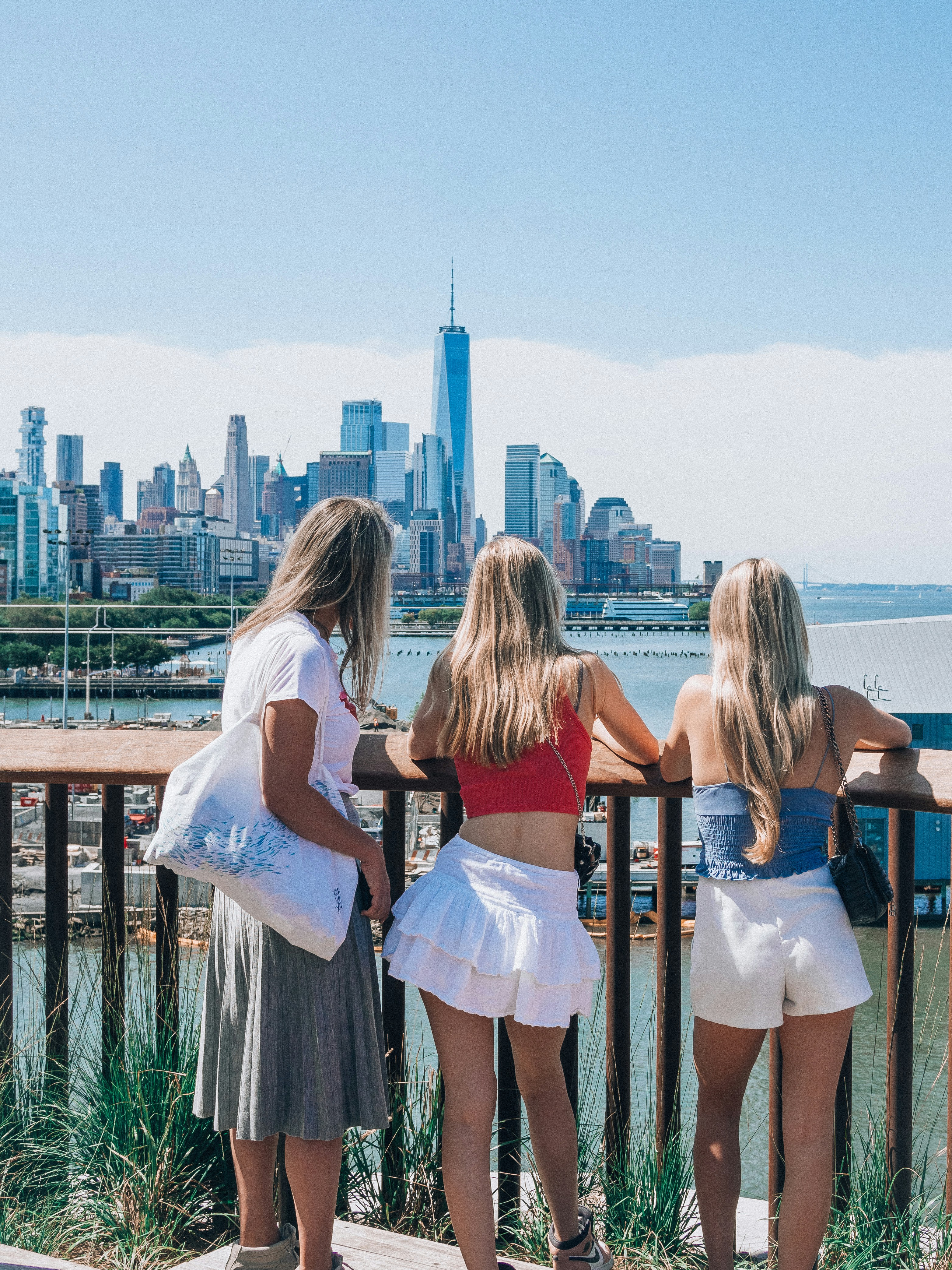
A traveler I'll call Maya lands at LaGuardia on a Friday night with 47 TikToks saved under a folder called "NYC HIDDEN" — promising hidden free views NYC tourists somehow always miss.
By Saturday at 2pm she is standing in Times Square, scrolling that folder for the rooftop somebody showed her in March.
She never finds it. She ends up at the Empire State Building. $44, 38-minute line, view she's already seen on her own feed.
This post is for Maya.
You Saved 47 'Hidden NYC' TikToks. You Visited Zero.
Here's the thing. The hidden free views NYC tourists keep missing aren't actually hidden. They're sitting in your saves folder right now.
Sunset Park. Transmitter Park. Gantry Plaza. The Roosevelt Island promenade. Fort Tryon.
You saw a Reel about each of them on a Tuesday in February. You hit the bookmark icon. You felt productive.
Then the trip arrived and the folder turned into a graveyard.
This isn't a discovery problem. Discovery is the one part of travel that works now. The problem is everything that happens between "I saved it" and "I'm standing there at the right hour."
Nine viewpoints. All free. All subway-accessible (with one honest exception). Mapped, clustered, and slotted by time of day below. And a clear answer for what to do with the saves folder next time.
Why Is 'Hidden Gems NYC' the Hardest Kind of Trip to Plan?
Because discovery is everywhere now and synthesis is nowhere. In 2014 the bottleneck was finding the spot. In 2026 the bottleneck is figuring out which of the eighty spots you already know about belong in the same afternoon.
Tourists end up at the Empire State Building not because they want to. They end up there because at 11am on a Saturday it's the only thing that surfaces when they panic-Google "things to do NYC near me."
The good stuff exists. It's just fragmented. Sunset Park is in a Reel from a Brooklyn creator. Transmitter Park is buried in a Reddit thread from 2019. The Roosevelt Island promenade got name-checked in a YouTube comment your friend screenshotted.
None of these surfaces talk to each other.
And none of them know it's currently 1:43pm, your hotel is in Williamsburg, sunset is at 8:21pm, and you have exactly one Saturday afternoon to spend.
The question travelers actually need answered isn't "what are the best free views in New York." It's "which of the ones I already know about can I realistically hit today, in what order, and when's the light?"
No app answers that.
Why Do Saved TikToks, Google Maps Pins, and Reddit Threads All Fail You on Day Two?
Because each tool was built for hoarding inspiration, not executing on it — and each one fails differently. Let's diagnose this honestly.
TikTok saves. No search. No geotag on roughly half the videos. No way to filter "the rooftop in Brooklyn with the view of Manhattan" out of 200 other saves. The folder is a feed, not a database.
Google Maps pins. You saved 60 over six months. They're scattered across five boroughs. There's no order, no clustering, no "these three are walkable from each other." You open the map and see a constellation. You close it.
Reddit r/AskNYC. Genuinely useful. Also buried under 200 comments of "just go to DUMBO," which is the answer for someone else's trip, not yours.
Instagram saves. Aesthetic and useless. You can't tell from a photo whether that rooftop is public, paid, or requires a $24 cocktail and a reservation.
The Notes app itinerary. A list of names with no times, no subway lines, no sunset math. You will not look at it twice.
The meta-failure is the same across all five. None of these tools know your trip dates. None of them know your hotel. None of them know it's overcast Tuesday vs golden-hour Saturday. None of them know which spots cluster.
The New Way Travelers Actually Discover Cities
Travel inspiration has moved fully into short-form video. Roughly three in five Gen Z and younger millennials now start trip planning on TikTok or Reels before they ever touch Google.
That's the shift.
But the planning layer hasn't moved with it. We're still copy-pasting Reel links into Notes apps like it's 2014. TikTok is now the world's biggest engine of travel inspiration chaos — and nothing on your phone is built to absorb the resulting saves folder.
The 2010s travel stack was Top-10 listicles, TripAdvisor reviews, and one Lonely Planet PDF. The 2020s discovery stack is a creator showing you Gantry Plaza at 7:47pm with 90 seconds of context. Those are different products. They need different planning tools.
Travelers don't want "top 10 hidden gems NYC" anymore. They already have a top 47 — their own. They want their shortlist organized.
That's the actual job to be done.
How Does AI Turn Your Saves Folder Into a Real NYC Itinerary?
AI reads what's inside the folder, extracts location and time-of-day cues from each clip, and clusters the spots geographically. It does the one thing the saves folder can't do on its own — synthesize.
Ask the right system "which of my saves are within a 15-minute subway ride of my Williamsburg hotel" and you get a real answer. No native app does that today.
It also accounts for the variables you'd never research one-by-one. Golden hour. Crowd patterns. Weather. Whether the F train is running on a weekend. Whether the view from Transmitter Park is better at 7:30 or 8:15 in June.
Four hours of tab-juggling collapses into one structured day-by-day plan.
This matters because the limiter on a long weekend isn't access. It's decision fatigue. You have 52 hours in NYC. You will spend six of them re-scrolling saves and 11 of them recovering from bad routing choices.
AI removes that tax.
Where Does Roamee Fit Into This?
Roamee is the AI itinerary generation tool we've been building around exactly this gap — saved-content-to-itinerary, with geographic clustering and time-of-day intelligence baked in. Roamee is what that work looks like when you point it at a chaotic TikTok saves folder. It's the tool we kept wishing existed every time we lost our own saves between the inspiration scroll and the actual trip. Not a top-10 generator. A way to make sense of the list you already built.
The 9 Free Hidden NYC Viewpoints — And How AI Maps Them For You
The list. Read it, then read the workflow underneath it.
1. Sunset Park (Brooklyn). R/D to 36th St, walk uphill. The fullest skyline panorama in the five boroughs. TikTok loves it for the framing. TikTok doesn't tell you the hill is steep and the best bench fills up by 7pm in summer.
2. Transmitter Park (Greenpoint). G to Greenpoint Ave. Pier sticking into the East River with Midtown straight ahead. Best 60 minutes before sunset. Bring a jacket — wind off the water is real even in July.
3. Roosevelt Island Promenade. F to Roosevelt Island, or the tram from 59th & 2nd. The tram itself is the move. Eye-level with Midtown, no crowds past the lighthouse.
4. Gantry Plaza State Park (LIC). 7 to Vernon Blvd-Jackson Ave. The Pepsi-Cola sign view. Photographed to death and still worth it. Go 90 minutes before sunset for the gradient on the buildings.
5. Fort Tryon Park. A to 190th St. Hudson, Palisades, the Cloisters behind you. Quiet even on weekends. The one on this list that feels like you're not in NYC at all.
6. Brooklyn Bridge Park Pier 6 berm. R to Court St or 2/3 to Borough Hall. Everybody goes to Pier 1. The berm at Pier 6 is 400 feet south, twice as quiet, same skyline.
7. Sugar Hill (Harlem). A/B/C/D to 145th St. Edgecombe Ave at 155th. The view nobody tells tourists about. You can see south to Midtown framed by brownstones.
8. Greenpoint Williamsburg Piers (the old Domino + WNYC Transmitter stretch). L to Bedford, walk north along the water. Best as a 20-minute walk, not a single spot. Connects to #2 if you're stringing a sunset crawl.
9. Liberty State Park. PATH to Exchange Place, light rail to Liberty State Park. The exception — not technically NYC and not subway-accessible. But: $0, Statue of Liberty in the foreground, full Lower Manhattan skyline. Worth a half-day if you have one.
Now the workflow.
You save 12 Reels over six weeks. You arrive Friday night. The AI ingests the 12, identifies that 4 cluster along the East River from Greenpoint to LIC, 2 are deep Brooklyn, 3 are Harlem/Upper Manhattan, and 3 are unrelated. It builds three half-days. Saturday afternoon becomes a Greenpoint-to-LIC waterfront crawl: Transmitter Park at 6:30, the Williamsburg piers walk at 7:00, Gantry Plaza for sunset at 8:21, dinner in LIC after. Four of the nine spots, one subway transfer, no decisions made standing on a corner.
That's what the saves folder was supposed to become.
What Does Trip Planning Look Like Once AI Catches Up to How We Discover?
The saves folder becomes the travel journal — but only if something can read it. Itineraries get assembled from your taste, not from a generic listicle written for nobody in particular, and the "I saved it but never used it" graveyard goes away.
And here's the strange consequence — first-time visitors will navigate certain cities better than locals who never bothered to organize their own knowledge. The information advantage isn't access anymore. It's retrieval.
The traveler with 200 unread saves and an AI planner beats the traveler with 200 unread saves and a Notes app every time.
The Real Hidden Gem Was the Plan You Never Made
The views were never hidden. Your planning workflow was.
Nine free spots. All in your saves folder already, or your friend's, or one search away. The constraint was never information. It was synthesis.
Stop hoarding inspiration. Start organizing it.
The next saves folder you build doesn't have to die in a scroll graveyard.
FAQ: Free Hidden Views in NYC
What are the best free hidden viewpoints in NYC most tourists overlook?
The three strongest from this list are Sunset Park in Brooklyn for the fullest skyline panorama, Gantry Plaza State Park in LIC for the iconic Midtown view, and Fort Tryon Park uptown for the Hudson. All nine on the list above are free, require no reservation, and have no observation-deck queue. Locals prefer them because you get the actual skyline plus space to breathe.
Where can you see the Manhattan skyline for free without waiting in line?
The three best free, no-line options are Gantry Plaza State Park (7 train to Vernon-Jackson), Transmitter Park in Greenpoint (G train), and the Pier 6 berm at Brooklyn Bridge Park (R to Court St). All are zero-cost, no ticketing, open dawn to late evening. Each gives you a different angle on Midtown or Lower Manhattan — pick by which side of the skyline you want.
Are there free alternatives to the Empire State Building and Top of the Rock?
Yes. Sunset Park gives you a fuller skyline panorama for $0 versus $44, and the Roosevelt Island promenade puts you eye-level with Midtown, which photographs differently and arguably better. The trade-off is honest: you get an outdoor, horizontal view instead of a vertical one from inside a building. For most travelers, that's an upgrade, not a downgrade.
What times of day are these hidden viewpoints least crowded?
Weekday mornings before 10am are quietest across all nine. Golden hour is the busiest window at Gantry, Domino, and Transmitter, so go 90 minutes before sunset to claim a spot, not 30. Fort Tryon and Sugar Hill stay quiet even on weekend afternoons, while Sunset Park fills up by 7pm in summer but is empty before noon.
How do you actually plan a trip around saved TikTok and Instagram spots?
Three steps. First, get your saves into one place — export, screenshot, or list them. Second, run them through an AI planner that can cluster by neighborhood and time-of-day, not just drop pins on a map. Third, anchor each half-day around one cluster rather than one viewpoint. Roamee is one tool built specifically for steps one through three.
Are any of these hidden NYC viewpoints accessible by subway?
All nine, with one exception. The quick map: G or L for Greenpoint and Williamsburg, 7 for Gantry Plaza, F or tram for Roosevelt Island, A for Fort Tryon, R or D for Sunset Park, A/B/C/D for Sugar Hill, R or 2/3 for Pier 6. Liberty State Park is the exception — PATH plus Hudson-Bergen Light Rail, about 35 minutes from Lower Manhattan.
Which boroughs outside Manhattan have the best skyline views?
Brooklyn and Queens dominate, because they're looking at the skyline rather than from inside it. Top Brooklyn picks are Sunset Park, Brooklyn Bridge Park Pier 6, and Transmitter Park. Top Queens picks are Gantry Plaza and Hunters Point South Park. Honorable mention goes to Liberty State Park, which is technically in New Jersey but gives you the Statue of Liberty plus Lower Manhattan in one frame.
Can AI help me plan a hidden gems NYC trip from my saved videos?
Yes. AI can extract location and intent from short-form video, cluster spots geographically, and slot them by best time of day, replacing several hours of manual research with one structured day-by-day plan. Roamee is purpose-built for this workflow, but the broader point is that the saves folder is finally a usable input, not just a hoarding spot.