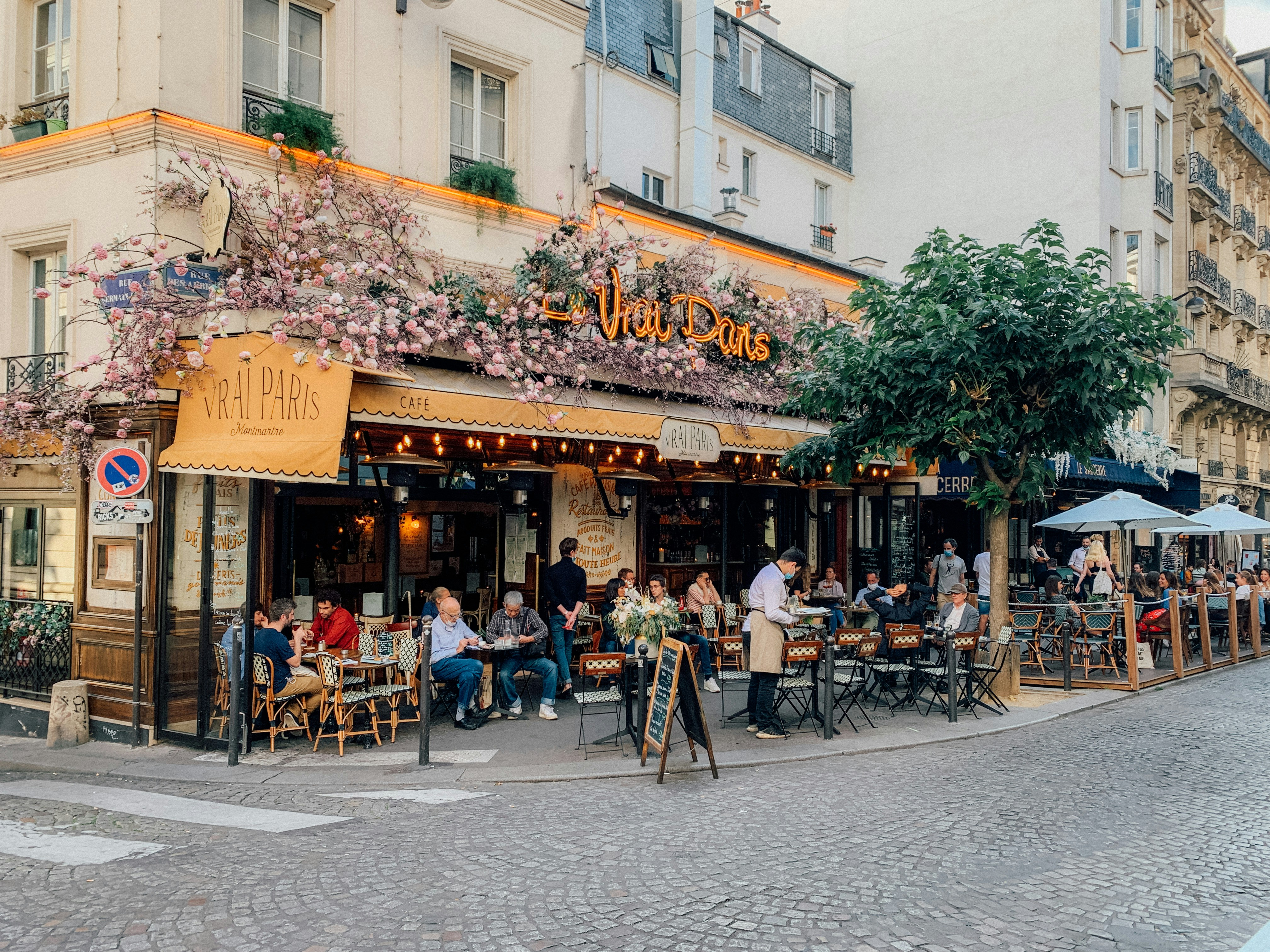
Why Does Your Paris Food List Never Become an Actual Day?
Because the saving was effortless and the sequencing was left entirely to you.
You have 40-something saved clips of hidden food markets in Paris. "Hidden Paris market you have to try." "Locals only, tourists don't know this one."
The trip is booked. The folder is full. The plan is nonexistent.
You discovered everything and visited nothing. The saves became a graveyard, not a guide.
Here's the part nobody says out loud: you can't walk a bookmark folder. The clips told you where. None of them told you in what order, on what day, or how to get from this one to the next without crossing the city twice.
The gap between your camera roll and your actual day isn't discovery. It's sequencing. And every tool you've used so far made the first part frictionless and left the second part entirely to you.
What's Actually Going Wrong: Discovery Without Sequencing
Saving is one tap. Routing is an afternoon of work you'll never do.
So the gap never closes.
That's the real problem — not that you lack places, but that twelve great hidden food markets in Paris are scattered across a dozen arrondissements with no connective tissue. Combining them feels impossible because every clip is context-free. No hours. No day-of-week. No sense of how far the next one is.
You're holding twelve dots and no line between them.
So how do you turn a list of saved Paris markets into one walkable day? You stop treating the saves as a destination list and start treating them as raw input for a route. Twelve hidden markets, clustered by neighborhood, sequenced so you move in one direction and arrive when each place is actually open.
No metro chaos. No zig-zag. One day you can eat your way through.
That's the whole promise. The rest of this is how.
Why Do Bookmarks, Maps, and Guidebooks Fail at This?
Three tools. Three different ways of leaving you stranded.
TikTok and Instagram saves. No map view. No hours. No distance between pins. It's a pile, sorted by when you saw it, not by where it is. The algorithm optimized for the next save, not your next step.
Google Maps lists. Better — you can drop the pins. But it won't sequence them, won't respect opening days, and won't tell you the 9th-arrondissement market is dead by the time you finish brunch. You still plan the whole thing by hand.
Guidebooks and blogs. They list the same five tourist-trap markets, bury the genuinely hidden ones in paragraph six, and never hand you a route. "Visit Marché Bastille" is not a plan.
So you wing it. And winging it in Paris means zig-zagging across town and arriving when half the stalls are shuttered — because most street markets close by early afternoon and a lot of them aren't open Mondays.
Which raises the question every first-timer should ask: how do you avoid the tourist-trap markets in Paris? You route around them. The hidden ones are usually a five-minute walk from the famous one — you just need to know which direction to step.
How Did Travel Planning Get Stuck Between TikTok and Reality?
Discovery moved to short-form video. We find places by vibe now, not by guidebook index.
That shift is mostly good. You're seeing the actual stall, the actual oyster guy, the actual line out front.
But the tools to act on a save never caught up. Saving exploded. Planning stayed manual.
So you research like a local and plan like it's 2010 — a notes-app list, a half-pinned map, a vague intention to "figure it out there."
The 24-to-38-year-old planning this trip is fluent in discovery and stuck in logistics. The input got 100x richer. The output is still a folder.
So: how do I turn my saved Paris food TikToks into an actual itinerary? You need a layer between the saving and the walking — something that reads the pile and hands back a route.
That layer is the part AI is actually good at.
How Can AI Turn a Pile of Saves Into a Walkable Route?
It reads your saved markets, fills in the hours and locations the videos skipped, then clusters and orders them into one no-backtrack line.
Here's what that missing layer does that you never will by hand. It ingests your saved markets plus the data you never collected per clip — hours, open days, exact location. The stuff the video never bothered to mention.
Then it does the work that breaks human patience:
- Clusters by neighborhood so nearby markets become one leg instead of three separate trips.
- Orders the stops to kill backtracking — you move in a single geographic direction.
- Respects opening windows — covered markets and early-closing stalls go first, peak street markets land mid-route when they're loudest.
- Assigns dwell time per stop and flags where a walk turns into a metro hop.
That's it. It's not magic. It's the sequencing problem — solved by the one thing that doesn't mind cross-referencing twelve sets of opening hours against a map.
The diagnosis was sequencing. This is the cure.
Where Roamee Fits
We've been thinking about exactly this gap. You already save the market clips — keep saving them. Roamee reads what you saved, pulls the hours and locations the videos left out, and hands back a sequenced, walkable day instead of a folder you'll scroll past. Roamee has been blunt about where AI travel planning is heading: AI itinerary generation that turns a pile of saves into a route, not another app for discovering more. No new behavior, no manual routing, no spreadsheet. It's not another place to discover markets — it's the layer between saving them and actually walking the route.
What Does a One-Day Route Through Paris's Hidden Food Markets Look Like?
One ordered line that starts east and ends with dinner — mostly on foot, with the metro used exactly once.
Say you've saved twelve hidden markets. Here's the shape of the day they become. You save the clips. The route reads them, geo-sorts them, and checks the calendar. You get an ordered line that starts east and ends with dinner — one direction, mostly on foot.
Step 1 — Anchor east, Aligre (12th). Start at Marché d'Aligre and the covered Beauvau hall. Open-air stalls, a covered market, and cafés in one block. Best Tuesday-to-Sunday mornings; it winds down early afternoon, which is exactly why it goes first. Eat: oysters and a glass of white at the back, cheese for the walk. Dwell: 45-60 min. Then a 12-minute walk northwest.
Step 2 — Marais, Enfants Rouges (3rd). The oldest covered market in Paris, half prepared-food stalls. Good most days except Monday. Eat: a Moroccan plate or the Japanese counter — this is your sit-down lunch anchor. Dwell: 40 min. Then a short walk through the Marais hitting one or two street stalls you saved along the way.
Step 3 — Belleville (20th/19th). Here's your one long jump: a single metro ride up from the Marais. The payoff is the cheapest, most diverse, most genuinely local market on the list — North African, Asian, produce stacked high. Best Tuesday and Friday mornings. Eat: street snacks, fruit, a mint tea. Dwell: 30 min.
Step 4 — Right Bank evening stretch. Drift back toward a Saint-Quentin or a covered hall that keeps later hours for a final graze and a sit-down glass as it gets dark.
Notice the logic: every leg between markets is a 5-to-15-minute walk. The metro comes out exactly once. Nothing closes on you because the early-closers were front-loaded.
Thirty saves became one ordered route. The route became a day you actually ate through.
Where Is Trip Planning Headed?
Saves become the itinerary input. You won't "build a plan" — you'll save, and the plan assembles itself from what you saved.
The direction is obvious once you've felt the gap. Routing becomes automatic, and then real-time. The sequence adapts when a market's closed for a holiday, when it rains and the open-air stalls don't show, when you're three cheese plates deep and need to cut a stop.
The camera roll stops being a graveyard and becomes a living plan that reshuffles as the day moves.
Discovery and doing finally collapse into one motion. You find it, and it's already on the route.
The Real Takeaway
You were never short on places. Paris hands you more hidden food markets than any single day can hold.
You were short on order.
The best Paris foodie day isn't the one with the most markets crammed in. It's the right sequence of fewer — four to six, chained by neighborhood, timed to when they're open.
So stop collecting. Start routing. Your next save shouldn't become another tab. It should become a stop.
Paris Food Market Route: Quick Answers
What are the best hidden food markets in Paris?
A tight cross-neighborhood list: Marché d'Aligre and the Beauvau covered hall (12th), Marché des Enfants Rouges (3rd), the Belleville market (20th/19th), and Marché Saint-Quentin (10th). "Hidden" here means local-frequented and off the guidebook top-five — not literally secret. For the full set sequenced into a route, work from the 12-market day above.
Which Paris neighborhoods have the best food markets?
Bastille/Aligre (12th) is the best all-in-one: covered hall plus open-air street market plus cafés. The Marais (3rd) gives you Enfants Rouges, the oldest covered market in the city. Belleville (20th/19th) is the cheap, diverse, very-local pick. For organic and upscale street markets, head to Batignolles and the Left Bank pockets.
What is the ideal order to visit Paris food markets in a single day?
Start with covered markets and early-closing stalls — many wind down by 1-2pm. Hit peak street markets mid-morning into lunch when they're busiest. Cluster by neighborhood and move in one geographic direction so you never backtrack. Save a sit-down or later-hours market for the evening.
What days and hours are Paris food markets open?
Most street markets run morning to early afternoon and are often closed Mondays. Covered markets (marchés couverts) keep longer hours, usually with a midday break, and open most days except Monday. Always confirm the day-of-week per market — getting this wrong is the number-one cause of a wasted leg. Sunday mornings are often the liveliest.
How far apart are the main Paris food markets — can you walk between them?
Within a neighborhood cluster, most are 5-15 minutes apart on foot. Cross-neighborhood jumps — say Marais to Belleville — are one short metro ride. A well-sequenced day ends up roughly 80% walking with one or two metro legs.
How much time should you budget at each market?
Small covered or street markets: 20-30 minutes to graze. Larger combo markets like Aligre: 45-60 minutes. Add a buffer for a sit-down lunch at one anchor stop. Plan four to six markets max in a day if you actually want to enjoy it.
What's the difference between covered markets and street markets in Paris?
Covered markets (marchés couverts) are permanent halls with longer, most-days hours, prepared food, and sit-down stalls. Street markets (marchés découverts) set up on specific mornings, lean fresher and more local, and are weather-dependent. Routing tip: anchor your day on a covered market and time the street markets to their open days.
Where should a first-timer start a Paris foodie day?
Start at Marché d'Aligre and the Beauvau hall — covered market, open-air street stalls, and cafés in one spot. It's the lowest-friction intro and a natural launch point heading into Bastille and the Marais. Go mid-morning, eat as you go, then walk the route outward.