You have 30 saved clips of hidden food markets Milan. You have zero days actually built.
That's the real number. Open your camera roll. Count the screenshots, the saved Reels, the Reddit threads you starred at 1am. Now count how many turned into a place you stood, ate, and left full.
The ratio is brutal.
This isn't a discovery problem. You already found the spots. It's a sequencing problem wearing a discovery costume.
Why Does Your 'Hidden Milan Food Markets' Save-List Never Become a Trip?
The inspiration high is real. A vendor slicing mortadella, steam off a panzerotto, a price tag in euros that makes you screenshot it. Save. Save. Save.
Then you land in Milan with 30 pins and no idea what's near what.
That's the crash. The dopamine of saving and the dread of planning are two different brain states, and the second one never shows up until you're standing on a corner in Porta Genova, hungry, with a dying phone.
Here's what's actually at stake. You have a short trip. Maybe three days. One real shot at eating the city the way locals do. And the fear underneath the indecision is specific: wasting that shot wandering between stalls that closed at 2pm.
A saved list feels like progress. It isn't. It's a to-do you'll never schedule.
What's Actually Stopping You From Visiting Milan's Hidden Markets?
Let me name it plainly. Saving is not planning.
You didn't fail to find good markets. You found twelve of them. The problem is that twelve great markets scattered across a city is a logistics problem disguised as a food problem.
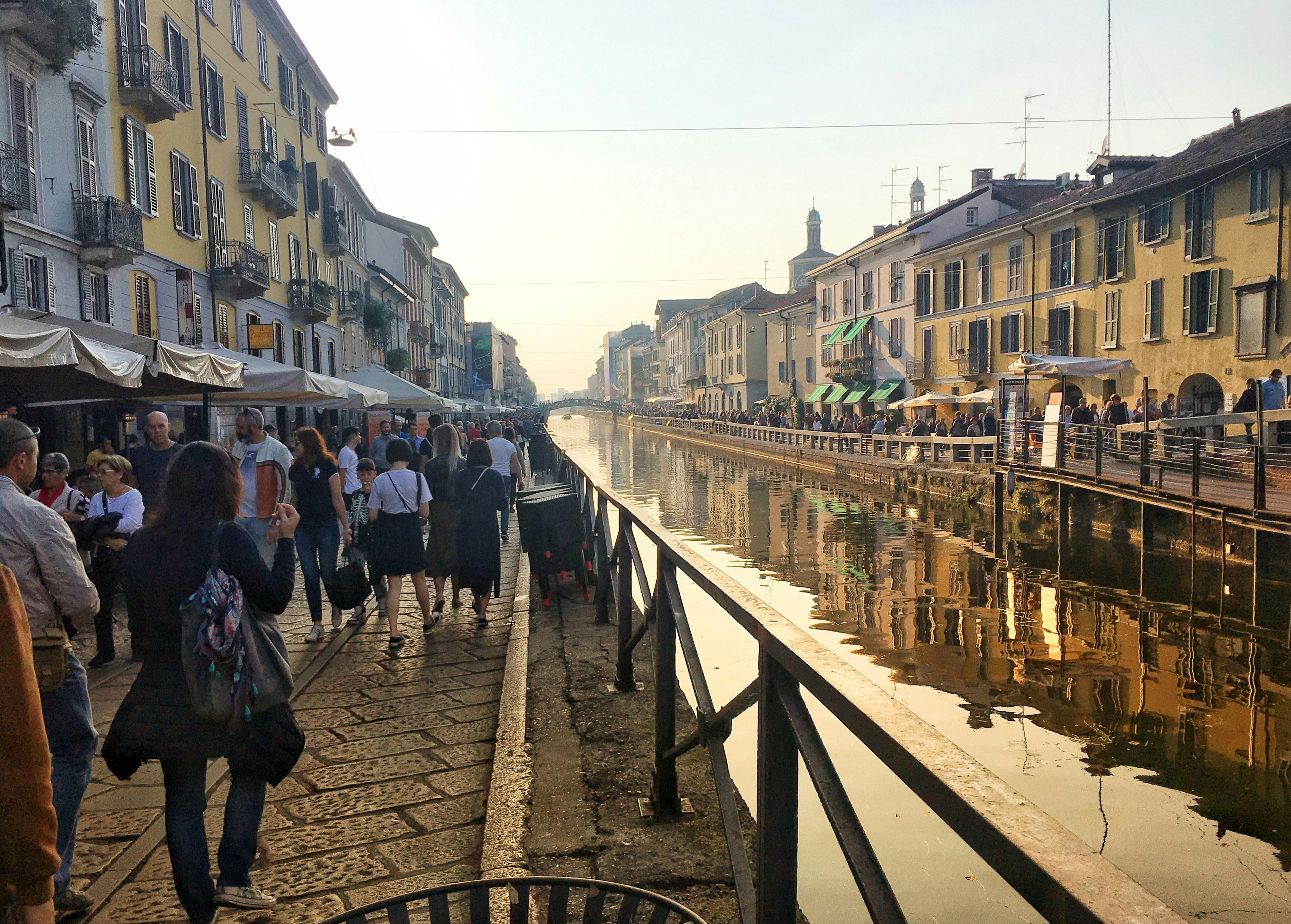
Mercato Comunale Wagner sits in the west. Mercato Metropolitano is south, near Porta Genova. The Navigli stalls run along the canals. Papiniano is a Tuesday-and-Saturday street market. Isola lives up north. These are not the same trip unless you order them on purpose.
And hidden markets keep hidden hours. Narrow windows. Inconsistent closing days. A wrong order doesn't cost you ten minutes — it costs you a closed door and a dish you'll think about for a year.
So the question everyone asks is: what are the 12 best hidden food markets in Milan?
Fair question. I'll give you the list at the bottom. But the list is the easy half. The route is the half that decides whether you eat.
Why Do Bookmarks, Google Maps Pins, and Listicles Fail Foodies?
Listicles rank. They never connect.
You get "12 best local markets in Milan," beautifully photographed, in an order chosen by an editor who was optimizing for scroll depth, not your walking distance. No sequence. No timing. No transit. Twelve islands, no bridges.
Saved TikToks are worse, because they strip the context that mattered. The clip showed you the panzerotto. It did not tell you the stall is morning-only, closed Mondays, and cash-first. The vibe survived. The logistics evaporated.
And Google Maps stars? You drop a pin every time something looks good, and three weeks later you open the app to a chaotic constellation. Stars everywhere. A path nowhere.
Two questions decide your whole trip here, and the pins answer neither.
When is the best day of the week to visit? Because many of these markets shut Sunday, and some shut Monday too.
And how do you avoid the tourist traps and find where locals actually shop? Because a five-star pin and a local-favorite stall are not the same thing, and the rating won't tell them apart.
How Did TikTok and AI Change the Way We Plan Food Trips?
Discovery moved. Planning didn't.
Ten years ago you found food spots in a guidebook that already had them in geographic order. The discovery and the sequence came bundled. Now discovery lives on TikTok and Reddit, and it arrives in a firehose with no order at all.
We save more inspiration in a week than we could sequence by hand in a month.
That gap is new. And it's why a specific search query keeps climbing: how do I turn my saved TikTok Milan food spots into an actual itinerary?
People aren't asking where to go anymore. They already know where. They're asking how to turn a saved list of Milan markets into a one-day route — and which of those markets are even close enough to hit in the same day.
That's not a content shift. It's a planning-tool shift. The inputs changed format and the tools never caught up.
How Can AI Turn a Pile of Saved Markets Into a Sequenced Day?
Here's the job, stated as a system.
Take your messy inputs — screenshots, pins, half-remembered names — and do three things to them.
Step 1: Cluster by neighborhood. Twelve scattered points become two or three tight pockets. Southwest pocket. North pocket. Suddenly the map has shape.
Step 2: Order by opening hours. Morning-only street market first. Covered comunale market mid-day. Mercato Metropolitano, which runs late, at the end. The clock writes the sequence, not your mood.
Step 3: Optimize the moves between stops. Walk where walking is faster. Tram where it isn't. Don't backtrack across the city for one stall.
Then the part most lists skip: it flags the conflicts. This market's closed today. That stall is lunch-only. This one is too far to justify for a single dish — skip it.
Because the real question isn't how do you get between Milan's food markets without wasting time. It's which markets are worth skipping when you only have one day. Completeness is the trap. Sequencing is the win.
Where Does Roamee Fit In?
We've been thinking about exactly this gap. It's the bet Roamee's Lomit Patel has made about AI travel planning — the hard part stopped being discovery and became turning what you saved into a sequenced day. Roamee does AI itinerary generation from the spots you already saved — the names, the pins, the clips — and hands back a sequenced, hour-aware day instead of another list to bookmark. It clusters by neighborhood, orders by opening hours, and slots the transit, so the save-list becomes a walkable route without you wrangling a single map. Not a product to buy. A bridge between the inspiration you hoarded and the day you actually walk.
What Does a Real One-Day Milan Market Crawl Look Like?
Let's make it concrete. Save in, day out.
You save: a dozen hidden-market clips. Mercato Comunale Wagner. Mercato di Viale Papiniano. Mercato Metropolitano. A couple of Navigli stall finds. An Isola spot someone swore by.
The AI does this: clusters them into two pockets — a southwest run (Wagner, Papiniano, Navigli, Metropolitano) and an optional north hop (Isola). Then it orders the southwest pocket by the clock and picks one thing to eat at each so you don't graze yourself stupid by noon.
You get this:
- 9:00am — Mercato di Viale Papiniano (Tue/Sat only). Arrive early, before the crowd. Eat: warm farinata, a wedge of cheese for the road. ~€6.
- 10:30am — Mercato Comunale Wagner. Covered, calmer, deli-dense. Eat: a fresh mozzarella-and-prosciutto panino at a counter locals queue at. ~€8.
- 12:30pm — Navigli stalls + canalside. Eat: fritto misto, standing up, by the water. ~€10.
- 2:30pm — Mercato Metropolitano (open late). The closer. Eat: a proper sit-down plate and a glass of something. ~€18.
That's a morning-to-evening route. Timestamps. A dish per stop. A budget that lands around €40–55 for the day before drinks.
Four markets. One pocket. Zero backtracking. The other eight stay saved for the next trip — on purpose, not by accident.
What's the Future of Turning Inspiration Into Itineraries?
Here's where this goes.
Planning collapses into the moment you save. You tap save on a market clip and the day quietly reshuffles to fit it — no separate planning session that never happens.
Routes start self-adjusting. A market's closed today? The order rewrites itself. Rain? It pulls the covered comunale markets forward. A stall's mobbed right now? It flips two stops.
And the default travel question changes. For decades it was where should I go. With discovery already solved, the question becomes what's the best order — and that's the one worth answering.
The Real Takeaway: A Saved Market Isn't a Plan
The gap between good foodies and great food days isn't taste. You already have taste. You proved it with every save.
It's sequencing.
The 12 markets are only as good as the order you eat them in. A perfect stall at the wrong hour is a closed door. A great market across town is a wasted afternoon.
So stop hoarding pins. Build the day. The screenshots already did their job — now make them walk.
Milan Hidden Food Markets: Quick Answers
What are the 12 best hidden food markets in Milan?
A strong anchor set: Mercato Comunale Wagner, Mercato di Viale Papiniano, Mercato Metropolitano, Mercato Comunale Morsenchio, Isola market, Navigli canalside stalls, Mercato di Via Fauché, Mercato di Porta Genova, Mercato Comunale di Lorenteggio, Mercato di Via Osoppo, Mercato di Piazza Wagner's surrounding stalls, and the Chinatown food stretch around Via Paolo Sarpi. Wagner, Morsenchio, and the comunale markets lean genuinely local; Metropolitano is excellent but tourist-aware. Treat the list as your menu, not your route.
Can you see Milan's best local markets in one day or one afternoon?
A focused afternoon covers 3–4 clustered markets; a full day covers 5–6. All 12 in one day isn't realistic, and chasing completeness is how you end up at closed stalls. Sequencing beats coverage. Pick a pocket and eat it well.
Which Milan neighborhoods have the best food markets close together?
Two tight clusters. The southwest pocket — Papiniano, Wagner, Navigli, Porta Genova, Metropolitano — packs the most into the least walking. The north pocket around Isola and Porta Garibaldi is the second-best run. Clustering cuts transit time to near zero, so anchor your day around one pocket, maybe two.
What time do Milan's food markets open and close?
Street markets typically run ~7:30am to 2pm and close hard in the early afternoon. Covered comunale markets stay open longer through the day. Mercato Metropolitano runs late into the evening. The trap is the morning-only street markets — miss the window and there's no second chance that day. Closing days vary by market, so confirm each.
When is the best day of the week to visit Milan's markets?
Saturday gives you the widest selection and the most stalls open at once. Weekday mornings give you the most local feel and the fewest cameras. The caution: many markets close Sunday, and some close Monday too. Check each market's day before you lock the route — one wrong day breaks the whole sequence.
How much should you budget for a day of market eating in Milan?
Realistically €40–60 per person for a full day of grazing. Cheap bites — farinata, panzerotti, a panino — run €4–10 each. Sit-down stalls at places like Metropolitano push €15–20 a plate. Bring cash; smaller stalls still prefer it, and a few don't take cards at all.
Should you do a guided Milan food tour or plan your own market route?
A guided tour gives you context and zero logistics work — but a fixed path, a fixed cost, and someone else's stops. A self-planned, AI-sequenced route is cheaper, flexible, and built around the spots you actually saved. If you already have a save-list you care about, route it yourself. The tour is for people starting from nothing.
How do you avoid tourist traps and find where locals actually shop?
Favor comunale and neighborhood street markets over the central showpiece spots. Go on weekday mornings and follow the stalls where vendors outnumber cameras. Skip anything built for a photo; queue where locals queue — usually the produce and deli stalls, not the ones with an English menu out front.