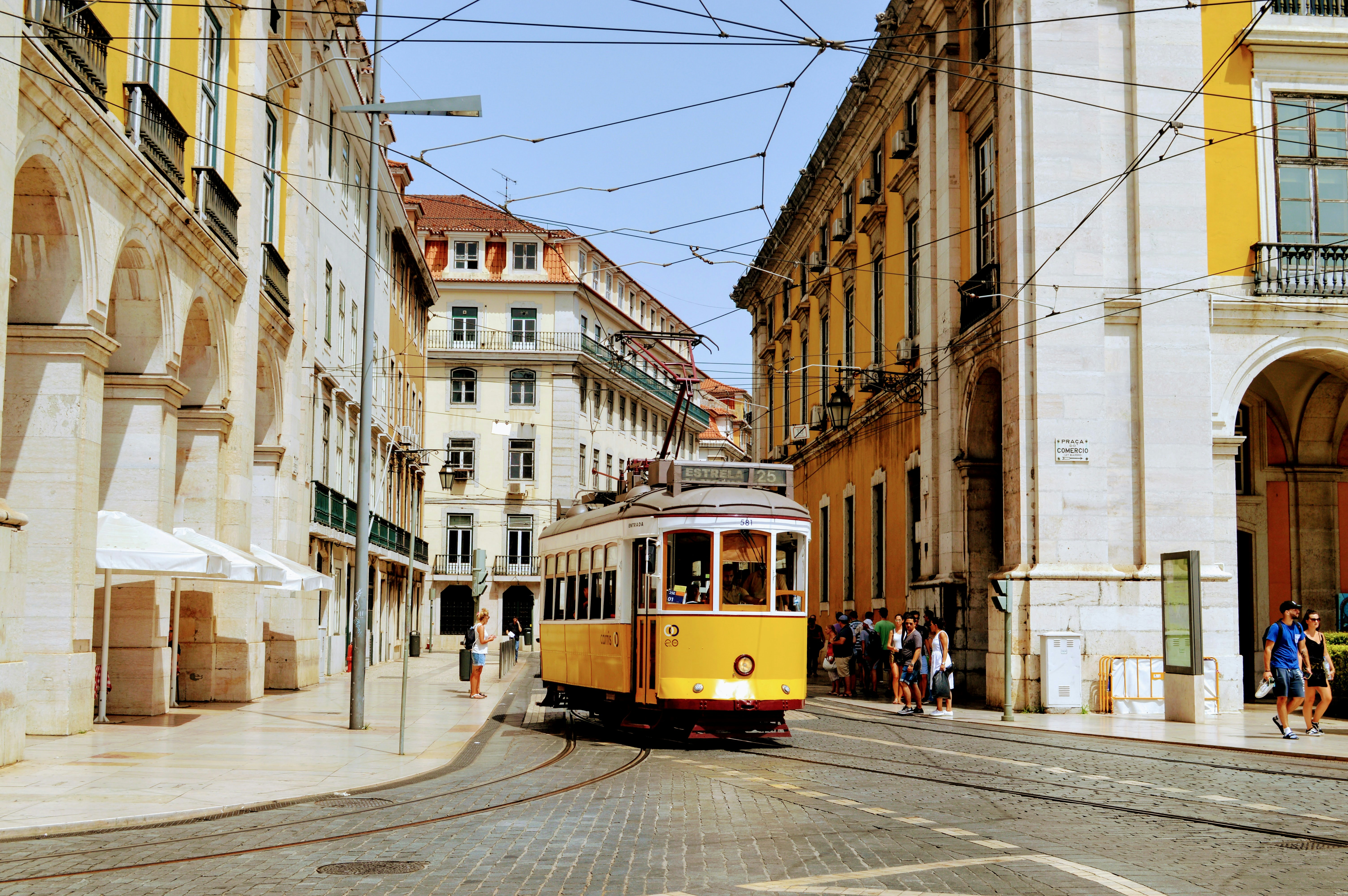
Remember When Lisbon Felt Like a Secret?
You moved for the dream. The light. The pastéis. The idea that you'd found one of the best cities for remote workers in 2026 before everyone else did.
Now you're in a co-working space that feels like an airport lounge. Same hoodies. Same standing desks. Same five faces you half-recognize from a Slack you muted.
Here's the quiet part nobody posts: you're paying more to feel less special. You crossed an ocean to escape a crowd, and the crowd booked the same flight.
The people who feel this most are already gone. They've found the next base. They're just not posting about it yet.
That lag — between who's left and what your feed shows — is the whole story.
Why Are Remote Workers Leaving Lisbon and Bali in 2026?
The best cities for remote workers in 2026 are not the ones that defined the last decade. The marquee hubs hit saturation, and saturation kills the exact thing that made them work.
Lisbon rents are up roughly 60-70% since 2020. Locals priced out of their own neighborhoods now treat nomads as the cause, not the cure. In Bali, Canggu traffic, visa crackdowns, and overbuilt villa sprawl turned the "escape" into a commute with better weather.
This is the part people miss.
The value proposition that built these cities — cheap, novel, uncrowded, full of interesting people early in something — has inverted. They're now expensive, familiar, packed, and full of people late to something.
It looks like a trend. It's not. It's a tipping point. Once the cost-and-crowding curve crosses the novelty curve, a hub doesn't drift back. It just keeps absorbing the people who haven't checked the math yet.
So: are Lisbon and Bali still worth it for digital nomads in 2026? Depends. For movers chasing the original deal, the honest answer is no.
What Does Digital Nomad Burnout Actually Look Like?
Digital nomad burnout isn't work burnout — the job is fine, the job is portable. It's location burnout: fatigue with the playbook, not the laptop, and it creeps in once a hub gets crowded.
It looks like this:
- The same five cafés on every feed, because the algorithm sent everyone to them.
- A community that resets every 30 days, so every friendship starts at "so, how long are you here?"
- Decision fatigue from over-optimized hotspots, where the "best" everything has been ranked, reviewed, and lined up.
The tools meant to help are the ones doing the damage. Nomad lists, ranking sites, Instagram geotags — they all point everyone at the same place at the same time. A ranking is a herd instruction wearing a data costume.
And the original draw — saving money — erodes fastest. The cost arbitrage that made the lifestyle pencil out is the first thing a viral city loses. You came for cheaper. You stayed for the same price as home, minus your friends.
That's the signal. When the savings vanish and the calendar still resets monthly, you're not living somewhere. You're queuing.
How Did TikTok and AI Turn Every Hidden Gem Into a Crowd?
Discovery collapsed. That's the behavioral shift under all of this.
A city used to take years to go from undiscovered to oversaturated. Now it takes one viral cycle. One creator's "underrated paradise" video and the early window closes in months, not years.
The algorithm is the problem. It rewards proven destinations, so it keeps feeding you the place that already peaked. By design, the feed is dragging behind reality by about five years — or in nomad time, two rent hikes.
But there's a counter-reaction worth naming. A maturing cohort is opting out. They're optimizing for focus, calm, and longevity instead of clout and content. They want a base, not a backdrop.
Which raises the real question: how do you find an up-and-coming digital nomad city before it gets crowded? Not by watching the feed. The feed is always late. You need a different instrument.
Which 5 Cities Are Remote Workers Choosing Instead?
Here's where the early movers actually went. Five bases, with the part rankings skip: how saturated they are right now.
1. Tirana, Albania — the Lisbon you missed by a decade. A 1-year visa-free stay for many passports, sub-€600 rents, fiber in the center, and a café scene that still feels local. Internet is solid, infrastructure is improving fast, saturation is low. The catch is the upside: it won't stay this quiet.
2. Tbilisi, Georgia — a tax base disguised as a city. Up to 365 visa-free days, a 1% small-business tax regime, fast cheap internet, and rents well under Western Europe. Wine country, mountains, and a real local culture. Saturation is moderate and rising — early window, not virgin territory.
3. Da Nang, Vietnam — the Bali alternative that actually works. Beach, mountains, a real city, and a coffee culture that predates the trend. Internet is genuinely fast, cost of living runs roughly half of Bali, and the e-visa is now straightforward. Less Instagram polish than Canggu. That's a feature. Saturation: low-to-moderate.
4. Penang, Malaysia — infrastructure without the price tag. George Town gives you world-class internet, a long-stay visa pathway (DE Rantau), low costs, and arguably the best food in Southeast Asia. English-friendly, well-connected, calm. Saturation is low. The trade-off is heat and a smaller "scene."
5. Oaxaca, Mexico — the slow base for US-time-zone workers. Aligned with North American hours, deep culture, affordable, and a growing but not-yet-flooded community. Internet is decent in the center, not spectacular. Saturation is moderate. You move here for substance, not nightlife.
Notice what these have in common: each wins on a different axis. Lowest cost, best infrastructure, best visa, best time-zone fit — rarely the same city. That's exactly why a universal "top 10" fails you.
This is where AI changes the move. Done right, AI-driven planning surfaces bases on personal fit — your budget, your climate tolerance, your time zone, the community stage you want — not on popularity. It's the case Lomit Patel has made about AI travel planning: match the person to the place, not the crowd to a list. That's the antidote to algorithmic herding — matching you to a city instead of matching everyone to the same one.
Where Does Roamee Fit?
This is the messy research problem we've been thinking about. Roamee turns the fifteen-tab spiral above into an AI-generated, personalized base-matching flow — weighing cost, visa, internet, and saturation against your actual life instead of handing you a leaderboard. Where TikTok scatters everyone toward the same viral café, Roamee points you somewhere that actually fits. Not a ranking everyone follows. A shortlist built for the way you specifically work and live.
What Does Finding Your Next Base Actually Look Like?
Here's the arc, concretely.
Step 1 — You save your criteria. Budget under $1,500/month. Time zone within three hours of your team. Hard requirements: fast internet, low saturation. Soft preferences: warm, walkable, a community that isn't fully formed yet.
Step 2 — AI does the scanning. It reads cost-of-living data, visa rules, internet benchmarks, and — the differentiator — crowding signals. It ranks emerging bases against your inputs, not against last year's hype.
Step 3 — You get a shortlist. Three or four cities, each tagged with monthly cost, visa path, and a saturation read. Tirana flags as early-window. The peaked hub you almost picked flags as past it.
That's the payoff: a city surfaced before it hits the feed, not after. Early-window, not peak-hype.
The decision becomes fifteen minutes. Not fifteen open tabs and a spreadsheet you'll abandon at 1 a.m.
Is the Old Digital-Nomad Playbook Officially Dead?
The era of one-size-fits-all hubs is ending. Not because the hubs are bad — because the model is.
A single ranked list assumes everyone wants the same thing. Remote workers in 2026 don't. They're optimizing for sustainability and fit over status and savings-arbitrage. The flex isn't "I live in Bali." It's "I found a base that fits my life and nobody's ruined it yet."
That's what the shift signals. The status game is exhausting, and a cohort just decided to stop playing it.
Where travel planning heads next is predictable once you see it: dynamic, AI-matched bases over static top-10s. Personalization replaces the leaderboard. The list told everyone to go to the same place — which is precisely why the place stopped working.
The playbook isn't dead because it failed. It's dead because it succeeded too well, for too many people, all at once.
How Do You Pick a Base That Won't Burn You Out?
Match the base to your season of life, not to the feed.
Head-down build year? Optimize for calm, cost stability, and fast internet — Penang, Tbilisi. Want energy and people? Weight community and walkability higher. The right base is a function of where you are, not where the algorithm is.
Then the timing rule. Move in the early window — after a city has visas, internet, and a small community, but before the saturation curve spikes. That's the narrow band where cost is still low and the scene is still real. Miss it and you're just paying peak to arrive late.
The reframe to leave with: the goal was never the next hot city. It's the right city for you. Those are almost never the same place — and the feed will be the last to know.
Remote Work Bases in 2026: Quick Answers
What are the best cities for remote workers in 2026 besides Lisbon and Bali?
Tirana, Tbilisi, Da Nang, Penang, and Oaxaca lead the early-mover list for 2026. Tirana and Tbilisi win on cost and generous visas, Da Nang and Penang on infrastructure and value, Oaxaca on US-time-zone fit. "Best" depends on your priorities, not a universal ranking — each city tops a different axis.
Why are digital nomads leaving Lisbon and Bali?
Saturation, rising costs, and nomad fatigue. The value proposition that built both — affordable, novel, community-rich — has eroded as crowds and rents climbed. This is a tipping point, not a dip; once cost and crowding cross the novelty line, these hubs don't reset.
What's the best alternative to Bali for remote work?
Da Nang, Vietnam, for most people — beach, real city, fast internet, and roughly half Bali's cost with a simpler e-visa. Penang, Malaysia is the close second if you weight food and long-stay visas higher. The right pick depends on your time zone and whether you want a scene or quiet.
Where should I move as a remote worker to avoid nomad burnout?
A low-saturation base matched to your work rhythm, not the trendiest city on your feed. Prioritize community stage, cost stability, and infrastructure over clout. Use the in-article framework: match the base to your season of life, then move in the early window before saturation spikes.
How do I find an up-and-coming digital nomad city before it gets crowded?
Stop following the feed — it's structurally late. Track early signals instead: new visa programs, infrastructure investment, and early-stage communities forming. Personalized AI matching can surface these early-window cities by fit before they go viral.
Are Lisbon and Bali still worth it for digital nomads in 2026?
For some, yes; for most movers chasing the original deal, no. Both remain strong on infrastructure and community but weak on cost and novelty. They're worth it as a known quantity — not as an edge.
What cheaper cities are remote workers choosing in 2026?
Tbilisi, Tirana, and Da Nang are the most cost-favorable of the five, often running 40-60% below current Lisbon or Bali totals once rent and dining are counted. The headline number matters less than cost stability — a cheap city that's spiking isn't cheap for long.
Which remote work destinations have the best cost of living and infrastructure?
Penang and Tbilisi balance low cost with fast internet and workable long-stay visas better than most. Penang offers strong fiber and the DE Rantau visa; Tbilisi pairs cheap living with up to 365 visa-free days. The trade-off: the absolute lowest-cost city and the best-infrastructure city are rarely the same place.