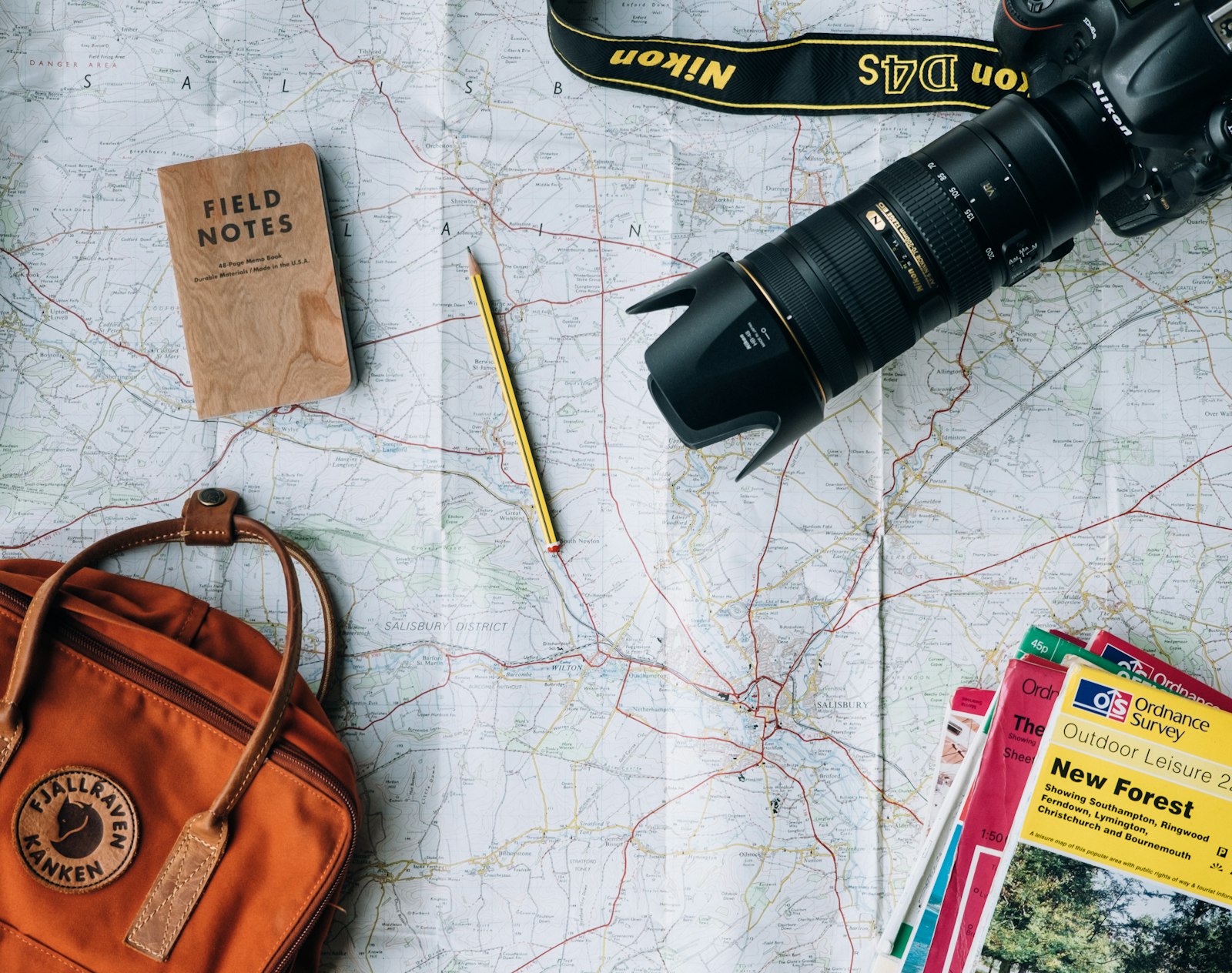
You have 40 open tabs. A saved TikTok folder you keep adding to. A flight you booked three weeks ago that still isn't a trip.
So you do the thing almost everyone does when weighing AI vs organized tours: you find a tour company, you read the itinerary, you hand over your card. And for one clean second, you exhale.
The overwhelm stops.
That exhale is the whole product. It's not the trip they sold you—it's the relief of not having to decide anymore.
The regret comes later. Day two, following a raised flag through a city you never got to choose, past the restaurant you saved and will never see.
This is the real story of AI vs organized tours. Not ease vs. effort. Something you gave up without noticing.
Why Do Done-For-You Tours Feel Like Relief When Planning Gets Overwhelming?
Tours feel like relief because they kill decision fatigue and logistics anxiety in a single purchase. That's it. Not because they're the best trip for you—because they're the fastest way to make the deciding stop.
And deciding is the part that hurts.
The real problem isn't that you can't plan a trip. It's the gap between inspiration and a bookable itinerary. You have the flight, the saved reels, the vague idea. What you don't have is the thing that turns all of it into "Tuesday, 9am, here."
That gap is where most trips stall. It's where the tour company steps in and says: give it to us, we'll close it.
But notice the move. The overwhelm is a planning problem. The tour treats it as proof you need someone else to own the entire trip.
Those aren't the same thing.
One is "help me get from inspiration to itinerary." The other is "take the trip off my hands." You needed the first. You bought the second.
What Do You Actually Give Up When You Book a Packaged Tour Company?
You trade away control. Pace, choices, spontaneity, the trip being yours—all of it, in exchange for the logistics being handled.
Here's what that looks like on the ground.
- A fixed daily schedule you had no say in.
- A group pace set by the slowest person and the tightest bus window.
- Padded "included" stops—the gift shop, the sanctioned viewpoint, the partner restaurant.
- No room for the place you actually saved.
And then the quiet one. The route is the same route thousands of other people walked. Same photos. Same order. You didn't pick a single stop on it.
That's the cookie-cutter problem. Not that the trip is bad—it might be fine. It's that it isn't yours, and it was never going to be.
So here's the hidden cost. You think you're outsourcing the logistics. You're also outsourcing the trip's identity. Both, bundled into one purchase, sold as one word: convenience.
The logistics you wanted handled. The identity you didn't mean to give away.
What's the Best Way to Plan a Trip Without Doing All the Research?
The honest answer: you no longer have to choose between the rigid tour and the exhausting solo research. There's a third thing now, and it sits right between them.
For a long time those were the only two options. Surrender the trip, or spend a weekend cross-referencing blogs, maps, and opening hours. Both are bad. One costs your agency, the other costs your Saturday.
Then the inputs changed.
TikTok and Reels now generate inspiration faster than any human can turn it into a plan. You save 30 places in a week. You'll organize zero of them.
Younger travelers rejected the rigid group tour years ago. But they also don't want to be a part-time travel researcher. They grew up with curation on demand—personalized, instant, no effort.
So the expectation shifted. The question stopped being "tour or DIY." It became: why can't something absorb the research the way it absorbs everything else?
That's the option the rest of this post is about.
How Does AI-Assisted Planning Remove the Logistics Burden Without a Fixed Itinerary?
AI takes on the research, the sequencing, the logistics—and leaves every decision editable. That's the difference. You get the relief without the surrender.
Here's the split.
What AI does: the heavy lifting. Routing so you're not zig-zagging across a city. Timing that respects opening hours and travel gaps. Realistic pacing so you're not booking a 6-stop day that only exists on paper.
What stays yours: every choice. Swap a museum for a market. Skip the thing you don't care about. Add the restaurant you saved. Reorder the whole day. The itinerary bends to you instead of the other way around.
Be clear-eyed about the limits, though. AI is strong at synthesis and logistics. It's weaker at taste, local nuance, and real-time judgment. It doesn't know the place got a bad rewrite last year or that the "must-see" is a tourist trap. Keep a human in the loop—yours.
Use it as a co-pilot, not an autopilot.
Now line it up against the tour. Same "someone handled it" relief. None of the lock-in. That's the trade tours told you was impossible.
Where Does Roamee Fit In?
This is the gap we've been thinking about at Roamee. You've got the saved TikToks, the flight, the rough idea—and no bridge to a real plan. Roamee turns that scattered inspiration into an editable, AI-generated itinerary you actually control: clustered, sequenced, timed, and yours to change. It's the itinerary Lomit Patel kept wanting when the tab count crept past 30 and the trip still hadn't shown up: AI doing the travel planning, not a tour deciding for you. Not a tour that decides for you. A planner that drafts, so you can decide faster.
What Does a Real Itinerary Built With AI Look Like, Step by Step?
Make it concrete. Here's the shape: you save, AI structures, you edit, you book.
Step 1 — You save. A TikTok reel of a viewpoint in Lisbon. A restaurant a friend swears by. One rough line: "Lisbon, 4 days, food and views." That's the whole input. Messy is fine.
Step 2 — AI does the work. It clusters your saves by neighborhood so you're not crossing the city twice a day. It sequences four days around them. It fills the gaps between your must-dos with things that fit. It flags the timing—this closes Mondays, that one needs a reservation, this walk is 25 minutes not 5.
Step 3 — You get a draft. A day-by-day plan. Not a suggestion, not a mood board—an actual schedule you could follow tomorrow.
Step 4 — You edit. In minutes, not a weekend. Drop the stop that doesn't excite you. Move the food tour to Friday. Add the bar you just remembered. Then book.
That's the answer to "can AI turn my travel ideas into a real day-by-day itinerary." It already does. And turning inspiration into a bookable plan stops being the weekend project that killed the trip.
Is the Future of Travel Planning Tour Companies or AI Planners?
The binary is dissolving. Rigid tour on one side, total DIY on the other—that framing is already old.
Planning is turning from a chore you dread into a conversation you steer. You say what you want, something drafts it, you push back, it adjusts. That loop didn't exist five years ago.
Personalization becomes the floor, not the upsell. "Tailored to you" used to be a premium line on a luxury package. Soon it's just the default state of any plan.
Tours don't disappear. They narrow—to the places they genuinely win, which is the next section's whole point. The done-for-you tour survives where doing it yourself is genuinely hard, and retreats everywhere it was only ever selling relief.
The Real Choice Isn't Tour vs. No Tour
Here's the reframe to leave with.
The choice was never ease vs. control. That was the false trade the tour sold you—accept the rigid itinerary, or accept the exhausting research. Pick your poison.
AI collapses the tradeoff. Keep the relief. Keep the agency. You don't have to spend one to get the other anymore.
So the next time the overwhelm hits and the tour button starts to look like an exhale—remember what it costs.
Your next trip can feel completely handled and still be entirely yours. That's not the compromise. That's the whole point.
AI vs Organized Tours: Quick Answers
Is an organized tour or planning it myself better for me?
It comes down to how much control you want versus how comfortable you are with unfamiliar logistics. A tour is zero effort and zero say; AI self-planning is low effort and full say. The deciding factor is the "when a tour still wins" cases below—if none of those apply to your trip, self-planning almost always gives you a better, cheaper, more personal result.
Can AI plan a whole trip itinerary for me?
Yes. From a few inputs—a destination, a rough number of days, and some saved places—AI can produce a complete day-by-day itinerary. It handles routing, pacing, timing, and the logistics that usually stall you. Just review and edit it for taste, local nuance, and any reservation it can't actually confirm.
When does an organized tour still make more sense than planning yourself?
When the friction is genuinely high: remote regions, hard language barriers, or permits and access you simply can't get on your own. Also for deep-expertise experiences with specialized guides, or when you truly want to make zero decisions. Outside those cases, AI self-planning usually wins on both control and cost.
How much time does self-planning with AI actually take compared to a tour?
Booking a tour takes minutes—but it pre-decides weeks of your trip. AI self-planning takes a few hours from inspiration to a bookable plan, versus a full weekend of manual research doing it the old way. And editing an AI draft is far faster than building an itinerary from a blank page.
What can AI trip planning not handle on its own?
Personal taste calls, hyper-local real-time conditions, and guaranteed reservations. It also can't weigh the tradeoffs only you care about. Use it as a co-pilot—AI drafts, you decide.
How do I get the ease of a tour without the rigid schedule?
Let AI absorb the logistics burden while keeping every choice editable. Start from your saved inspiration, let it structure the days, then adjust the pace and swap the stops that don't fit. You get the "handled" feeling of a tour with a plan that flexes to you instead of the reverse.