You Have 40 Saved Italy TikToks and Zero Booked Trains
Open your saved folder.
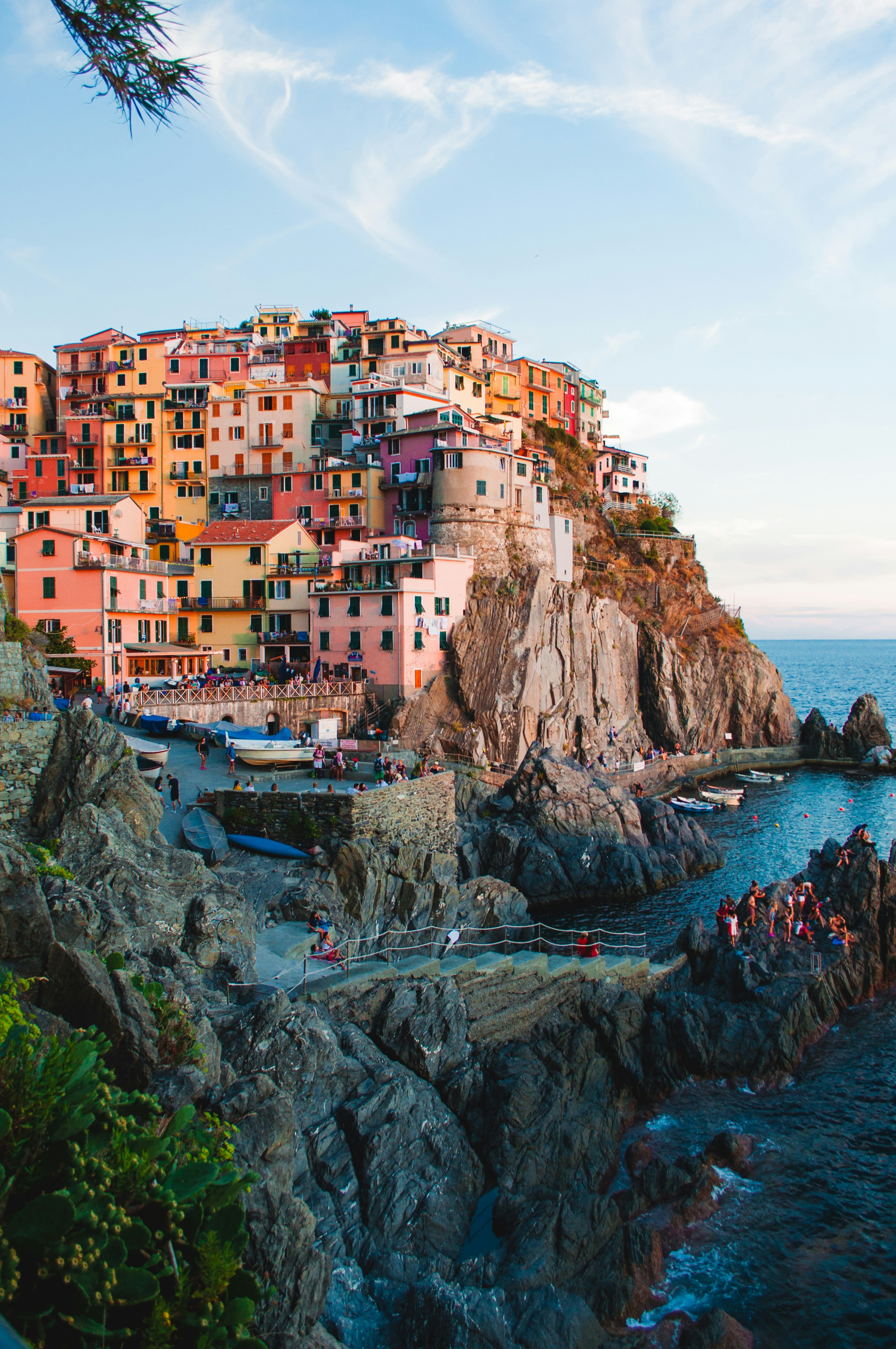
Cobblestone alleys. A pastel fishing village stacked on a cliff. A nonna rolling pasta on a wooden board in what is definitely not Rome.
Forty of them. Maybe sixty. You started saving in February, all filed under a mental folder called affordable hidden gems Italy.
It's now June. You are doing the Sunday-night ritual again: pour a glass, open Notion, tell yourself you'll plan it next weekend. You won't.
Next year you will book Rome–Florence–Venice. Again. Default mode. Inspiration overload collapsing into the cheapest path of least resistance.
This is not a discipline problem. It is a translation problem.
Why Do Most 'Affordable Hidden Gems Italy' Lists Fail Real Travelers?
Most affordable hidden gems Italy lists fail because they optimize for saves, not sequencing. The metric a creator is paid against — shares, screenshots, bookmarks — has almost nothing to do with whether you can actually chain six villages across three regions without losing a day to a Sunday rail gap.
No list tells you which of those twelve villages are reachable by Trenitalia regional, in what order, and at what real cost once you add the rural taxi from the station to the agriturismo on the hill.
The diagnosis dictates the treatment. And the diagnosis here is wrong.
Urban professionals 24–38 are not under-inspired. They are over-inspired. They have money. They do not have time. What they need is logistics, not another mood board.
The anchor question almost no list answers: what is the actual gap between a TikTok save and a bookable Italy itinerary?
It is roughly four hours of spreadsheet work per saved village, across at least five tabs, plus a non-trivial amount of regret. Multiply by forty. You see the problem.
The gap isn't inspiration. It's translation.
What's Actually Broken About Current Trip Planning Tools?
The current planning stack was built for a different decade — designed for a world where people decided where to go before they opened the tool, not one where trips begin with 40 saved Reels.
Google Maps. Excellent for a single pin. Useless for chaining Bergamo → Lake Iseo → Verona → Bologna in a way that respects regional rail timetables and where you actually want to sleep.
Booking.com and Skyscanner. Siloed. Flights do not know about your train legs. Stays do not know that your Civita di Bagnoregio night requires a bus from Orvieto that stops running at 19:40.
Reddit threads. Three years stale, region-specific, internally contradictory. The top comment was true in 2022. It is not true now.
Travel blogs. SEO-bloated, affiliate-driven, almost never budget-honest. The €60/night agriturismo was €60/night in 2019.
Spreadsheets. Where ambition goes to die at 11pm on a Tuesday.
None of these tools take your saved social content as the starting point. They all assume planning begins at a search bar. That assumption is roughly a decade out of date.
How Did TikTok Change Where Trips Begin — But Not How They Get Booked?
TikTok shifted travel discovery from search to scroll: trips now begin with a saved Reel of a single staircase in a single village in Basilicata, not a guidebook chapter on a region. But the booking stack — OTAs, rail sites, regional hotels — is stuck in roughly 2012 and still assumes you'll arrive at a search bar with a destination already in mind.
Guidebooks in the 2000s. Pinterest in the early 2010s. Instagram Reels in the late 2010s. TikTok in the 2020s.
The surface area got larger. It also got more granular. A guidebook recommended a region. A Reel recommends a single staircase.
Discovery is now algorithmic, hyper-visual, village-by-village. Two decades of behavior shift on one side. One decade of tooling stasis on the other.
The save button created a new kind of debt. Visual wishlists with no execution path. Forty IOUs to your future self that compound into nothing.
Gen Z and younger millennials already expect AI to close this loop. Increasingly, they will not plan without it. That is not a preference. That is a generational rewrite of how a trip moves from idea to booked.
Can AI Plan a Budget Italy Itinerary With Hidden Gems?
Yes — and the unlock is structural, not magical. AI can hold the whole graph at once: trains, ZTL zones, regional rail passes, shoulder-season pricing, walking distances, and the fact that two of your saved villages are 14 minutes apart while three others are scattered across three regions.
A human spreadsheet cannot hold that graph. A travel blog will not tell you.
The workflow that actually works:
Step 1. Parse the saved posts. Extract place names. This is the input layer almost no current tool accepts.
Step 2. Cross-reference reachability and cost. Which villages sit on a Trenitalia regional? Which require a bus plus a taxi plus a prayer?
Step 3. Sequence. Milan → Bergamo → Lake Iseo → Verona → Bologna in a loop that respects geography, not the order you happened to save them in.
Step 4. Surface hidden costs. Rural taxi surge. Sunday rail gaps. Agriturismo two-night minimums. The ZTL fine you do not yet know you are about to incur.
Step 5. Answer the budget question honestly. This village adds €180 and a four-hour detour. Keep or cut?
That last move is the one no list, no blog, and no spreadsheet has ever made for you. It is the difference between inspiration and an itinerary.
Where Roamee Fits
We have been thinking about this gap for a while. Roamee ingests your saved Reels and TikToks, turns the place names into a sequenced, budget-aware itinerary, and keeps flights, trains, and stays in one view, with a cut-this-to-save-€300 toggle built in. It is a tool built for exactly this gap between TikTok travel inspiration chaos and a bookable trip: not more discovery, just translation.
What Does This Look Like in Practice?
Here's a real run of an affordable hidden gems Italy trip. You save five videos: Civita di Bagnoregio, Polignano a Mare, Castelmezzano, Tellaro, Bosa. All gorgeous. All saved on different Tuesdays.
AI does the translation:
- Castelmezzano: beautiful, low rail reachability, adds two days of transit. Flagged.
- Bosa: Sardinia, requires a separate flight and a car. Flagged.
- Civita, Polignano, Tellaro: feasible as a nine-day shoulder-season loop.
The proposed sequence:
Day 1–2. Fly into Rome. Day trip to Civita di Bagnoregio via Orvieto.
Day 3–5. Train to Bari. Base in Polignano a Mare. Side trips to Monopoli, Alberobello.
Day 6. Short-hop flight Bari → Pisa.
Day 7–8. Drive or train to Tellaro on the Ligurian coast.
Day 9. Train to Milan. Fly out.
Realistic budget, shoulder season, April or October: €1,400–€1,800 per person from the US East Coast, all in.
You get bookable links, calendar holds on the Trenitalia Super Economy fares before they jump, and a single toggle that re-prices the trip if you cut Tellaro to save €300.
This is what closing the loop looks like. Not a chatbot. A translator.
The Future of Trip Planning Is Translation, Not Discovery
Discovery is solved.
The algorithms feed us more places than we will ever visit. The constraint is no longer knowing what exists. The constraint is converting that knowledge into a trip before the inspiration decays.
The next decade of travel tech is about closing the inspiration-to-booking loop. Not building another OTA. Not another inspiration feed. The translation layer in between.
Expect AI agents that watch your saves, propose trips proactively, and book within budget bands you set once. The travel agent of the 1990s is being reborn as ambient AI — not as a Tuesday-night spreadsheet exercise.
The winners in this category will be the tools that treat your saved folder as the input, not the search bar.
Final Insights
The bottleneck was never inspiration.
Hidden gems are not gatekept by knowledge anymore. They are gatekept by logistics. By rail timetables. By rural transfers. By the four-hour spreadsheet tax that nobody has time to pay on a Tuesday night.
If you have forty saved videos and no trip, you do not need more research. You need a translator.
Your saved folder is not a wishlist. It is a trip that already wants to exist. Somebody — or something — just has to do the translation work.
That is the whole job.
FAQ: Affordable Hidden Gems Italy
How do I turn my saved TikToks of Italian villages into a real trip?
Start by exporting or listing the place names from your saved folder, then group them by region — Tuscany, Puglia, Lombardy, Liguria — because clustering is what cuts transit cost. Run them through an AI planner that cross-references rail reachability and shoulder-season pricing. Cut anything that adds more than three hours of transit unless it is a hero stop you are willing to anchor the trip around.
Which hidden gem villages in Italy are actually affordable to reach by train?
Train-friendly picks include Bergamo, Orvieto, Lecce, Polignano a Mare, Modena, Mantua, and Verona — all on or near major Trenitalia lines and reachable on regional fares. Tricky and expensive options like Castelmezzano, Civita di Bagnoregio, Bosa, and Tropea require buses, walks, or extra flights. Rule of thumb: if it is on a Trenitalia regional line, it is affordable. If it requires two or more transfers plus a taxi, budget €60–120 extra per direction.
What does a realistic budget look like for an off-the-beaten-path Italy trip?
Shoulder season — April, May, September, October — for nine to ten days runs €1,400–€2,000 per person from the US East Coast. Roughly: flights €600–800, trains €120–180, stays €70–110 per night, food €40–60 per day. Hidden costs that wreck a budget include ZTL fines if you rent a car, rural taxi surge pricing, and agriturismo two-night minimums you did not plan around.
How do you balance famous cities with lesser-known towns in one trip?
Use famous cities as logistical anchors: fly in and out of them, and use them as rail hubs. A 2:1 rule works well — for every famous city, add up to two hidden gems within two hours by train. Avoid the all-hidden-gems trap, because you will spend more time in transit than in places, and the trip will feel like a logistics exercise instead of a vacation.
How far in advance should you book trains and stays for a budget Italy trip?
For Trenitalia Frecce and Italo, book 60–90 days out to catch Super Economy fares at €19–29; regional trains have no advance discount and can be bought day-of. Stays in small villages need 60+ days for shoulder season and 90+ for summer, because inventory is thin and the good agriturismi sell out first. Transatlantic flights are cheapest 8–12 weeks out for shoulder-season pricing.
What's the best AI tool to plan a multi-city Italy trip on a budget?
Look for four things: it ingests your saved social content, it knows European rail, it surfaces hidden costs, and it supports hard budget caps. Generic chatbots hallucinate train times and invent stations, so use a travel-specific AI built for itinerary work. Roamee is built for exactly this gap; other options exist, but most still treat planning as search instead of translation.
Should I visit hidden gems in Italy or stick to the famous cities?
Both — hidden gems shine when anchored to famous hubs, not instead of them. For a first-time visitor, aim for 60/40 famous to hidden; for a return visitor, flip it to 30/70 and lean into one region deeply. The mistake is thinking it is a binary choice: the good trips are mixes, where the famous city gives you the rail hub and the museum day, and the hidden village gives you the trip you will actually remember.